

Case Result: $6,000,000 Settlement — Skull Fracture in Three Places, Bilateral Subdural Hematomas, Traumatic Brain Injury
A pedestrian was struck by a vehicle while crossing legally in a crosswalk with a green light. He suffered a skull fracture in three places, bilateral subdural hematomas that expanded on repeat CT imaging, an intracranial bleed, and a traumatic brain injury requiring ICU admission. I recovered $6,000,000 for him and his family.
A skull fracture is one of the few injuries where the visible damage on an X-ray is often the smallest part of the story. The skull exists to protect the brain, and when it breaks, the force required to break it has almost always done something to the brain underneath — even when a scan looks reassuring at first. Insurance companies routinely treat a skull fracture as a minor bone injury. In my experience handling these cases since 2009, it is almost never just that.
I am John J. Roach, a San Francisco personal injury lawyer with extensive trial experience in traumatic brain injury cases. I understand the medicine behind a skull fracture — the fracture types, the bleeding it frequently causes, and the delayed complications that can develop days after an accident — and I know what it takes to get these injuries valued correctly by an insurance company or a jury.
If you or a family member suffered a skull fracture in an accident, call (415) 851-4557 for a free consultation. I work on a contingency fee basis — you pay no attorney fees unless I recover for you. Se habla español.
What Is a Skull Fracture?
A skull fracture is a break in one or more of the bones that form the skull, almost always caused by a direct, forceful impact to the head. Because the skull exists to protect the brain, a fracture is a signal that significant force reached the head — force that frequently injures the brain tissue, blood vessels, and membranes underneath the bone as well. The severity ranges enormously, from a hairline crack that heals on its own to a fracture that requires emergency neurosurgery, and the type of fracture is one of the first things I evaluate in any case because it shapes both the medical prognosis and the legal value of the claim.
The Four Types of Skull Fracture
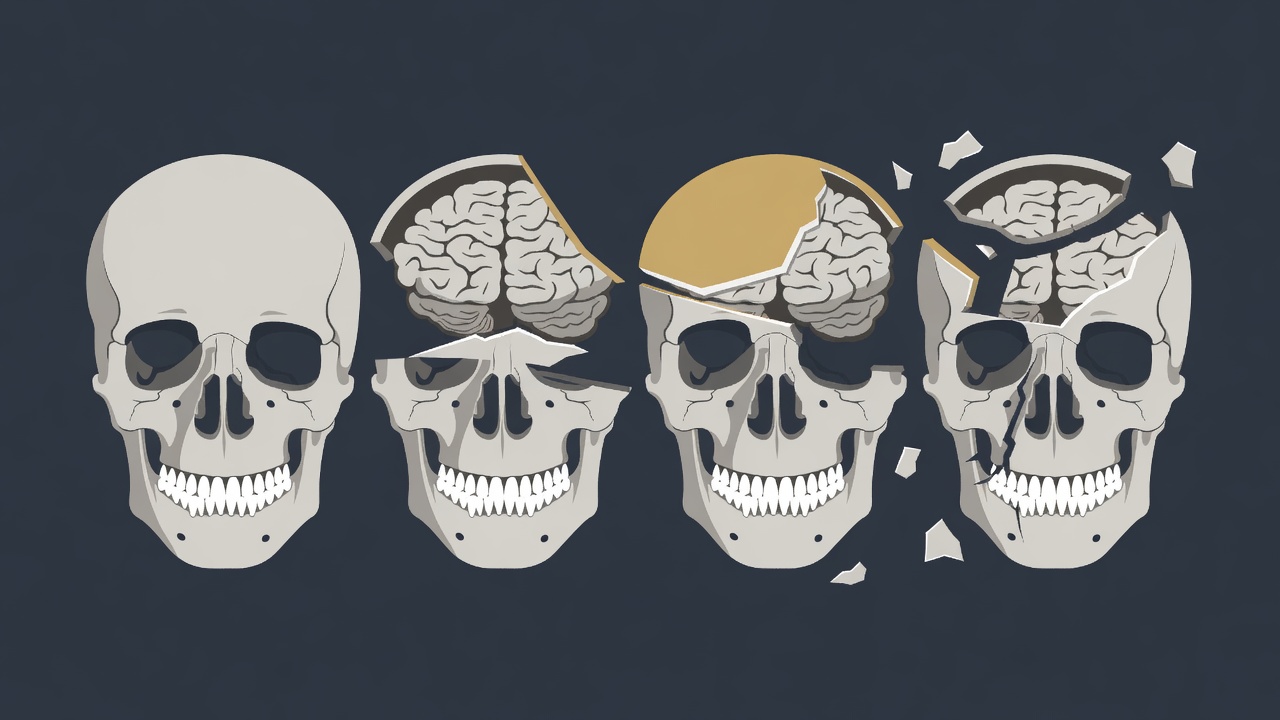
Not all skull fractures carry the same risk, and understanding which type occurred matters for both treatment and case value.
- Linear fracture — a simple crack in the bone with no displacement. The most common type, and the one most likely to heal without surgery — but still capable of causing serious brain injury underneath if it crosses a blood vessel groove.
- Depressed fracture — a section of bone is pushed inward toward the brain. These frequently require surgery to relieve pressure and repair the indentation, and they carry a materially higher risk of direct brain tissue damage.
- Compound (open) fracture — the skin is broken along with the bone, creating a direct pathway for infection into the skull and brain. These cases require immediate surgical intervention and carry elevated risk of meningitis and other complications.
- Comminuted fracture — the bone shatters into multiple fragments rather than breaking along a single line. This pattern typically results from high-force trauma — a serious car accident, a fall from height, or a violent pedestrian strike — and it is frequently accompanied by bleeding inside the skull.
How Doctors Diagnose a Skull Fracture
A skull fracture is confirmed through CT imaging, which allows physicians to see both the bone itself and the layers immediately beneath it — the dura, the space where blood can collect, and the surface of the brain. This is why a single scan does double duty: it identifies whether the skull is fractured, and it identifies whether there is bleeding accumulating in the space between the skull and the brain. That second finding is often the more urgent one. A physical exam alone cannot reliably rule out a skull fracture, particularly at the base of the skull, which is why imaging is standard for any significant head trauma. Even without a fracture, the same impact can cause a concussion or more serious traumatic brain injury — a scan that comes back negative for a fracture does not rule out a brain injury.
Why a Skull Fracture Almost Always Means More Than a Broken Bone
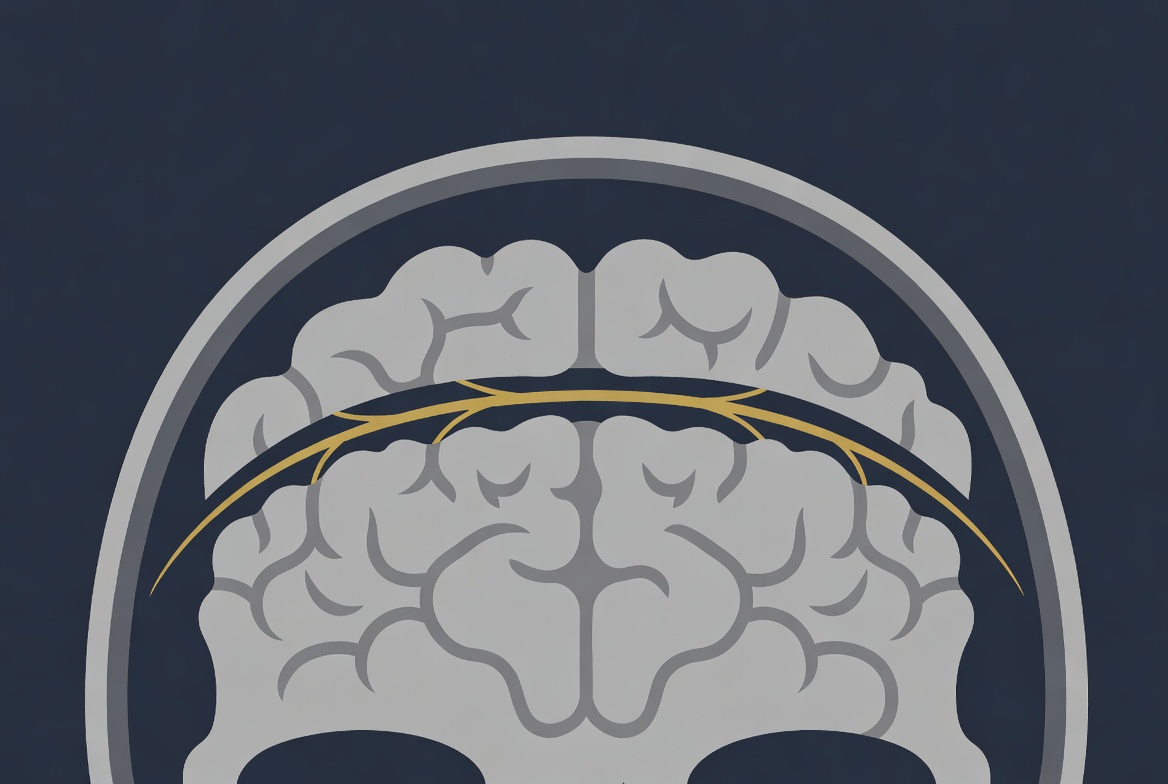
The skull does not fracture without a significant transfer of force, and that same force typically affects the brain and the blood vessels surrounding it. In the cases I have handled and reviewed over the years, a skull fracture is very often accompanied by a subdural hematoma — bleeding that collects between the brain and its outer covering — or an epidural hematoma, bleeding between the skull and that covering. These are not rare coincidences. The same impact that breaks bone frequently tears the small bridging veins that run along the surface of the brain, and that bleeding can be more dangerous, over time, than the fracture itself.
The vessels most often responsible for this bleeding are the bridging veins — small veins that cross the space between the brain surface and its outer covering. A sudden impact can tear these vessels even without breaking a single bone, which is part of why a subdural hematoma so often accompanies a skull fracture rather than replacing it as the primary injury. When a hematoma grows large enough to compress the brain, treatment frequently involves a surgical procedure called burr hole drainage, in which a small opening is made in the skull to relieve pressure and drain the accumulated blood — a far less invasive option than a full craniotomy, but still a serious neurosurgical intervention that reflects how significant the underlying injury really is.
Understanding a GCS Score
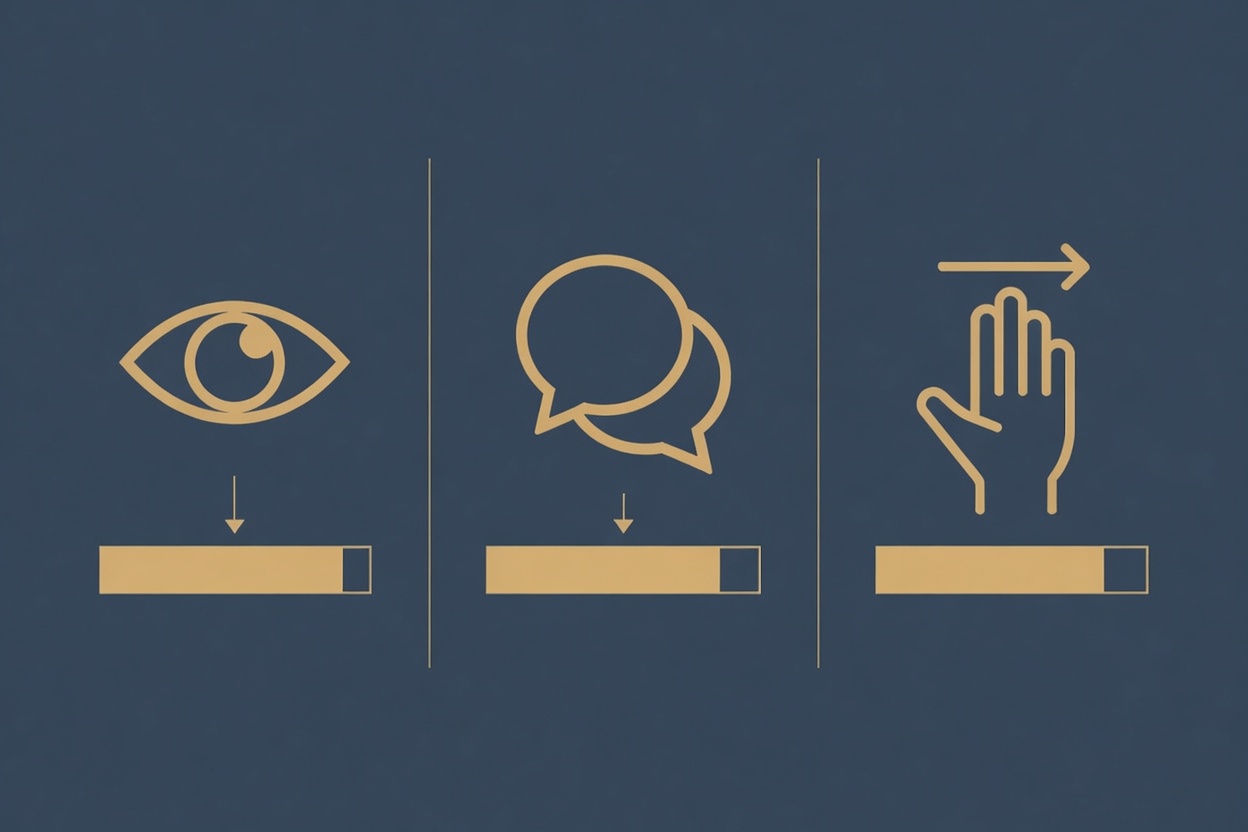
This is why a skull fracture patient is typically evaluated using the Glasgow Coma Scale (GCS), a 15-point scoring system doctors use to measure the severity of a head injury at presentation based on eye opening, verbal response, and motor response. A patient who arrives alert but scores in the low-to-mid teens on this scale, rather than a perfect 15, is already showing objective signs of brain involvement — even before imaging confirms it. A lower GCS score at presentation is one of the clearest, most objective pieces of medical evidence in a brain injury claim, because it was recorded in real time by treating medical staff, before any legal claim existed.
Physical Signs That Suggest a Skull Fracture
Not every skull fracture is obvious on first look, and some of the most telling signs do not appear immediately. Physicians and emergency responders are trained to look for several classic indicators, particularly with fractures at the base of the skull:
- Battle sign — bruising behind the ear, which can take hours to appear after the injury and often signals a basilar skull fracture.
- Periorbital ecchymosis (“raccoon eyes”) — bruising around both eyes, another delayed indicator of a base-of-skull fracture.
- Cerebrospinal fluid (CSF) leakage — clear or blood-tinged fluid draining from the nose or ears, which indicates a breach in the protective membrane around the brain and carries a serious infection risk.
- Hearing changes or dizziness — damage near the inner ear structures at the base of the skull can affect balance and hearing, sometimes permanently.
Because several of these signs develop hours after the initial trauma, a patient who is discharged from an emergency room with a “clean” initial exam can still be diagnosed with a skull fracture once these delayed signs appear or once follow-up imaging is obtained. This is one of the most important reasons I tell every client to keep every follow-up appointment, even after being told the initial injury looked minor.
The Critical First 24 to 48 Hours
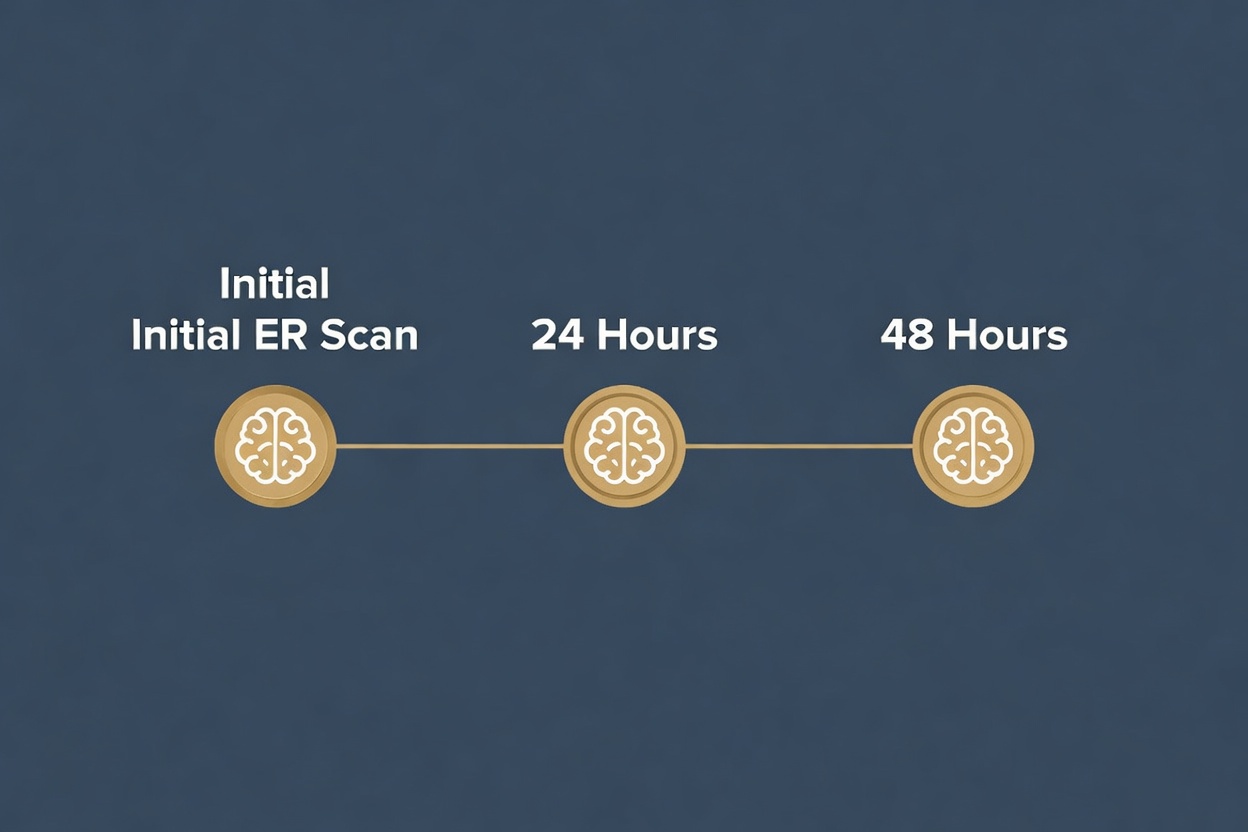
One of the most important and least understood facts about skull fracture and hematoma cases is that the initial CT scan does not always tell the whole story. It is common for a repeat CT scan performed a day after the injury to show that a hematoma has expanded, even in a patient who seemed neurologically stable at first. Symptoms that develop or worsen overnight — a new or escalating headache, nausea, confusion, slowed speech, or new sensory changes — are warning signs that treating physicians and families need to watch for closely during this window, not signs that can be dismissed as “just being shaken up.”
This delayed-worsening pattern is also legally significant. Insurance adjusters frequently point to an early, reassuring-sounding ER note to argue an injury was minor. A full understanding of the 24-to-48-hour clinical picture — repeat imaging, evolving neurological exams, and any need for extended monitoring — is often what separates a fairly valued brain injury claim from one that gets unfairly discounted.
Common Causes of Skull Fractures in the Bay Area
Skull fractures in my practice most often arise from:
- Car accidents — particularly high-speed collisions and rollover crashes, where the head strikes a window, pillar, or the roof.
- Pedestrian knockdowns — pedestrians struck in a crosswalk frequently suffer head impact against the vehicle, the pavement, or both. I cover the added complexity of proving these cases on my pedestrian brain injury page.
- Motorcycle accidents — even with a helmet, the forces involved in a serious motorcycle crash can be severe enough to fracture the skull.
- Falls from height — construction sites, unsafe stairwells, and defective premises conditions throughout San Francisco’s hilly terrain. I handle the added liability questions in these cases on my construction brain injury page.
- Falls on dangerous property — a slip-and-fall onto a hard surface, particularly for older adults, can generate enough impact force to fracture the skull even from standing height.
- Bicycle accidents — a cyclist thrown from a bike and striking pavement or a vehicle can suffer the same fracture patterns seen in motorcycle and pedestrian cases, particularly without a helmet or in a high-speed collision.
- Uber and Lyft rideshare accidents — the same violent forces as any serious vehicle collision, with the added complexity of California’s rideshare insurance framework.
- Construction and workplace accidents — falls from height, being struck by falling tools or materials, and scaffolding collapses are recurring causes of severe skull and brain trauma on Bay Area job sites.
Each of these fact patterns comes with its own evidence — a police collision report, surveillance or dashcam footage, a workplace incident report, or property maintenance records — and preserving that evidence quickly is often what determines whether a case can prove how the fracture actually happened.
In the most severe cases, a catastrophic skull fracture and brain injury does not survive the trauma, and the family is left navigating a wrongful death claim on top of an unimaginable loss. I handle these cases with the same trial-ready preparation as every other matter in my practice.
Government Claim Deadlines Can Apply — Do Not Assume You Have Two Years
Many skull fracture cases involve a public entity defendant — a city bus, a poorly maintained sidewalk, a dangerous condition on public property, or a public road defect. If a government entity is even partially responsible for the crash or fall that caused your skull fracture, California’s Government Claims Act imposes a dramatically shorter deadline than the standard two-year statute of limitations for personal injury. Under Government Code section 911.2, a claim against a public entity generally must be presented within six months of the incident — not two years. Missing this deadline can permanently bar an otherwise strong case, regardless of how severe the injury is. If there is any possibility a government entity was involved, do not wait to talk to an attorney.
What a Skull Fracture Case Is Worth
There is no standard settlement value for a skull fracture case. What a case is worth depends on the type of fracture, whether surgery was required, the severity of any underlying brain injury, the victim’s age and occupation, and the strength of the liability evidence. Because skull fractures so often come with an underlying brain injury, the value of a claim typically extends well beyond emergency room and surgical bills.
Past and future medical expenses — Emergency treatment, neurosurgical care, any surgical intervention required to repair the fracture or relieve pressure on the brain, ongoing neurological monitoring, imaging, and rehabilitation, including cognitive and physical therapy.
Lost income and earning capacity — Wages lost during recovery, and, in cases involving permanent cognitive or physical impairment, the loss of future earning capacity, calculated by a vocational expert and an economist.
Life care costs — In the most severe cases, a brain injury permanently affects a person’s ability to work or live independently. A life care planner projects the cost of attendant care, ongoing therapy, and medical monitoring over the person’s remaining lifetime.
Pain and suffering — Frequently the largest component of damages in a serious brain injury case, given the permanent impact these injuries can have on a person’s life, relationships, and sense of self.
When a skull fracture leaves someone with permanent cognitive, physical, or vocational limitations, a full evaluation typically involves a team well beyond the treating physician — a neuropsychologist to document cognitive deficits, a vocational expert to assess whether the person can still work in their prior occupation or any occupation at all, an economist to calculate the present value of lost future earnings, and a life care planner to project future costs. Insurance adjusters almost never volunteer this level of analysis on their own — it takes an attorney who knows how to build the record to get a case properly valued at this level.
I have recovered $25 million+ for injured clients, including a $6 million pedestrian TBI settlement involving a skull fracture in three places and a $2,185,000 TBI recovery in a separate case. You can review these and other case results — every skull fracture and brain injury case is different, and an honest evaluation requires a full understanding of the medical record, not just the initial ER note.
How I Handle Skull Fracture Cases
Brain injury cases require more than legal skill. They require a lawyer who understands the medicine, knows how to work with neurosurgeons, neurologists, and life-care planners, and who prepares every case as if it will go before a jury — because that preparation is what makes insurance companies negotiate seriously. I personally handle every case I accept from intake through resolution — no associate handoffs, no case manager screening calls. When insurance companies know a case is trial-ready, they negotiate differently.
For San Francisco’s Spanish-speaking community, I provide bilingual representation in English and Spanish directly, with no interpreter and no handoff to staff. My full brain injury practice page covers the broader range of traumatic brain injuries I handle beyond skull fractures specifically.
How Insurance Companies Defend Skull Fracture Cases
Before you accept any offer, it helps to understand the playbook insurance companies run in skull fracture cases. I have seen it from the other side of the table.
They call it “just a broken bone.” Even when imaging shows a fracture accompanied by bleeding, a low GCS score, or documented cognitive symptoms, the defense will characterize the injury in early filings as a bone injury that heals, not a brain injury. The goal is to set a tone, early, that minimizes what actually happened.
They point to a normal early scan and ignore what came after. Because hematomas can expand over the first 24 to 48 hours, an insurer will often anchor on the first, most reassuring-sounding ER note and downplay any repeat imaging, evolving neurological exam findings, or delayed symptoms that developed afterward.
They argue that no surgery means no serious injury. A linear fracture that heals without surgical intervention does not mean the underlying brain injury was minor. Insurers routinely conflate not needing surgery with not being seriously hurt, when the two are medically unrelated questions.
They hire their own doctor for an evaluation. These exams are arranged and paid for by the insurance company, and the resulting report is frequently written to minimize the injury, regardless of what your own treating physicians documented in real time.
They review your medical history for anything unrelated. Before making a serious offer, insurers routinely request prior medical records looking for any past headaches, dizziness, or cognitive complaints they can use to argue your current symptoms pre-existed the accident. California law entitles you to recover for the aggravation of a pre-existing condition, but this tactic complicates the damages picture if you are unrepresented.
They dispute the value of your medical bills. California law generally limits recovery to the amount actually paid for care rather than the full amount billed, and defense attorneys use this rule to argue your damages are lower than they appear.
Understanding this approach in advance is why experience matters. I build every skull fracture case from day one to withstand it.
Talk to a San Francisco Skull Fracture Lawyer for Free
If you or a family member suffered a skull fracture in an accident, do not assume the injury is limited to the bone. Call (415) 851-4557 or request a free case review today. You pay no attorney fees unless I recover for you. Se habla español.
Frequently Asked Questions
Does every skull fracture require surgery?
No. Linear fractures — the most common type — often heal without surgical intervention. Depressed and compound fractures are much more likely to require surgery to relieve pressure on the brain, repair the skull, or address a break in the skin that creates infection risk.
Can I have a serious brain injury even if my skull fracture does not require surgery?
Yes. The same force that fractures the skull frequently causes bleeding or bruising to the brain underneath, regardless of whether the fracture itself needs surgical repair. A minor fracture on imaging does not mean a minor brain injury.
Why did my symptoms get worse a day after my accident?
This is a well-documented pattern. A hematoma (bleeding inside the skull) can continue to expand for 24 to 48 hours after the initial injury, even when the first CT scan and neurological exam looked reassuring. This is why repeat imaging and close monitoring in the first two days matter so much.
What is the Glasgow Coma Scale, and why does it matter for my case?
The Glasgow Coma Scale (GCS) is a 15-point test doctors use to measure the severity of a head injury based on eye opening, verbal response, and motor response. A GCS score below 15 at presentation is an objective medical sign of brain involvement, and it is often an important piece of evidence in valuing a brain injury claim.
Will I need reconstructive surgery for a depressed or compound skull fracture?
It depends on the fracture and the surgeon assessment. Depressed fractures are often surgically elevated to relieve pressure on the brain and restore the normal contour of the skull. Compound fractures require surgical cleaning and repair to reduce infection risk. Any reconstructive or cranioplasty work needed is a compensable part of your medical damages.
What if a government entity, like the city or a transit agency, caused my fall or accident?
California Government Claims Act requires a formal written claim within six months of the incident under Government Code section 911.2 — far shorter than the standard two-year deadline for private defendants. If a public entity may be responsible, contact an attorney immediately to avoid losing your right to recover.
How much does it cost to hire a skull fracture lawyer?
I handle these cases on a contingency fee basis, meaning you pay no attorney fees upfront and owe nothing unless I recover compensation for you. The initial consultation is always free.
Is my case affected by my immigration status?
No. California civil courts do not decide personal injury cases based on immigration status, and your right to recover compensation for a skull fracture or brain injury does not depend on it. I provide full representation in Spanish, directly, for clients who prefer it.
Contact a San Francisco Skull Fracture Lawyer Today
If a skull fracture has left a loved one requiring ongoing care, my brain injury caregiver guide covers what to expect at home and how a claim accounts for that caregiving burden.
If you or a family member suffered a skull fracture in an accident caused by someone else, I want to hear from you. I offer free consultations, I work on a contingency fee basis, and I have the experience and resources to handle serious brain injury cases from investigation through trial. Call me at (415) 851-4557 or fill out the contact form. Hablo español directamente — para asistencia en español, visite mi página en español. I represent injured clients throughout San Francisco and the Bay Area.