

When a vehicle strikes a pedestrian, the head takes the worst of it. There is no seatbelt, no airbag, no steel frame — just the impact with the vehicle, and then often a second impact with the pavement. That is why pedestrian collisions produce some of the most severe traumatic brain injury cases I see, and why two of my largest recoveries — a $6 million pedestrian TBI settlement and a $2,185,000 pedestrian brain injury settlement — both came from exactly this kind of case. If you or a family member was hit by a car in San Francisco and something has not been right since, this page explains what you need to know.

Why Pedestrian Collisions Cause the Most Serious Brain Injuries
A pedestrian struck at even moderate city speeds absorbs the full force of the collision with no protection. The brain injuries that follow come in two forms: the visible ones — skull fractures, bleeding — and the invisible ones, where the brain is shaken violently inside the skull. Both can be devastating. The invisible ones are the injuries insurance companies fight hardest to deny.
These cases overlap heavily with the car accident cases I handle across the city, and the same danger applies to cyclists — an unprotected person against a vehicle. But pedestrian cases carry one extra dimension: the injured person often cannot remember the collision at all, which makes early, independent investigation of fault essential.
The Normal Brain Scan Misconception
Here is the single most important thing to understand about a pedestrian head injury: a normal CT scan does not mean your brain is fine.
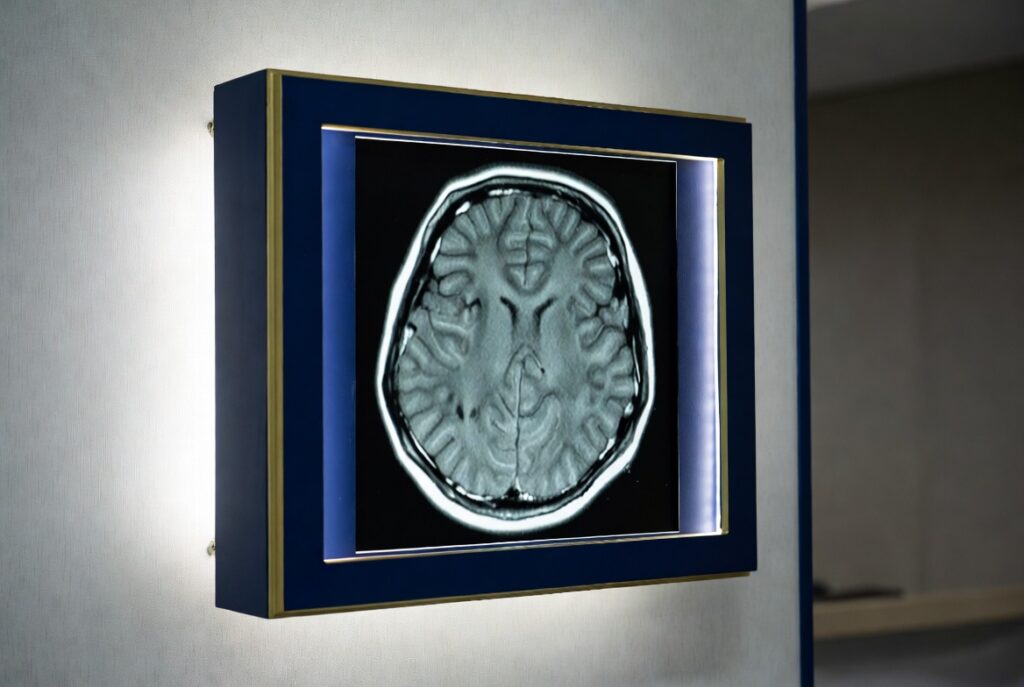
Emergency room CT scans are designed to find life-threatening emergencies — skull fractures and brain bleeds that need surgery right now. They routinely miss the microscopic damage of a mild or moderate traumatic brain injury, where the injury is to the brain’s wiring rather than to structures a CT can see. A person can be discharged with a “normal” scan and still face months or years of headaches, memory problems, personality changes, light sensitivity, and an inability to work.
Insurance companies know this, and they use the normal scan against victims constantly: no visible injury, no payout. I build these cases the right way — with neuropsychological testing, advanced imaging where appropriate, treating-physician testimony, and testimony from the people who knew you before and after. The same applies to concussion symptoms after a crash that get dismissed as minor, and to a subdural hematoma that develops slowly in the days after the collision.
Watch for Delayed Symptoms
Brain injury symptoms after a pedestrian collision often surface days or weeks later, once the adrenaline fades and normal life resumes. Take these seriously and get medical care if you notice:
- Persistent or worsening headaches
- Memory gaps, brain fog, or trouble concentrating
- Personality changes, irritability, or depression noticed by family
- Sensitivity to light or noise
- Sleep changes — sleeping far more, or unable to sleep
- Dizziness, balance problems, or nausea
Your Rights as a Pedestrian in California
California Vehicle Code section 21950 requires drivers to yield the right-of-way to pedestrians crossing within any marked crosswalk or unmarked crosswalk at an intersection — and it goes further, requiring drivers to exercise due care for the safety of any pedestrian on the roadway. A driver who fails to see you is not excused because you were “hard to see.” And even if an insurance company argues you were partly at fault — crossing mid-block, for example — California’s pure comparative negligence rule means you can still recover; your compensation is reduced by your share of fault, not eliminated.
Hit by a Muni Bus or City Vehicle? You May Have Only Six Months
If the vehicle that struck you was a Muni bus, a city or county vehicle, or any other government-operated vehicle — or if a dangerous public sidewalk or roadway condition contributed to the collision — your case falls under the California Government Claims Act. Under Government Code section 911.2, you generally must file a written government claim within six months of the injury, far shorter than the ordinary two-year deadline. Missing that window is almost always fatal to the claim, no matter how severe the brain injury. If a public entity is involved in any way, contact an attorney immediately.
What a Pedestrian Brain Injury Case Is Really Worth
Brain injuries are expensive injuries — not just the emergency care, but years of neurology visits, cognitive rehabilitation, lost earning capacity, and the changes to daily life that never show up on a bill. When those changes mean a spouse or family member becomes a full-time caregiver, our brain injury caregiver guide covers what to expect at home and how a claim accounts for that caregiving burden. Insurance minimums do not come close, which is why I also examine every other source of recovery, including your own underinsured motorist coverage when the driver’s policy is too small for the harm done. I have recovered $25 million+ for Bay Area clients, and the largest recoveries in my career have come from pedestrian brain injury cases — because when these cases are built properly, their full value becomes undeniable.
Why You Need a Lawyer Who Understands Brain Injuries
A pedestrian TBI case is really two fights: proving the driver was at fault, and proving an injury the defense will call invisible. As a trial-tested attorney practicing since 2009, I prepare the brain injury cases I handle as if they will be tried — with the medical experts, imaging, and witness testimony to make the invisible injury visible to an insurer or a jury. And as a San Francisco pedestrian accident lawyer who has recovered seven-figure results in these exact cases, I know what they are worth. For Spanish-speaking victims and families, I provide representation personally as a direct Spanish-speaking attorney — no interpreter, no handoff.
Talk to a San Francisco Pedestrian Brain Injury Lawyer for Free
If you or someone you love was hit by a vehicle and is not the same since, do not let a “normal” scan or a fast settlement offer decide the case. Call (415) 851-4557 or schedule a free case review today. Se habla español.
Frequently Asked Questions
Yes. Emergency CT scans are designed to detect bleeding and fractures that need immediate surgery. They frequently miss mild and moderate traumatic brain injuries, where the damage is to the brain’s connections rather than structures a CT can see. Ongoing symptoms like headaches, memory problems, and personality changes after a normal scan are consistent with a real, compensable brain injury.
Delayed onset is common with brain injuries. Symptoms often emerge or worsen over days or weeks as swelling develops and the demands of normal life return. Get medical care as soon as symptoms appear and document everything — the gap between the collision and the diagnosis is something an experienced attorney knows how to address.
Very likely yes. California drivers owe a duty of care to pedestrians on the roadway, not only in crosswalks, and California’s pure comparative negligence rule means that even if you share some fault, you can still recover — your compensation is reduced by your percentage of fault, not eliminated.
It depends on the severity and permanence of the injury, medical costs past and future, lost earning capacity, and the impact on your daily life. Serious brain injury cases are frequently seven-figure cases when built properly. I have recovered $6,000,000 and $2,185,000 in separate pedestrian brain injury cases.
Claims against government entities fall under the California Government Claims Act, which generally requires a written claim within six months of the injury — far shorter than the standard two-year deadline. Contact an attorney immediately if any public entity or public property condition is involved.
This is common — California’s minimum liability limits are far below the cost of a serious brain injury. Your own underinsured motorist (UIM) coverage may provide additional recovery, and I examine every available policy and defendant in every case.
No. California civil courts do not decide injury cases based on immigration status, and your discussions with your attorney are confidential. Your right to recover for an injury does not depend on your immigration status.