

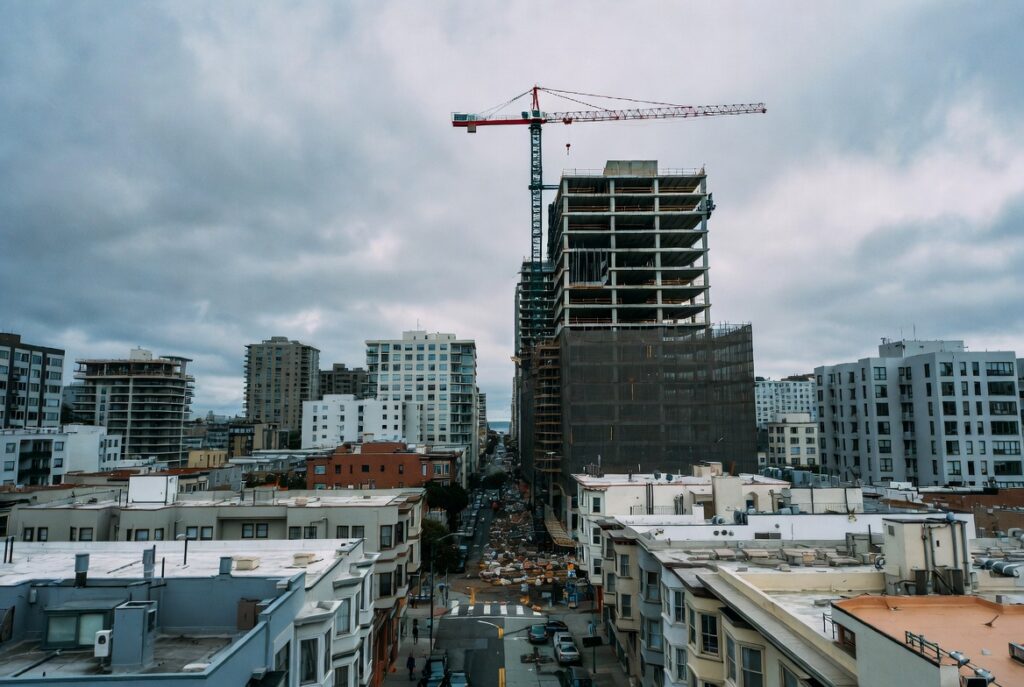
San Francisco is a city under constant construction — high-rise projects downtown, transit work, and residential builds in every neighborhood. Construction is also one of the most dangerous industries for the human brain: falls from height, falling tools and materials, and struck-by incidents with vehicles and equipment all deliver exactly the kind of force that causes a traumatic brain injury. If you or a family member suffered a head injury on a Bay Area job site, the single most important thing to understand is this: workers’ compensation is probably not your only source of recovery — and the difference can be enormous.
Workers’ Comp Is Not the Whole Case: Third-Party Claims
If you were hurt working on a construction site, workers’ compensation covers your medical care and a portion of lost wages regardless of fault — but it pays nothing for pain and suffering, and its wage benefits are capped well below what a serious brain injury actually costs a family. Workers’ comp is also, generally, your only remedy against your own employer.
But construction sites are full of parties who are not your employer. When someone other than your employer caused or contributed to your injury, you may have a separate third-party personal injury claim — with full damages, including pain and suffering — on top of your workers’ comp benefits. Common third-party defendants on a construction site include:
- A subcontractor from a different company whose worker dropped the load, drove the equipment, or created the hazard
- The manufacturer of defective equipment — a failed lift, a defective ladder, a tool that malfunctioned
- A negligent driver who struck you in or around the work zone — these overlap with the vehicle collision cases and commercial vehicle cases I handle
- In some circumstances, a property owner or general contractor who retained control over the unsafe condition — an area of California law with important limits that requires case-by-case analysis
Identifying whether a third-party claim exists is the most valuable thing an attorney can do for an injured construction worker — it is the difference between capped workers’ comp benefits and full compensation.
Why Hard Hats Don’t End the Inquiry
A hard hat protects against penetration and blunt impact — it does not stop the brain from moving violently inside the skull. Workers wearing full protective equipment still suffer concussions and serious brain injuries from falls and struck-by incidents, because the injury mechanism is the sudden acceleration of the brain itself. And as I explain to every brain injury client: a normal emergency room CT scan does not mean your brain is fine. CT scans find bleeds and fractures — they routinely miss the diffuse damage of a mild or moderate TBI. Ongoing headaches, memory problems, irritability, and an inability to focus after a jobsite head injury are consistent with a real concussion or worse, including a slowly developing subdural hematoma in the days after the incident. Get medical care, and take delayed symptoms seriously. Falls from height and struck-by incidents often produce skull fractures and brain bleeding that workers’ comp alone does not fully value.
Injured on a Public Works Project? You May Have Only Six Months
A large share of Bay Area construction is public work — city and county projects, school district construction, Caltrans roadway work, and transit projects. If a government entity’s negligence contributed to your injury — a dangerous condition on public property, a public agency’s vehicle, or hazards on a public works site — your claim falls under the California Government Claims Act. Under Government Code section 911.2, you generally must file a written government claim within six months of the injury, far shorter than the ordinary deadlines. On any project with a public entity involved, talk to an attorney immediately — this deadline is unforgiving.
Your Immigration Status Does Not Change Your Rights
San Francisco’s construction workforce is built on immigrant labor, and I represent many Spanish-speaking construction workers and their families. Two things every injured worker should know. First, your right to workers’ compensation benefits and to bring a personal injury claim does not depend on your immigration status — California law protects injured workers regardless of status, and California Government Code section 7284 reflects the state’s policy of protecting immigrant communities. Second, everything you tell your attorney is confidential. Fear of asking for help is exactly what some employers and insurers count on. Do not let it cost your family the recovery you are owed.
What a Construction Brain Injury Case Is Worth
Brain injuries are among the most expensive injuries a person can suffer — emergency care, neurology, cognitive rehabilitation, lost earning capacity in a physical trade you may not be able to return to, and the changes to family life that never appear on a bill. When those changes mean a family member becomes a full-time caregiver, my brain injury caregiver guide covers what to expect at home and how a claim accounts for that caregiving burden. I have recovered $25 million+ recovered for Bay Area clients, and my largest results — $6 million and $2,185,000 brain injury recoveries — reflect what traumatic brain injury cases are worth when they are built properly. Every case is different, but the pattern holds: TBI cases are undervalued until someone proves what the injury really took.
Why You Need a Lawyer Who Understands Both Systems
A construction brain injury case lives at the intersection of two systems — workers’ compensation and third-party liability — and the the brain injury cases I handle require making an invisible injury visible with neuropsychological testing, medical experts, and before-and-after witness testimony. As a trial-tested attorney practicing since 2009, I build every case as if it will be tried. And for San Francisco’s Spanish-speaking construction workers, I handle everything personally as a direct Spanish-speaking attorney — consultations, depositions, and trial, with no interpreter and no handoff.
Talk to a Construction Brain Injury Lawyer in San Francisco for Free
If a jobsite head injury has changed you or someone in your family, don’t settle for what workers’ comp alone will pay. Call (415) 851-4557 or schedule a free case review today. Se habla español.
Frequently Asked Questions
Often yes. Workers’ compensation is generally your only remedy against your own employer, but if a different party caused or contributed to your injury — a subcontractor from another company, an equipment manufacturer, a negligent driver, or in some cases a property owner or general contractor — you may have a separate third-party personal injury claim with full damages, including pain and suffering.
Workers’ comp pays regardless of fault but is limited — medical care and partial wage replacement, with nothing for pain and suffering. A third-party claim requires proving fault but allows full compensation: all lost earnings, future care, and pain and suffering. Many construction injury cases involve both at the same time.
Yes. Hard hats protect against impact and penetration, but a brain injury happens when the brain moves violently inside the skull — something no helmet fully prevents. Workers in full protective equipment suffer concussions and serious TBIs from falls and struck-by incidents regularly.
No. Emergency CT scans are designed to catch bleeding and fractures that need immediate surgery. They routinely miss mild and moderate traumatic brain injuries. Ongoing headaches, memory problems, personality changes, or trouble concentrating after a jobsite head injury are consistent with a real, compensable brain injury.
No. California protects injured workers regardless of immigration status — both workers’ compensation benefits and personal injury claims are available to you, and your conversations with your attorney are confidential.
Claims involving government entities fall under the California Government Claims Act, which generally requires a written claim within six months of the injury — far shorter than the usual deadlines. If any public entity or public property is involved in your injury, contact an attorney immediately.
Nothing upfront. This firm works on a contingency fee basis — no attorney fees unless I recover compensation for you. The initial consultation is free, in English or Spanish.