

John Roach, Esq. | July 22, 2026 | California Law \ Car Accidents
San Francisco Motorcycle Accident Lawyer: Lane Splitting, the Helmet Law, and Beating the Bias Against Riders

Riders in San Francisco face a double injustice. First, when a careless driver hits them, the lack of a steel cage means the injuries are far more severe than they would be in a car. Second, they then have to overcome a stubborn bias — the assumption, shared by some insurance adjusters and even some jurors, that the motorcyclist must have been reckless. Neither California law nor the facts support that assumption, but it has to be confronted head-on, with evidence, from the first week of the case. As a San Francisco motorcycle accident lawyer practicing since 2009, my job is to put the fault back where it belongs — on the driver who caused the crash — and that work is part of the broader Bay Area car accident representation I provide to injured people across the region.
Lane Splitting Is Legal in California
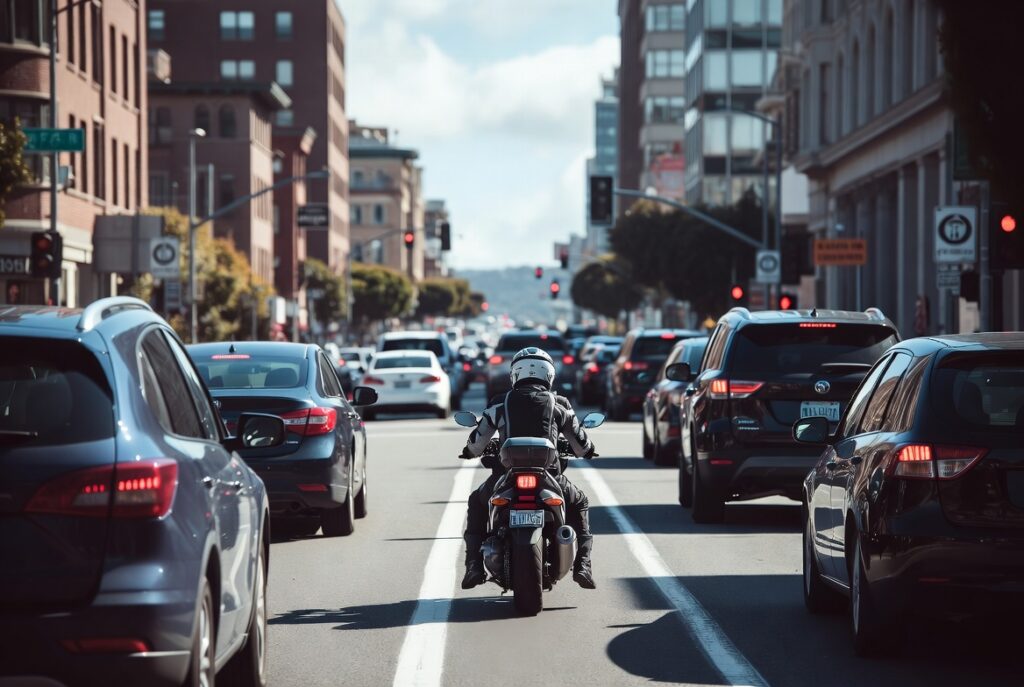
Let’s clear up the most common myth first. Lane splitting — riding between lanes of slower or stopped traffic — is legal in California. The state formally authorized it under Vehicle Code section 21658.1, making California the first state in the country to do so, and the California Highway Patrol has published safety guidelines for doing it responsibly. That matters enormously for a case, because insurers love to argue that a rider who was lane splitting was automatically at fault. They were not. A rider lane splitting lawfully has exactly the same right to recover as any other road user.
Of course, lane splitting must be done with reasonable care, and the specific facts — speed differential, spacing, weather, traffic conditions — always matter. But the legal starting point is that a lane-splitting accident is not the rider’s fault simply because the rider was between lanes. A driver who changes lanes without checking a mirror, opens a door into traffic, or drifts across a lane line into a splitting rider can be held fully responsible. When an adjuster tells a lane-splitting rider “you shouldn’t have been there,” that adjuster is misstating California law, and I say so in writing.
The Helmet Law and How It Affects Your Recovery
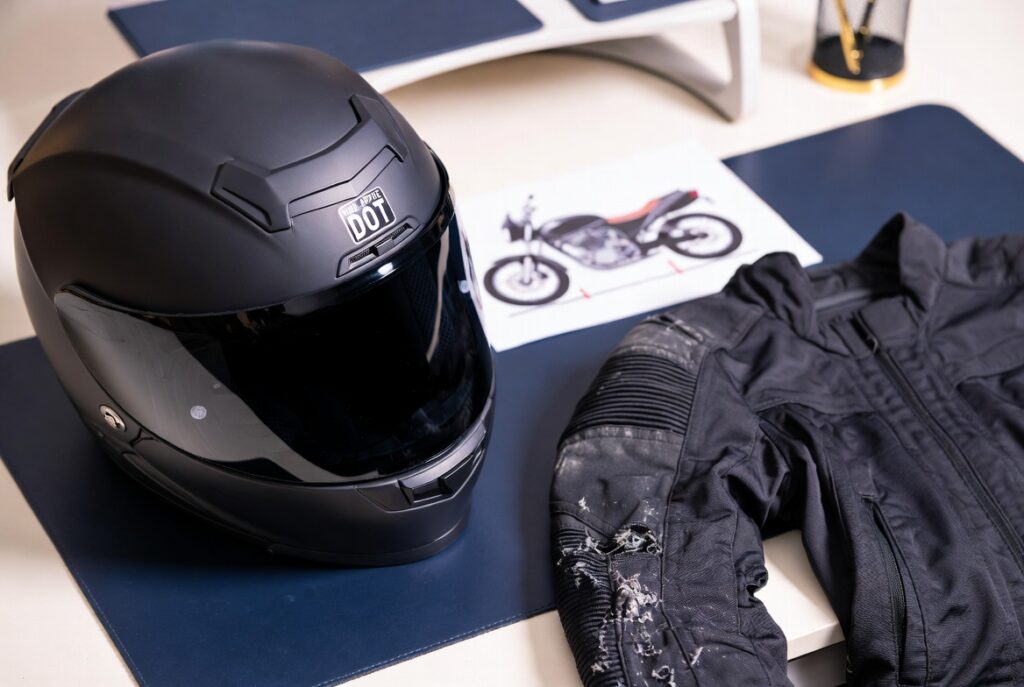
California has a universal helmet law: all motorcycle riders and passengers must wear a DOT-compliant helmet under Vehicle Code section 27803. This affects an injury case in two ways. If you were wearing a helmet, that fact helps neutralize any attempt to shift blame onto you — you were following the law, and your documented compliance becomes part of the credibility that wins these cases. If you were not wearing one, an insurer may argue that your head injuries would have been less severe with a helmet. That is a comparative fault argument under Li v. Yellow Cab Co. (1975), and it is aimed at one thing: reducing what the insurance company pays.
Even then, not wearing a helmet does not erase your claim. California’s comparative fault system reduces damages by a percentage — it does not bar recovery — and the argument only reaches head-injury damages, not your broken bones, surgeries, or lost wages. Because motorcycle crashes so often produce a concussion, a more serious traumatic brain injury, or spinal cord injury, how this argument is handled can be worth a great deal. In one spinal case, careful medical documentation and refusal to accept the insurer’s framing produced the $650,000 spinal injury settlement.
How Most San Francisco Motorcycle Crashes Happen
The data and my own experience since 2009 point the same direction: the car driver is usually at fault. The recurring patterns I see in the car accident cases I handle across San Francisco are:
- The left-turn collision. The single most common motorcycle crash — a car turns left across the path of an oncoming rider in violation of Vehicle Code section 21801, then tells the officer “I didn’t see them.”
- Unsafe lane changes. A driver merges into a rider occupying a lane the driver never checked — the mirror-and-blind-spot failure that also endangers anyone receiving cyclist injury representation on the same streets.
- Dooring. A parked driver opens a door into a rider’s path without looking, in violation of Vehicle Code section 22517.
- Following too closely. A distracted driver causes a rear-end collision that would be a fender-bender between two cars but is devastating for a rider.
- Rideshare and delivery traffic. Uber and Lyft drivers stopping suddenly, double-parking, and pulling U-turns are a growing cause of rider injuries — cases where rideshare accident representation brings a $1 million commercial policy into play.
“I didn’t see the motorcycle” is an admission of inattention, not a defense. A driver’s duty under California law is to see what is there to be seen. Establishing that failure — with scene evidence, vehicle data, and witnesses — is the core of every motorcycle case I build.
When the Road Itself Causes the Crash: MUNI Tracks, Potholes, and the 6-Month Government Deadline
San Francisco presents a hazard most cities do not: exposed rail tracks. MUNI streetcar and light-rail tracks run flush with the pavement across the city, and a motorcycle tire that catches a wet rail groove can go down instantly with no other vehicle involved. Potholes, uneven pavement from utility cuts, missing signage, and defective road design cause rider crashes the same way. These are not “single-vehicle accidents” in any meaningful sense — they are dangerous-condition-of-public-property claims against the city, the SFMTA, or Caltrans.
Here is the trap. If a dangerous roadway condition — such as exposed MUNI rail tracks, a pothole, or a defective road design — caused or contributed to your motorcycle crash in San Francisco, you generally must file a written government claim within six months of the crash under Government Code section 911.2. You cannot sue the public entity until that claim is filed and acted on, and if the agency rejects the claim, Government Code section 945.4 gives you a second, short window to file suit. These deadlines are far shorter than the two-year statute most people assume applies, and missing the six-month claim deadline can end an otherwise strong case before it begins. If there is any chance a public entity’s roadway played a role in your crash, the six-month clock is the first thing to calendar.
Overcoming the Bias Against Riders
The hardest part of a motorcycle case is often not the law — it is the prejudice. Some adjusters and jurors arrive assuming the rider was speeding or weaving. I counter that with evidence: scene reconstruction, vehicle and traffic data, independent witnesses, and a clear, factual account of how the driver — not the rider — caused the crash. Preparing the case as if it will be tried, with credible riders presented as the careful road users most of them are, is what dismantles the stereotype. That trial-first preparation is why insurers who know my 9-for-9 verdict record take rider cases from this office seriously.
What Insurance Companies Do in Motorcycle Cases
Insurers run the same playbook in nearly every rider case. They call within days with a fast, low settlement offer — before the full extent of a head or spine injury is even diagnosable. They ask for a recorded statement hoping to capture a stray phrase (“I was moving with traffic”) they can twist into an admission of speed. They lean on the lane-splitting myth and the helmet argument to inflate your share of comparative fault. And they value the case as if road rash and fractures were the whole injury, ignoring that even a “moderate” crash can produce lasting cognitive symptoms from a brain injury. Every one of these tactics works better against an unrepresented rider than a represented one — which is exactly why the calls come so fast.
What to Do After a Motorcycle Accident
- Call 911 and get medical care immediately; adrenaline and protective gear can mask serious injuries, and delayed treatment is the first thing an insurer uses against you.
- Photograph the scene, both vehicles, the roadway (including any tracks, potholes, or debris), your gear, and your injuries.
- Preserve your helmet and damaged gear as evidence — do not throw anything away.
- Get witness names and numbers — independent witnesses are the most powerful antidote to rider bias.
- Do not admit fault, apologize, or estimate your speed at the scene.
- Decline recorded statements to the other insurer until you have spoken with an attorney — and remember the six-month deadline if a public roadway condition was involved.
What an Injured Rider Can Recover
A rider injured by a negligent driver in California can pursue past and future medical expenses, lost wages and diminished earning capacity, and compensation for pain, suffering, and the loss of the life you had before the crash. Because riders absorb the full force of an impact, these cases frequently involve catastrophic harm — I have handled severe traumatic brain injury cases including a $6 million pedestrian TBI settlement, and the same injury mechanics apply to anyone hit as a pedestrian or on two wheels. In the most tragic cases, when a driver kills a rider, the family can bring a claim for the loss of a family member. And if the at-fault driver carries minimal insurance — common in these cases — your own uninsured/underinsured motorist coverage may be the policy that actually pays.
Why a San Francisco Motorcycle Accident Lawyer Matters
Riders deserve an advocate who does not share the insurer’s prejudice. With extensive trial experience since 2009, I build motorcycle cases to defeat the “reckless rider” narrative, document the full scope of the injuries, and hold the at-fault driver — or the public entity that let the roadway become a hazard — fully accountable. I am a solo, bilingual attorney: every client works with me personally, from the first call to the resolution, in the areas I serve across the Bay Area. For Spanish-speaking riders, I am a direct Spanish-speaking attorney — no interpreter, no handoff — and every service I describe here is available in Spanish through my abogado de lesiones personales en San Francisco resources. Everything is handled on contingency: you pay nothing unless I recover for you.
Talk to a Motorcycle Accident Lawyer for Free
If a driver hurt you while you were riding in San Francisco, don’t let anyone tell you it was your fault for being on a motorcycle — and don’t let a six-month government deadline pass unnoticed. Call (415) 851-4557 or talk to a personal injury attorney in a free, confidential consultation. Se habla español.
Frequently Asked Questions
Yes. California authorized lane splitting under Vehicle Code section 21658.1 and was the first state to do so, with CHP safety guidelines. A rider lane splitting lawfully has the same right to recover as any other road user; it does not automatically make the rider at fault.
No, though it can complicate it. California requires a DOT helmet under Vehicle Code section 27803. If you were not wearing one, an insurer may argue your head injuries would have been less severe, which can reduce head-injury damages under comparative fault — but the at-fault driver is still responsible for causing the crash, and your other damages are unaffected.
A car turning left across the path of an oncoming rider is the most common motorcycle crash, a violation of Vehicle Code section 21801. “I didn’t see the motorcycle” is an admission of inattention, not a defense.
That can be a dangerous-condition claim against the city, SFMTA, or Caltrans — and it comes with a strict deadline. You generally must file a written government claim within six months of the crash under Government Code section 911.2 before you can sue the public entity. Missing that deadline can end the case, so act quickly.
Many adjusters and jurors carry a bias that riders are reckless. Overcoming it takes evidence — scene reconstruction, vehicle data, and independent witnesses — to show the driver, not the rider, caused the crash.
Without the protection of a car, riders frequently suffer traumatic brain injuries, spinal injuries, fractures, and road rash. Even a low-speed collision can cause life-altering harm, which is why full medical documentation matters before any settlement discussion.
This firm works on a contingency fee — no fees up front, and you owe attorney fees only if I recover for you. The consultation is free.
No. California civil courts decide cases on the facts, not immigration status, and your discussions with your attorney are confidential. Your right to recover does not depend on your status.