

John Roach, Esq. | August 24, 2026 | California Law
Claims Against California Government Entities: A San Francisco Lawyer’s Guide to the Six-Month Deadline That Kills Cases

When a government entity injures you, two questions matter more than any others — and they are the two questions injured people actually ask when they call my office. First: does this lawyer really sue the government? Plenty of firms quietly avoid these cases because the rules are unforgiving. Second: does this lawyer have experience with my kind of injury? A subdural hematoma is the same devastating injury whether it came from a broken city sidewalk, a driver working for a public agency, or a rear-end collision on the freeway — and the person handling your case needs to know both the injury and the defendant.
If you’re still in the first days after your accident, my free guide, The First 10 Days After a Car Accident in San Francisco, walks through the rest of the checklist — including this six-month government claims deadline.
For my office, the answer to both questions is yes. I have been suing public entities and litigating catastrophic injuries as a San Francisco car accident lawyer and premises liability attorney since 2009, and I have recovered more than $25 million for Bay Area clients — including a $6 million pedestrian TBI settlement. This guide is the master reference for how claims against California government entities actually work: the deadline that kills more cases than any other, the legal standard, the evidence, the defenses, and the strategy questions most people never hear about until it is too late.
You Cannot Just Sue the Government Like a Private Party
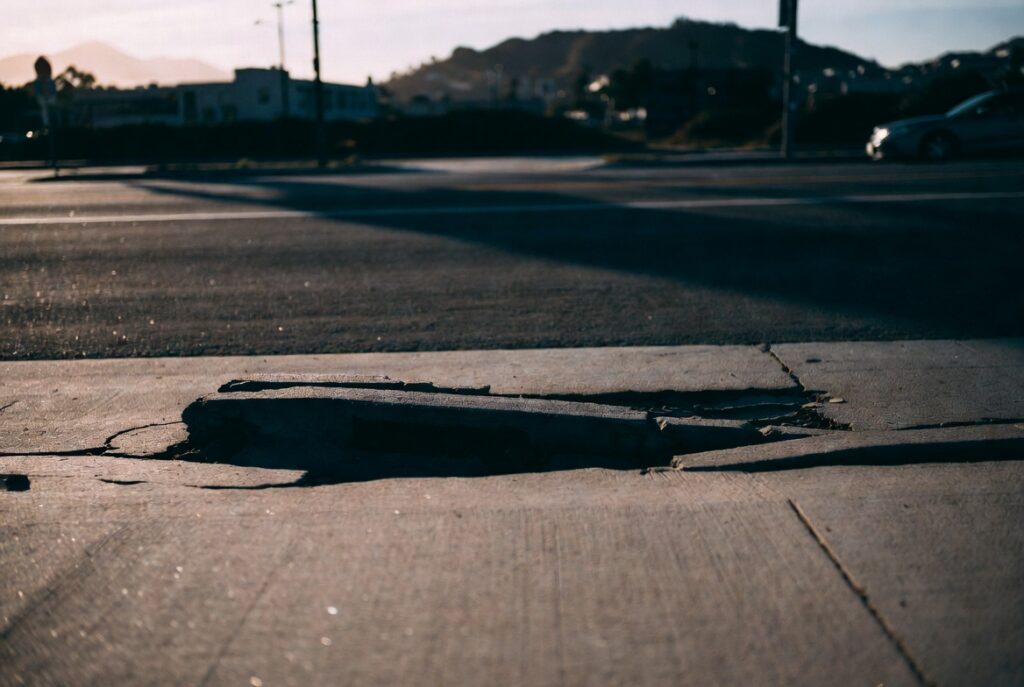
Most people assume that if a city, county, or public agency let something dangerous sit on a sidewalk, street, or public building for months, they can sue like they would any other negligent property owner. They cannot — not directly, and not on the timeline they expect. Claims against public entities are governed by the California Government Claims Act, a statutory scheme with its own prerequisites, its own deadlines, and its own defenses. Whether you were hit as a pedestrian by a government vehicle, injured on a MUNI bus (my full MUNI bus accident guide covers transit cases in detail), or hurt by a defect on public property, the same machinery applies.
The Six-Month Deadline: Government Code § 911.2
Before you can file a lawsuit against a California public entity, you must first present a formal written government claim to that entity. This is not optional paperwork — it is a jurisdictional prerequisite, and the deadlines stack and shorten at every stage:
- Six months to file the claim. Under Government Code § 911.2, a claim for personal injury or wrongful death generally must be presented within six months of the incident. The claim must contain the information required by Government Code § 910 — and many entities require their own specific claim form. Filing the wrong form, or serving the wrong entity, can be as fatal as filing nothing.
- The entity has 45 days to respond. It typically rejects the claim or lets the time lapse.
- A rejection starts a new, shorter clock. If the entity formally rejects the claim and mails proper notice, you generally have only six months from that mailing to file suit — far shorter than California’s standard two-year injury deadline.
- Missed the six months? There is a narrow lifeline. A discretionary application for leave to present a late claim must be made within a reasonable time and no later than one year from the incident. It is a backstop, not a plan.
Six months sounds like a long time until you are also waiting on medical records, identifying every responsible party, and gathering evidence before the government has any reason to preserve it. In my office, the six-month clock is treated as urgent from day one — not day one hundred and fifty.
The Legal Standard: “Dangerous Condition of Public Property”
You cannot sue a public entity for ordinary negligence the way you would a private landowner. Government Code §§ 830 and 835 require proof that the property was in a “dangerous condition” that created a reasonably foreseeable risk of the kind of injury that occurred, and that the entity either:
- Created the condition through its own employees or contractors, or
- Had actual or constructive notice of the condition long enough before the injury to have fixed it or warned the public.
Notice is often the whole ballgame. A day-old pothole is a very different case from a defect that sat ignored for months. So every one of these cases becomes an investigation running on two tracks at once: one aimed at proving the government or its contractor caused the hazard, and one aimed at proving the government knew about it and did nothing. San Francisco’s own crash-location data can be some of the strongest notice evidence available — I’ve broken down which intersections show the clearest pattern of repeat, city-documented injury crashes in San Francisco’s Most Dangerous Intersections: What the City’s Own Data Shows.
When the injury comes from a government driver rather than government property — a public agency employee on the clock — the entity is liable for its employee’s negligence under Government Code § 815.2. The liability theory is more familiar, but the § 911.2 claim deadline applies with exactly the same force.
Same Injury, Different Defendant: Why Injury Experience Travels
Here is what the second question — “does this lawyer know my injury?” — gets right. The defendant changes the procedure; it does not change the medicine. A traumatic brain injury from a fall on a broken public stairway involves the same neurology, the same normal-CT-scan fight, and the same life-care planning as one from a highway crash. A spinal cord injury from a defective curb ramp is litigated against different immunities than one from a trucking collision, but the injury must be proven the same way — and undervalued the same way by whoever is defending it.
That is why the results matter across categories: the $6 million settlement for a pedestrian with a traumatic brain injury, a $2.185 million brain injury recovery, a $650,000 spinal injury settlement. I have spent my career proving head and spine injuries — including the “invisible” ones where concussion symptoms persist long after imaging comes back normal — no matter who the defendant is. When the defendant happens to be a city or public agency, that injury experience arrives with the procedural experience these cases demand. And in the worst cases, where a family has lost someone, the same government claim machinery applies to a wrongful death claim — with the same six-month fuse.
How I Build a Case Against a Public Entity
Most of the evidence in these cases does not come from the accident scene. It comes from records the government is legally required to hand over — if you know to ask, and ask fast.
- Public Records Act requests. Under the California Public Records Act (Gov. Code § 7920.000 et seq.), I send targeted written requests for the entity’s internal maintenance records, inspection logs, work orders, contractor permits, and — critically — every prior complaint or service request (311 calls, hazard reports) tied to that specific location going back years. A single citizen complaint sitting in the city’s own database before the injury can be the most powerful notice evidence in the case, and the client usually has no idea it exists until I go looking.
- Historical street-level imagery. Publicly available historical imagery can reconstruct, month by month, when a hazard first appeared and how long it sat there. Paired against the entity’s own maintenance and complaint records, that timeline is often what turns “there was a defect” into “the city knew, or should have known, and had time to fix it.”
- Preservation letters, sent immediately. Nearby businesses frequently have exterior cameras, and that footage is typically overwritten on a 30- to 60-day cycle. Preservation demands go out to every nearby business as early as possible — footage confirming exactly how the incident happened disappears fast if nobody asks.
- Body-worn camera footage and incident reports. Police BWC footage is frequently the single best contemporaneous record of what a hazard actually looked like, captured within minutes of the injury, before anyone could alter the scene.
- The government’s own inspection records. Permits, daily inspection reports, and contractor logs often show the entity’s inspectors were on site — or were supposed to be — in the days before the injury. A daily report that fails to note an obvious hazard, or documents a defect without recording a fix, can establish notice all by itself.
- Measuring the defect against the government’s own rules. Public agencies publish detailed engineering specifications — maximum surface irregularity, required transition ramps between old and new pavement, rules requiring steel plates to be ramped to grade before a crew leaves for the day. When I can show a specific, measurable violation of the agency’s own published tolerance, the case stops being “how big was the bump, exactly” and becomes “the government’s own contract said this condition should never have existed.”
- The totality of the conditions. Real hazards are rarely one number. An uneven surface here, no recovery space there, a total absence of warning signage where a work zone met a bike lane — the strongest case theory treats everything the injured person actually encountered as the dangerous condition, rather than pinning the case to a single measurement that can be nitpicked in isolation.
- Every photograph that exists. Not just what my investigator captures — what first responders documented, what witnesses snapped on their phones, what the contractor photographed for its own file. Photos taken by different people, on different days, with different devices, corroborate each other in a way a single set never can.

The Defenses the Government Will Raise — and Why Week One Matters
Public entities have real defenses, and a case has to be built to survive them from the start, not patched after the government raises them:
- The trivial defect doctrine. Courts routinely find that very minor sidewalk irregularities — a fraction of an inch — are not actionable. A viable case documents the size, shape, and concealment of the hazard precisely and early.
- Open and obvious conditions. If a hazard was plainly visible and easily avoided, the entity argues it owed no further duty. Documentation of concealment — debris, poor lighting, foot-traffic patterns, dusk conditions — matters here.
- Design immunity. A hazard resulting from an approved design choice can be immune in a way a maintenance failure is not. Framing the case around maintenance, changed conditions, or a deviation from the approved plan has to happen from the first records request.
More Than One Defendant: Contractors, Store Owners, and Indemnity Agreements
The public entity that owns the sidewalk or right-of-way is rarely the only responsible party — and often it is not the party that ultimately pays. Abutting property and business owners frequently have independent duties to maintain the sidewalk next to their building. Any contractor whose work created the hazard can be independently liable, usually backed by a performance bond and a commercial general liability insurer.
Public works contracts routinely contain indemnity provisions, and government agencies are frequently required to formally tender the defense of a claim to the contractor who did the work. In practice, that means the check that resolves the case is often written not by the city, but by a private contractor’s insurance carrier — or a store owner’s.
This is where handling these cases regularly becomes a strategic advantage rather than a procedural chore. When the government’s real exposure runs through a private party, the public entity and my client often have aligned interests — and the entity’s own records, inspection files, and tender correspondence become powerful evidence against the contractor or business that actually created the hazard. When it best serves my client, I leverage the public entity’s cooperation and its paper trail to build the case against the private defendant whose insurer will fund the recovery. Identifying every responsible party early — and getting preservation letters and claim documents out to each of them — protects the client’s recovery no matter who ends up pointing the finger at whom.
Two Current Examples: A Pedestrian and a Cyclist
Two matters in my office right now show how these cases actually get built. In one, a pedestrian was seriously injured by a longstanding defect on a city sidewalk. The notice case is being assembled exactly as described above: Public Records Act requests for years of maintenance logs and 311 complaints tied to that block, historical street imagery establishing month by month how long the hazard sat there, and preservation letters to the surrounding businesses before their camera systems overwrote the footage.
In the other, a cyclist was injured in a construction zone on a public street. There, the case runs through the government’s own rulebook: the public works contract’s engineering specifications, the contractor’s daily inspection reports, responding officers’ body-camera footage capturing the scene within minutes, and the indemnity and tender relationship between the city and its contractor — the private insurer that is actually on the hook. Both clients came in with the same two questions this post answers, and both cases were preserved because the six-month clock was treated as urgent from the first phone call.
These descriptions are general and do not disclose the specific facts, evidence, or strategy of any pending matter.
What to Do Right Now If Public Property — or a Public Employee — Injured You
- Photograph the exact location immediately, from multiple angles, with something for scale. Public property gets repaired fast once the entity learns someone was hurt, and the physical evidence disappears for good.
- Get medical care now, even if you feel only shaken. Brain and soft-tissue injuries surface late, and treatment gaps become the government’s first argument.
- Collect witness names and contact information before people scatter.
- Do not give a recorded statement to any adjuster — government or private — before speaking with an attorney.
- Calendar six months from the incident date — then treat the real deadline as much sooner, because the claim has to be investigated, drafted on the proper form, and served on the correct entity before it runs.
- Talk to a lawyer who handles government claims regularly, not after your treatment wraps up. These cases are won in the first few weeks, long before a lawsuit is filed.
Talk to a San Francisco Injury Lawyer Who Sues the Government
If a public entity’s property or employee injured you anywhere in the Bay Area, the two questions you should ask any lawyer are the two this post answers — and you are welcome to ask me directly. I am a trial-tested attorney who has handled dangerous-condition and public-entity cases since 2009, from sidewalk defects to transit collisions to construction-zone injuries, with the catastrophic-injury results to match. Consultations are free, you pay nothing unless I recover for you, and my frequently asked questions page covers the basics — but the six-month clock will not wait, so schedule a free case review today at (415) 851-4557. I offer bilingual representation in English and Spanish, with no interpreters between you and your attorney.
¿Se lesionó usted en una acera, calle u otra propiedad del gobierno? Los plazos para reclamar contra una entidad pública en California son mucho más cortos de lo que la mayoría imagina — generalmente solo seis meses. Su estatus migratorio no afecta su derecho a recuperar compensación. Hable directamente conmigo, un abogado de lesiones personales en San Francisco que atiende a la comunidad en español, sin intérpretes. Llame al (415) 851-4557 para una consulta gratuita y confidencial.
Frequently Asked Questions
Generally six months from the date of injury under Government Code § 911.2. Before you can sue a city, county, or state agency, you must first present a formal written government claim to that entity within this window. This is far shorter than California’s standard two-year personal injury deadline.
The public entity has 45 days to respond, and it typically rejects the claim or lets the time lapse. If it mails a formal rejection with proper notice, you generally have only six months from that mailing to file your lawsuit in court.
California allows a discretionary application for leave to present a late claim, but it must be made within a reasonable time and no later than one year from the incident, and relief is not guaranteed. Talk to an attorney immediately — this is a narrow backstop, not a reliable second chance.
Yes, if the sidewalk was in a dangerous condition and the city created it or had notice of it long enough to fix it. Be aware that courts consider very minor irregularities “trivial defects” that are not actionable, so precise, early documentation of the hazard’s size, shape, and concealment is critical.
Often someone else. Abutting property owners, businesses, and construction contractors can be independently liable, and public works contracts frequently require a contractor’s private insurer to take over the defense through indemnity and tender provisions. Identifying every responsible party within the claim period protects your full recovery.
Most entities require a claim containing the specific information listed in Government Code § 910, and many require their own claim form. Filing the wrong form or serving the wrong entity can defeat an otherwise valid claim, which is why the claim documents should be prepared by an attorney who handles these cases regularly.
No. Your right to recover compensation for an injury in California does not depend on your immigration status, and that is just as true when the defendant is a government entity. Consultations at my office are confidential, in English or Spanish.
The same catastrophic injuries as any serious crash: traumatic brain injuries including subdural hematomas and concussions, spinal cord injuries, fractures, and wrongful death. The defendant changes the procedure, not the injury — which is why you want an attorney with experience in both.