

John Roach, Esq. | October 5, 2026 | California Law \ Car Accidents
California E-Bike Laws for Kids: A San Francisco Lawyer on the Four New Laws, the Motorcycle Gap, and Who Pays After a Crash

A 15-year-old in California who wants to ride a motorcycle has to complete 15 hours of state-certified training, hold a permit for six months, pass a written test and a vision exam, and ride a registered, insured vehicle while wearing a helmet. A 12-year-old who wants to ride a 750-watt throttle e-bike down the same street at 20 miles per hour needs none of that. No license. No training. No registration. No insurance. No test of any kind.
That gap is the real story behind the e-bike package signed into law on Wednesday, September 30. Three bills signed that day, plus a student-safety bill signed earlier this year, give California four new e-bike laws in 2026. Together they are the state’s first serious attempt to close the distance between what an e-bike is legally treated as (a bicycle) and what too many of these machines are on the street (something much closer to a motorcycle in the hands of a child).
As a trial attorney, I have handled bicycle, pedestrian, and motorcycle injury cases in the Bay Area since 2009. Here is what the new laws actually do, how fast these machines really go, how California’s training rules compare to the motorcycle rules, and why these statutes will matter in courtrooms long before most families read them.
The Four New California E-Bike Laws at a Glance
SB 1167 (Sen. Catherine Blakespear): the e-moto law. Starting January 1, 2027, any electric device that can go faster than 20 mph on throttle or 28 mph on pedal assist can no longer be sold or advertised as an e-bike. Those devices get reclassified as mopeds or motor-driven cycles, depending on top speed, which means the rider needs the matching license and the vehicle needs registration. Legal e-bikes must carry labels showing top assisted speed, motor wattage, class, brand, and manufacturer or importer. Sellers of faster devices must disclose that the buyer is purchasing a motor vehicle. Crash reports must now distinguish between e-bikes and other electric devices, which matters more than it sounds: a December 2025 Mineta Transportation Institute report found many “e-bike” crashes likely involved e-motorcycles and e-mopeds instead.
AB 2346 (Asm. Lori Wilson and Asm. Marc Berman): speed, equipment, and what sellers must tell you. Sets a prima facie 10 mph speed limit for e-bikes on sidewalks and lets local governments post 10, 15, or 20 mph limits on bike paths and multiuse trails. For e-bikes sold on or after January 1, 2029, it requires a front and rear lamp on every e-bike, a speedometer on Class 2 bikes, and a point-of-sale disclosure stating the bike’s class and top speed along with a recommendation that riders under 16 not exceed 15 mph. That last piece is worth pausing on: once it applies, the 15 mph recommendation for riders under 16 will be in the seller’s own paperwork, handed to every family at the point of sale.
AB 2595 (Asm. Diane Papan): the San Mateo County pilot. Lets each city and local authority in San Mateo County choose to ban children under 12 from riding Class 1 and Class 2 e-bikes, through January 1, 2031. For the first 60 days after a local ban is adopted, violations get a warning. After that, the fine is $25, it can be dismissed if the parent shows the child completed an approved e-bike safety course within 120 days, and the parent or guardian is jointly and severally liable with the child for the fine. It mirrors earlier age pilots in Marin and San Diego counties.
AB 1569: training in schools. Chaptered August 27, 2026, it requires the California Department of Education, in consultation with the California Highway Patrol, to develop an e-bike safety program for students in grades 7 through 12, with the program due by March 1, 2028. Do not expect a class at your child’s school in January.
When does all this take effect? None of these bills was passed as an urgency measure, so they take effect January 1, 2027, including the 10 mph sidewalk limit. That date does not mean school training starts then; AB 1569’s program is not due until March 1, 2028. The equipment and point-of-sale disclosure rules in AB 2346 apply to e-bikes sold on or after January 1, 2029. The San Mateo age ban applies only in a city that adopts it, and only through January 1, 2031.
State law already bars anyone under 16 from operating a Class 3 e-bike. The San Mateo pilot traces back to two deaths in the county over the past year, including a 4-year-old killed outside a Burlingame restaurant in August 2025 in a chain-reaction crash involving an 11-year-old riding a Class 2 e-bike with a passenger and an SUV leaving a city parking lot.
How Fast Do E-Bikes Go? Faster Than Most Parents Think
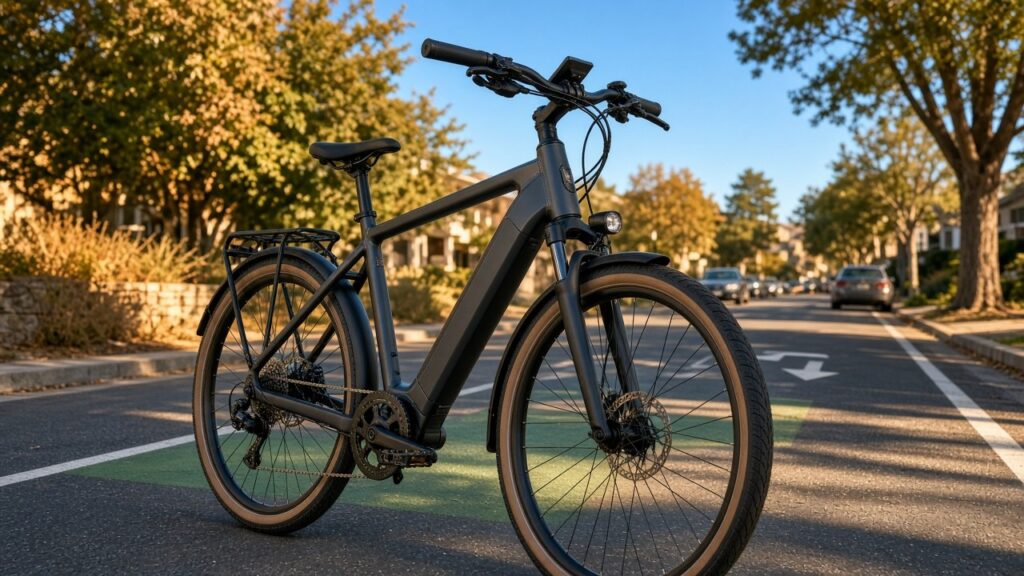
California recognizes three classes of e-bike, all limited to 750 watts:
- Class 1: pedal assist only, motor cuts out at 20 mph.
- Class 2: throttle, so the bike moves without pedaling, motor cuts out at 20 mph.
- Class 3: pedal assist up to 28 mph, rider must be 16 or older and wear a helmet.
Those are the legal machines. The problem is the other category. At e-bike safety classes in San Diego County this summer, officials reported that many kids showed up on “e-bikes” that were actually electric motorcycles capable of 40, 50, or even 60 mph, and that most of the parents had no idea.
Speed alone undersells the danger. A child on an ordinary pedal bike typically cruises somewhere around 10 to 12 mph. Crash energy rises with the square of speed, so a rider at 20 mph carries roughly three times the energy of a rider at 11 mph, and a rider at 28 mph carries more than six times as much. E-bikes are also commonly two to three times heavier than a child’s pedal bike, which adds still more force. At 28 mph a rider covers about 41 feet every second. When a car door swings open or a driver backs out of a driveway, a 13-year-old has a fraction of a second to react.
The injury numbers reflect that physics. A UC San Diego study released in July found California recorded just two e-bike crashes in 2018 and 1,506 in 2024. Two findings in that study matter most for parents: children 14 and under made up a larger share of e-bike injuries than of traditional bicycle injuries (15.6% versus 10.2%), and moderate to severe injuries were more common among e-bike riders than among traditional cyclists. Rady Children’s Hospital in San Diego has reported record numbers of children arriving at its trauma center after e-bike crashes. A large share of the serious cases I see in this category involve the head, which is why I spend so much time on traumatic brain injury cases and why a concussion after an e-bike fall should never be shrugged off.
The Training Gap: Motorcycle License Rules vs. E-Bike Rules in California
This is the comparison most parents have never seen side by side:
| Requirement | Motorcycle (M1), rider under 21 | Class 1 or 2 e-bike | Class 3 e-bike |
|---|---|---|---|
| Minimum age | 15½ for a permit, 16 for a license | None statewide (local pilots in Marin, San Diego, and now San Mateo) | 16 |
| Required training | 15-hour CHP Motorcyclist Training Course (5 hours classroom, 10 hours riding) | None (free CHP online course is voluntary) | None |
| Permit holding period | 6 months | None | None |
| Written and vision test | Yes | No | No |
| License | Class M1 | No | No |
| Registration and insurance | Required | No | No |
| Helmet | Required at every age | Required under 18 | Required at every age |
To be fair to the machines: a legal Class 1 e-bike is not a motorcycle, and for an adult commuter it can be a genuinely good way to get around. But a throttle bike that moves a child at 20 mph without pedaling, and an e-moto that hits 50 mph, sit much closer to the motorcycle column than the bicycle column. California asks a 20-year-old to log 10 hours of supervised riding before touching a public road on a motorcycle. It asks nothing of a 12-year-old on a throttle e-bike. AB 1569 is a start, but it reaches students in grades 7 through 12, and the youngest riders are often younger than that.
What Real E-Bike Training Should Look Like (A Lawyer’s Checklist for Parents)
No statute requires this yet. Based on the crashes I see, this is what I would want before any child rides on a street:
- Complete the free CHP online e-bike safety course together, and keep the certificate.
- Start with Class 1, not Class 2. A pedal-assist bike stops helping when the child stops pedaling. A throttle does not.
- Practice off-street first: hard braking from full assisted speed, emergency swerves, and starting and stopping on a hill.
- Teach the four Bay Area crash patterns: opening car doors, cars backing out of driveways, right-turning vehicles at intersections, and pedestrians stepping off the curb.
- No passengers unless the bike is built for one. Many manufacturers’ manuals prohibit it.
- Cap young riders at 15 mph. That is the speed California will soon require sellers to recommend for riders under 16. Many e-bikes let you set a lower assist limit in the display settings.
- Helmet every ride, lights after dusk, no earbuds.
- Use the moped test: if you would not hand your child the keys to a moped, they are not ready for a throttle e-bike.
Is Your Child’s “E-Bike” Actually a Motorcycle?
A California Legislature-commissioned study found that nearly 88% of the electric two-wheelers sampled at selected middle and high school bike racks were not legal e-bikes at all. They were e-motorcycles.
That is what drove San Diego County’s response. On September 15, the San Diego County Board of Supervisors voted 4-1 to direct county attorneys to investigate and take legal action against manufacturers and retailers marketing what one supervisor called overpowered electric motorcycles as e-bikes. The theory is false and deceptive advertising. As of early October, the public reporting describes an authorization to sue rather than a filed complaint against a named company, so watch for the first filing.
Five quick checks for your garage:
- Does it have working pedals? No pedals, not an e-bike.
- Does the label show a class, a top assisted speed, and 750 watts or less?
- Was it advertised with a top speed above 28 mph, or with an “off-road,” “unlimited,” or “race” mode?
- Does the throttle push it past 20 mph without pedaling?
- Did it come without any class label at all? That alone is a warning sign, and starting in 2027 SB 1167 makes labeling mandatory.
If the answer points to e-moto, the legal consequences are serious. On a public road it is a motor vehicle. The rider needs a license, the vehicle needs registration and insurance, and a child under 16 cannot legally ride it at all. Just as important for families: many homeowner’s and renter’s policies exclude liability arising from motor vehicles. If your child injures someone on an e-moto, you may discover there is no insurance behind you at all.
Negligence Per Se: Why a Lawyer Sees These New Laws as Evidence
Here is where the new laws reach the courtroom. Under California Evidence Code § 669, a person who violates a statute, ordinance, or regulation is presumed negligent if four things are true: the person violated the law, the violation caused the injury, the injury is the kind the law was designed to prevent, and the injured person is someone the law was meant to protect. The presumption can be rebutted, but it shifts the fight in a meaningful way.
Each new rule creates a measurable standard of care:
- An under-16 rider on a Class 3 e-bike is violating existing law today.
- An unlicensed teenager on an e-moto is operating an unregistered motor vehicle without a license, and SB 1167 removes any argument that the device was “just a bike.”
- An e-bike on a sidewalk above 10 mph, once AB 2346 takes effect January 1, 2027, violates a speed limit written specifically to protect pedestrians.
- An 11-year-old on a Class 2 e-bike in a San Mateo County city that opts into AB 2595 violates a local ordinance, and ordinances count under § 669.
- A seller that markets an e-moto as an e-bike after January 1, 2027 violates a statute aimed squarely at protecting buyers and the public, which strengthens negligence and products claims against that seller.
Two cautions, because this cuts both ways. First, a violation has to actually cause the harm. An underage rider who had the right of way and was hit by a driver running a red light still has a strong claim, and the driver’s insurer cannot simply wave the statute around. Second, if your child was the one injured while breaking one of these rules, expect the insurer to raise it as comparative fault in California, which reduces a recovery rather than eliminating it. California also generally judges children by what is reasonable for a child of similar age and experience, although courts may hold a minor to an adult standard when the minor is doing an adult activity like operating a motor vehicle. An e-moto is exactly where that argument will be made.
Who Pays When a Kid on an E-Bike Causes a Crash?
When a child rider injures a pedestrian, another cyclist, or a driver, several parties can be on the hook:
- The child. Minors can be sued, but a 12-year-old has no assets. The real question is always who stands behind them.
- The parents, for their own negligence. Buying an unlicensed child an e-moto, letting a young child ride a throttle bike in traffic, or allowing a passenger the manual prohibits can each support a negligent supervision or negligent entrustment claim. The wrongful death lawsuit filed in March over the Burlingame crash names the 11-year-old rider’s parents and alleges the child was too young to be riding an e-bike and was carrying a passenger the bike’s manual prohibited. Those are allegations, not findings, but they show exactly how these cases will be pleaded.
- The parents, by statute. Civil Code § 1714.1 makes parents liable, up to a capped amount, for a minor’s willful misconduct. When the “e-bike” is actually a motor vehicle, Vehicle Code § 17708 can also make a parent who gave permission liable for the minor’s negligent driving, subject to the limits in § 17709. SB 1167’s reclassification makes that statute far more relevant than it used to be.
- The seller and manufacturer. A products claim requires proof of a design or warning defect under the consumer-expectations or risk-benefit test, plus causation. Deceptive marketing of an e-moto as an e-bike, and the SB 1167 disclosure duties starting in 2027, give a plaintiff strong evidence on both. Starting with bikes sold in 2029, AB 2346’s written recommendation that riders under 16 stay at or below 15 mph will cut two ways: it puts the 15 mph recommendation in the seller’s own paperwork, and it puts parents on notice of the same recommendation.
- Insurance. Homeowner’s or renter’s liability coverage may respond to a legal e-bike crash away from home, but motor vehicle exclusions often bite on e-motos. Your own uninsured motorist coverage generally applies to uninsured motor vehicles, so whether the device was a bicycle or a motor-driven cycle can decide whether that coverage exists at all. In my experience the exact policy language controls, so get the policy to your attorney early.
The Six-Month Clock When a City Path or Sidewalk Is Involved
AB 2346 hands cities and counties new authority over bike paths and trails, and many youth e-bike crashes happen on public paths, sidewalks, and school-adjacent streets. When a city, county, school district, or transit agency shares responsibility through a dangerous design, a missing sign, a broken sidewalk, or a defective path, you must present a formal government claim within six months under Government Code § 911.2, not the usual two years. For an injured child there is some protection: a late-claim application can be filed within one year, and the public entity must grant it when the injured person was a minor for the entire six-month period. Do not rely on that safety valve, and do not assume it protects a parent’s own claim. I walk through the full process in my guide to the six-month government claim deadline and on my government claims page.
If Your Child Was Hurt on an E-Bike: What I Tell Parents
- Watch the deadlines separately. A child’s own injury claim is generally tolled until age 18, but the parents’ claim for the child’s medical bills is not, and the two-year statute of limitations runs on it now.
- Preserve the bike. Do not repair, sell, or return it. Photograph the class label, the wattage plate, the display, and any speed or mode settings.
- Save the ad and the receipt. Online listings change. Screenshot the product page and keep the order confirmation, because the marketing is evidence.
- Keep the helmet, even if it is cracked.
- Do not let an adjuster interview your child. Route every request through your attorney.
- Expect court approval of any settlement. California requires a judge to approve a minor’s settlement, which protects your child and is one more reason not to accept a quick offer.
Living in San Mateo County? What AB 2595 Changes
The pilot is opt-in, so nothing changes until your own city council adopts it, and any local ban runs only through January 1, 2031. Once adopted, the first 60 days bring warnings only. After that, a $25 fine applies, parents are jointly and severally liable for it, and it can be dismissed if the child completes an approved safety course within 120 days. Treat that course as the point, not the fine. Foster City has signaled interest. The president of the Board of Supervisors has said she would not support applying it to the county’s unincorporated areas. If you live in San Mateo, Burlingame, Daly City, or elsewhere on the Peninsula, watch your council agendas. Once a city adopts the ban, an under-12 rider on a Class 1 or Class 2 e-bike in that city is violating a local ordinance, with the negligence-per-se consequences described above. I represent injured families across the Peninsula, including through my San Mateo car accident lawyer practice.
Talk to a Bilingual San Francisco E-Bike Accident Lawyer
Whether your child was hurt on an e-bike, or someone on an e-bike or e-moto hurt you or your family, these cases turn on details most insurers would rather you never look at: the device class, the label, the ad, the policy exclusions, and the deadlines. I handle every case personally, from the first call through trial if it comes to that. My office has recovered $25 million+ for Bay Area clients, including a $6 million settlement for a pedestrian with a traumatic brain injury and a $2.185 million brain injury recovery, and I have a 9-for-9 jury trial record. Learn more about my background, review my case results, or schedule a free consultation. Call (415) 851-4557.
¿Habla español? Muchas familias compran estas bicicletas eléctricas en línea pensando que son seguras para sus hijos, y nadie les explica que algunas son, en realidad, motocicletas. Si su hijo o un familiar resultó lesionado, o si alguien en una bicicleta eléctrica le causó daño a usted, lo atiendo personalmente y en español, sin intérpretes. Su estatus migratorio no le quita el derecho a reclamar una compensación. Visite mi página en español, conozca cómo manejo los accidentes de bicicleta o pida su consulta gratuita. Llame al (415) 851-4557.
Frequently Asked Questions
Four bills: SB 1167 bars devices faster than 20 mph on throttle or 28 mph on pedal assist from being sold as e-bikes starting January 1, 2027, and requires labels and disclosures. AB 2346 sets a 10 mph sidewalk limit, lets local governments post speed limits on paths and trails, and, for e-bikes sold from 2029, requires lamps, speedometers on Class 2 bikes, and a seller disclosure recommending that riders under 16 not exceed 15 mph. The new laws generally take effect January 1, 2027. AB 2595 lets San Mateo County cities ban riders under 12 from Class 1 and 2 e-bikes until January 1, 2031. AB 1569 requires a student e-bike safety program for grades 7 through 12, due by March 1, 2028.
Class 1 and Class 2 e-bikes stop providing motor assistance at 20 mph, and Class 3 e-bikes at 28 mph. All three are limited to 750 watts. A device that goes faster under its own power is not legally an e-bike in California, and many of these devices reach 40 to 60 mph.
No license is required for a legal Class 1, 2, or 3 e-bike, though riders under 18 must wear a helmet and Class 3 riders must be at least 16. If the device is actually an e-moto, it is a motor vehicle and the rider needs a motorcycle or moped license, which a child under 16 cannot get.
For now, yes. AB 2595 lets each San Mateo County city choose to ban riders under 12 from Class 1 and Class 2 e-bikes. After a 60-day warning period, the fine is $25, parents are jointly and severally liable for it, and it can be dismissed if the child completes an approved safety course within 120 days. Nothing changes until a city adopts the ban.
Motorcycle applicants under 21 must complete a 15-hour CHP course with 10 hours of riding, hold a permit for six months, and pass written and vision tests. Legal e-bikes require no training at all. The CHP offers a free online e-bike safety course, but it is voluntary.
They can be. Parents can face claims for negligent supervision or entrustment, statutory liability for a minor’s willful misconduct under Civil Code § 1714.1, and, when the device is actually a motor vehicle, liability under Vehicle Code § 17708 for permitting the minor to drive. Homeowner’s policies may not cover an e-moto.
Under Evidence Code § 669, violating a safety statute or ordinance creates a presumption of negligence if the violation caused the type of injury the law was meant to prevent to a person it was meant to protect. Riding an e-moto without a license or an underage rider on a Class 3 e-bike are common examples. The presumption can be rebutted.
A child’s own injury claim is generally tolled until age 18, but the parents’ claim for medical bills follows the regular two-year deadline. If a city, county, or school district is involved, a government claim must be presented within six months.