

John Roach, Esq. | June 17, 2026 | Attorney Tips \ California Law
Free Consultation with a San Francisco Personal Injury Lawyer: What to Expect at Your First Meeting

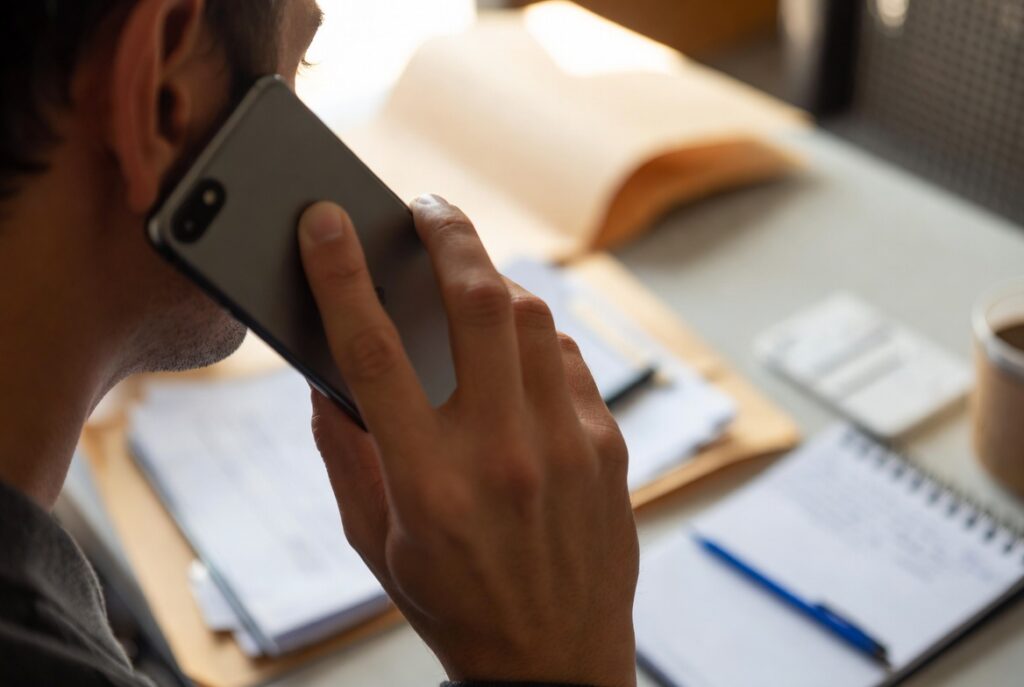
Calling a personal injury lawyer for the first time is intimidating. People don’t know what it will cost, how long the call will take, what they need to have ready, whether the lawyer will take their case, or whether they should even call at all. The uncertainty itself becomes a reason to wait — and waiting after a serious injury is often the single most expensive thing a person can do.
This post explains what a free consultation with my office actually looks like: how to schedule one, what to prepare (and what not to worry about), what I’ll ask you, what I’ll explain to you, and what happens next. The goal is to make the call easier to pick up by removing the guesswork.
I have practiced personal injury law in San Francisco and across the Bay Area since 2009, and I handle every consultation personally. There are no associate handoffs and no intake-screener gatekeeping. When you call (415) 851-4557 or email john@representmyinjury.com, you talk to me.
What “Free Consultation” Actually Means
The phrase gets used loosely in legal marketing, so it’s worth being precise about what it actually means at this office.
No fee for the conversation. There is no hourly charge for the consultation. There is no minimum length. There is no “intake fee” or “case evaluation fee.” If we talk for ten minutes and decide your situation does not need a lawyer, you owe nothing. If we talk for an hour and a half and decide to work together, you owe nothing for the consultation itself.
No obligation to hire afterward. You can have a full consultation, learn what I think about your case, get my recommendations on next steps, and decide not to hire me. There is no pressure during the call and no follow-up sales push afterward. The consultation is information for your decision, not a commitment to anything.
No out-of-pocket cost if I take your case. If we decide to work together, the representation operates on a contingency fee — you pay nothing unless I recover compensation for you. How contingency fees work in California personal injury cases is covered in detail in a separate post on the blog.
Confidentiality from the first word. California’s attorney-client privilege applies from the start of the conversation. Anything you tell me — about the accident, about your medical history, about your immigration status, about your finances — is protected. The privilege exists whether or not you ultimately hire me.
How to Schedule a Free Consultation
Three ways to reach me, and same-day or next-day appointments are usually available.
- Phone. Call (415) 851-4557. If I am with a client or in court, leave a message and I will return the call myself, usually within hours.
- Email. Write to john@representmyinjury.com. Include a sentence or two about what happened and the best phone number to reach you. Replies come from me directly.
- Web form. The free consultation form on this website sends directly to me. Same response time as email.
Consultations can happen by phone, by video, or in person at my office at 1388 Sutter Street in San Francisco — whichever you prefer. Many of my clients prefer phone or video for the first conversation, particularly if mobility is a concern after an injury.
I offer bilingual consultations in English and Spanish at no additional cost. Spanish-speaking clients work with me directly, in Spanish, without an interpreter. Para programar una consulta en español, llame al (415) 851-4557 o escriba a john@representmyinjury.com.
What to Have Ready Before the Call (and What Not to Worry About)
Helpful to have if available, but absolutely not required:
- A copy of the police or incident report
- Photos of the scene, vehicle damage, or visible injuries
- Your insurance card and the other party’s insurance information
- Any letters or claim numbers from insurance adjusters who have contacted you
- Names and contact information for witnesses, if you have them
- Your medical records, billing statements, or doctor’s notes — even partial documentation helps
- A rough timeline: date of accident, when symptoms appeared, which doctors you have seen
If you do not have any of this — call anyway. Many people I represent did not have a single document when they first called. Some had not even been to the doctor yet. The consultation does not require you to come prepared. It only requires you to be willing to tell me what happened.
What I Will Ask You
The consultation is a structured conversation, not an interrogation. I will ask about:
What happened. A narrative of the accident — where it occurred, what time, what the conditions were, what you remember about the moments before and after. If you are unsure about details, that is normal. Memory of the seconds before and after a serious crash is rarely clean.
Who was involved. The other driver or drivers, any passengers, witnesses, law enforcement, paramedics, the businesses or properties involved if applicable, and any commercial relationships (a rideshare driver, a delivery driver, an employee on the clock).
What injuries you have sustained. What hurts, what does not work the way it used to, what symptoms have developed over time. I will ask about head injuries specifically because traumatic brain injury and concussion symptoms often appear later than the obvious physical injuries do.
Your medical care so far. Who you have seen, what they have said, what testing has been done, what is still in progress. If you have not seen a doctor yet, we will talk about why same-day or next-day evaluation matters — covered in my complete guide to what to do after a car accident in San Francisco.
Insurance contacts so far. Which insurance companies have called you, what they have asked, what you have said, whether you signed anything, whether you gave a recorded statement. If an adjuster has been pressuring you, I want to know exactly what they have been doing. The tactics insurance adjusters use against Bay Area accident victims follow predictable patterns.
What you need most right now. Sometimes the immediate need is medical guidance. Sometimes it is help with a difficult adjuster. Sometimes it is dealing with property damage on a vehicle. Sometimes it is wage replacement information. The consultation is shaped around your actual situation, not a template.
What I Will Explain to You
By the end of the consultation, you should leave the call with clear answers to the following questions.
Whether California law gives you a viable claim. Personal injury law turns on three pillars: liability (whose fault was it, and how strong is the evidence), damages (the full physical, financial, and emotional impact of the injury), and insurance (what coverage is available from every applicable policy). I will walk you through where your case sits on each.
What deadlines apply. California’s standard personal injury deadline is two years under Code of Civil Procedure § 335.1. But there are exceptions and shorter deadlines — including the six-month government tort claim deadline that catches more cases than the two-year rule does. The complete deadline analysis is the subject of a recent post on the blog.
What your case is realistically worth. I cannot tell you a number from one conversation, and any attorney who quotes a precise figure on the first call is either guessing or marketing. What I can give you is a framework: the factors that drive case value in California, the realistic ranges those factors produce given what is known about your case, and the work that needs to be done to evaluate it accurately.
Why I think your case is or is not a fit. I do not take every case that calls. Some cases are outside my practice area; some have insurance limitations that make them better suited for another firm; some are too early to evaluate and need more medical workup first. If your case is not a fit, I will tell you, explain why, and often refer you to someone who handles that specific type of matter.
What happens in the first weeks if we work together. Evidence preservation letters within 48 hours. Contact with insurance adjusters so they stop calling you directly. Medical record collection. Witness interviews. The first phase of a case is investigative — and the work I do in the first two to four weeks materially affects what the case is worth twelve months later.
What Happens After the Consultation
Three possible outcomes.
We agree to work together. I send a retainer agreement that lays out the contingency fee terms, the scope of representation, and the way we communicate. You review it, sign it, and send it back. I take over communications with insurance companies immediately so they stop contacting you. The investigation phase begins.
We agree the case is not a fit. If I do not take the case, I will tell you why and, where possible, refer you to a lawyer or firm better positioned for that specific matter. I do not charge for this — and the consultation itself remains free regardless of the outcome.
You decide to think it over. Many people want to talk to family or to other lawyers before deciding. That is entirely reasonable. There is no follow-up sales pressure from this office. If you decide later that you want to move forward, the next call is just as easy as the first.

Why Direct Attorney Communication Matters
Personal injury law is increasingly dominated by high-volume firms where the attorney named in the marketing rarely speaks with clients. Cases are handled by case managers, paralegals, and associate attorneys, with the named partner appearing only at major decision points or major settlements. There are practical reasons for this — it lets firms handle more cases — but it produces a representation experience where the client does not know their own lawyer.
My practice operates differently. Every San Francisco car accident case, every rear-end collision claim, every pedestrian accident, every rideshare crash, every traumatic brain injury or spinal injury matter, every wrongful death claim, every slip and fall, every dog bite case — every type of personal injury matter I handle — I handle personally from the first consultation through the resolution. When you have a question during the case, you ask me. When the settlement is being negotiated, I am the one negotiating it. When the case goes to trial, I am the one trying it.
With $25 million+ recovered for Bay Area clients and a record of nine successful jury verdicts in nine trials, the practice has the resources and the trial credibility to handle serious cases — without losing the direct attorney communication that smaller-volume practices preserve.
Frequently Asked Questions
Usually 30 to 60 minutes, depending on the complexity of the situation. Simple matters can be evaluated in less time. Complex matters — multi-vehicle crashes, serious injuries with significant medical history, cases involving multiple insurance carriers — may run longer. The consultation takes as long as your situation requires, and there is no charge for the time.
No. Consultations can happen by phone, by video conference, or in person at 1388 Sutter Street in San Francisco. Most first consultations happen by phone — it is faster to schedule and easier when mobility is limited by injury. In-person meetings can be scheduled when helpful.
Yes. California’s attorney-client privilege applies from the start of the conversation, regardless of whether you ultimately hire me. Anything you share — about the accident, your medical history, your finances, your immigration status, anything else — is protected. The privilege exists to make consultations safe to have.
That is one of the most common reasons to schedule a consultation. Part of what the conversation produces is a clear answer to that question. Some cases genuinely do not need a lawyer — small property damage claims, minor injuries with clear liability and prompt insurance cooperation. Most cases involving meaningful injuries do. The consultation is the way to find out, without committing to anything.
Call anyway. Yes, the recorded statement can be used against you, and yes, ideally you would have called before giving it. But the damage from a statement is rarely fatal to a case, and an experienced attorney can often manage around it. The worst thing to do after giving a statement is to keep going — call before the next conversation with the adjuster.
As soon as possible. Evidence preservation matters — surveillance video gets overwritten, witness memories fade, vehicle data recorders may be lost when cars are repaired. The earlier representation begins, the more evidence survives intact. Same-day or next-day calls are not unusual and not too early.
Schedule a Free Consultation with a San Francisco Personal Injury Lawyer Today
If you or a loved one was injured in San Francisco, the Bay Area, or anywhere in California, schedule a free consultation by calling (415) 851-4557 or emailing john@representmyinjury.com. No cost, no obligation, no associate handoffs — when you call, you talk to me. Consultations are available in English and Spanish at no additional cost.