

John Roach, Esq. | September 3, 2026 | California Law \ Car Accidents
Hurt as an Uber or Lyft Passenger in San Francisco? A Rideshare Accident Lawyer Explains Who Pays

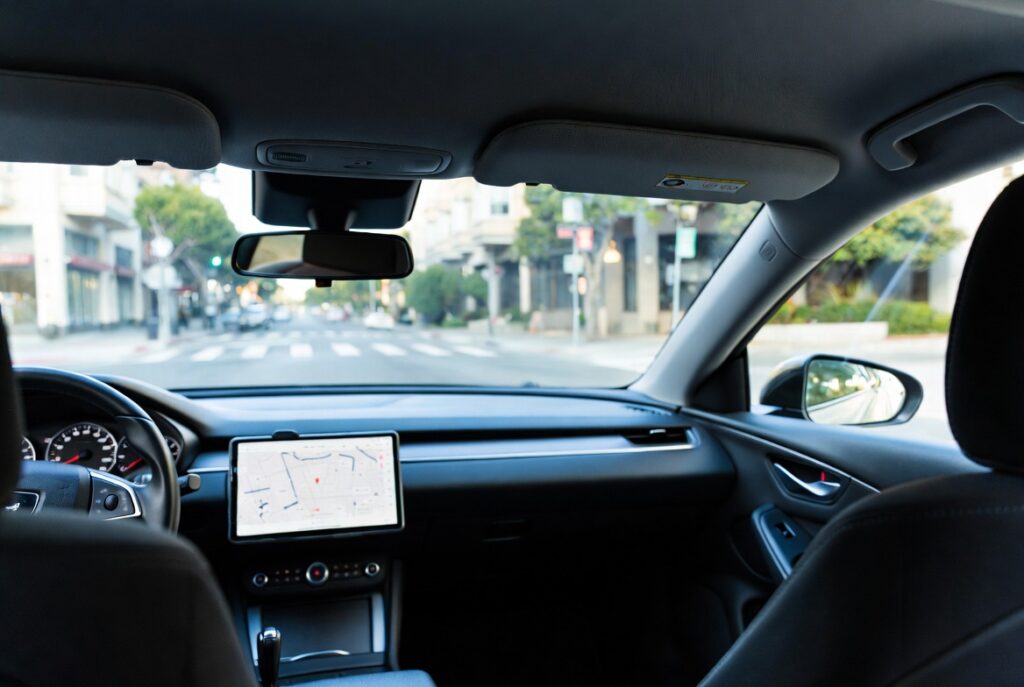
You got in the back seat, confirmed the driver’s name, and watched the little car icon crawl across the map. Then someone ran a light — your driver, or the other driver, it happened too fast to tell — and now you’re hurt, the trip is a blur, and you’re wondering something nobody thinks about until it happens: I was just the passenger. Who actually pays for this?
Here is the answer I give every injured rideshare passenger who calls my office: as the passenger, you are almost never at fault — and you are usually the best-protected person in the entire crash. But “protected on paper” and “paid in full” are two very different things, and the gap between them is where insurance companies make their money. I’ve handled these cases since 2009 as a San Francisco Uber and Lyft accident lawyer, and in this guide I’ll walk through exactly who pays, what changed under California’s new rideshare laws, and the mistakes that cost passengers real money.
The Short Answer: Someone’s Insurance Covers You — Which One Depends on the Crash
For a passenger injured during a trip, compensation comes from one (or more) of three places:
- The rideshare company’s commercial policy. From the moment your driver accepts the trip until you’re dropped off, Uber and Lyft must carry $1,000,000 in third-party liability coverage. If your driver caused the crash, this is the policy that answers for your injuries.
- The other driver’s insurance. If another vehicle caused the crash, your claim runs first against that driver’s liability policy — just like any car accident.
- Uninsured/underinsured motorist (UM/UIM) coverage. If the at-fault driver has no insurance, too little insurance, or flees the scene, UM/UIM coverage steps in — and this is exactly where California law just changed in a way every passenger should understand.
Good News First: The $1 Million Policy Survived SB 371
California’s SB 371, effective January 1, 2026, rewrote parts of the rideshare insurance system, and a lot of what you’ll read online about it is wrong or outdated. The key fact for injured passengers: the $1,000,000 liability requirement during trips is intact. If your Uber or Lyft driver caused your crash while you were on board, a seven-figure policy still stands behind your claim. I broke down the whole law — coverage period by coverage period — in my guide to how the $1 million policy, app status, and the new SB 371 rules decide your case, so I won’t repeat it all here.
What SB 371 did cut is the piece most passengers have never heard of — and it’s the piece most likely to affect them.
The Trap: When the Other Driver Is Uninsured, the Safety Net Shrank in 2026
Picture the most common serious rideshare crash in San Francisco: you’re a passenger, and a different car — not your Uber — runs the light. That driver turns out to carry no insurance, or a minimum-limits policy, or takes off before anyone gets a plate. Roughly one in six California drivers is uninsured, so this is not a rare scenario. It’s Tuesday.
Before 2026, the rideshare platform’s uninsured/underinsured motorist coverage matched the big number: $1,000,000. As of January 1, 2026, SB 371 cut that UM/UIM coverage to $60,000 per person and $300,000 per accident. For a serious injury — surgery, a hospital stay, months off work — $60,000 can disappear before you’re discharged. That single change is why passenger cases now demand a lawyer who looks past the app’s policy:
- Your own auto policy’s UM/UIM coverage may apply to you as a passenger in someone else’s car — many people have no idea their policy follows them into an Uber.
- A household family member’s policy — a spouse’s or parent’s UM/UIM coverage — can protect relatives living in the same home.
- Every liable party gets examined: the at-fault driver’s personal assets, a vehicle owner who loaned the car, and any employer whose driver was on the job.
Stacking these layers correctly is the difference between a $60,000 case and full compensation. It’s also the part injured passengers can’t do from a hospital bed — and the part I do every day, including in UM/UIM arbitration against insurance companies, where I won a $750,000 award for a client whose insurer insisted his injuries were worth a fraction of that.
When Your Own Driver Caused the Crash
If your Uber or Lyft driver ran the light, rear-ended someone, or misjudged a turn, your claim targets the platform’s $1,000,000 trip-period policy. Two things to know:
You are not suing your driver personally. Passengers sometimes hesitate because the driver “was nice” or “needs the job.” Your claim is paid by a commercial insurance policy that exists precisely for this — the same way I remind Spanish-speaking clients that claiming against a neighbor’s homeowners policy isn’t taking the neighbor’s house.
Don’t expect the platform to volunteer anything. Uber and Lyft classify drivers as independent contractors under Prop 22, and their insurers defend claims aggressively. I’ve written about when Uber and Lyft can be held liable for driver negligence after Prop 22 — the coverage is there, but nobody hands it to you.

What to Do in the First Hour — Starting With a Screenshot
Rideshare cases come with something no ordinary crash has: a digital record. Preserve it immediately.
- Screenshot everything in the app before you close it: the trip screen, the driver’s name and photo, the route map, and later the receipt. This is proof you were a passenger on an active trip — the fact that unlocks the $1,000,000 policy.
- Call 911 if anyone is hurt. Get the police report number. Photograph the vehicles, the intersection, and the other driver’s license plate and insurance card if you can.
- Get the other driver’s and witnesses’ information. Your rideshare driver has the app record — the other driver and the witnesses will vanish.
- Report the crash in the app — both Uber and Lyft have in-app accident reporting. Keep it factual and brief.
- See a doctor the same day, even if you feel “mostly fine.” Whiplash, concussions, and back injuries routinely surface days later, and the gap between crash and treatment is the insurer’s favorite argument. My step-by-step guide on what to do after a car accident in San Francisco applies fully here.
- Talk to a lawyer before giving any recorded statement — to the other driver’s insurer or the rideshare company’s. You’ll likely hear from both, sometimes within hours.
The Medical Bills Question
Passengers often delay treatment because they don’t know who will pay the bills while the claim is pending. Don’t. Use your health insurance if you have it; if you don’t, treatment on a medical lien is common in these cases — and California’s SB 623, which takes effect for cases beginning January 1, 2027, is about to change how those liens are capped and negotiated. I covered it in my breakdown of SB 623, California’s new rideshare medical lien law. The short version: get treated now, and let your lawyer manage what the providers ultimately collect — negotiating those liens down is one of the quiet ways a good lawyer raises your net recovery.
Why Passenger Cases Are Strong — and Why Insurers Still Fight Them
A passenger case has the cleanest liability picture in personal injury law: you weren’t driving, so comparative fault arguments against you barely exist. Fault fights happen between the drivers — and when both point fingers, both policies are in play for your claim. Add the commercial coverage and the digital trip record, and these cases are built to succeed.
So insurers fight the other half: your injuries. They’ll question the ER gap, the MRI findings, the chiropractor, the time off work. That’s where results and trial experience matter — I’ve recovered more than $25 million for Bay Area clients, tried cases to verdict, and my case results include seven-figure outcomes in crashes insurers once called “moderate.” If your crash happened in the East Bay, my guide for passengers hurt in Ubers and Lyfts in Oakland and Berkeley covers the same rights on that side of the bridge.
If Other Passengers Were Hurt Too: How the $1 Million Gets Shared
The $1,000,000 rideshare policy is a per-incident limit, not a per-person limit. If you were riding with friends or family and more than one of you was seriously hurt in the same crash, that single policy has to stretch across everyone’s claims. In a severe crash with multiple injured passengers, it is entirely possible for that $1 million to run out before it covers the full value of everyone’s injuries — which is exactly why identifying every other layer of coverage matters even more in a multi-passenger crash: the at-fault driver’s own policy, UM/UIM coverage on any policy in your household, and any other vehicle involved. I evaluate the total number of injured people and the total available coverage together, early, so no one in the vehicle gets shortchanged because they didn’t know to look past the rideshare policy.
Can You Sue Uber or Lyft Directly, Not Just the Driver?
Usually your claim runs against the driver and the $1 million policy behind them, because Uber and Lyft classify drivers as independent contractors specifically to limit the company’s own direct liability for a driver’s on-the-road negligence. But that is not the end of the analysis. If the rideshare company itself was negligent — for example, failing to properly vet a driver’s background, ignoring prior complaints about a driver’s conduct, or failing to deactivate a driver it knew was dangerous — that can support a separate claim against the company directly, independent of the driver’s insurance policy. Part of my investigation in any serious rideshare injury case is finding out whether the company knew something about this driver before you ever got in the car.
Frequently Asked Questions: Injured Uber and Lyft Passengers
Who pays if my Uber driver caused the crash?
The rideshare company’s commercial policy. During an active trip — from ride acceptance to drop-off — Uber and Lyft must carry $1,000,000 in liability coverage, and SB 371 did not change that trip-period requirement.
Who pays if another driver hit my Uber?
That driver’s liability insurance pays first. If they’re uninsured, underinsured, or fled, the platform’s UM/UIM coverage applies — now capped at $60,000 per person and $300,000 per accident under SB 371 — and your own or a household member’s UM/UIM coverage may add another layer on top.
Can I make a claim if I was sharing the ride with strangers?
Yes. Every injured passenger has an independent claim, and the per-accident policy limits are divided among them — one more reason serious injuries need counsel early, before the limits get consumed by faster-moving claimants.
The rideshare company’s insurer called me the next day. Should I talk to them?
Not before getting advice. Early calls are friendly, recorded, and designed to lock in statements that shrink your claim. You have no obligation to give a recorded statement to any liability insurer.
What is my passenger case worth?
It depends on your injuries, treatment, lost income, and how the coverage layers stack — not on a formula. Be skeptical of anyone quoting a number before reviewing your medical records; the honest answer starts with a full picture of your treatment and every available policy.
Does it matter that Uber and Lyft drivers are independent contractors?
For your injury claim as a passenger, usually not much — the commercial trip-period coverage applies regardless of the driver’s employment classification. Prop 22 matters more in fights over the platforms’ direct liability, which is a battle your lawyer takes on, not you.
How long do I have to file?
Generally two years from the crash in California — but UM/UIM claims run on policy deadlines that can be shorter, and app data and camera footage disappear in days or weeks. Start early.
Talk to a Rideshare Accident Lawyer Who Tries Cases
If you were hurt as an Uber or Lyft passenger in San Francisco or anywhere in the Bay Area, call me at (415) 851-4557 for a free consultation. I’ve handled injury cases since 2009, recovered more than $25 million for my clients, and I handle every case personally — you talk to the lawyer, not a case manager. There’s no fee unless I win.
¿Se lesionó como pasajero de Uber o Lyft? Atiendo a la comunidad hispana directamente en español — sin intérpretes. Visite mi página de abogado de accidentes de Uber y Lyft en San Francisco o mi guía de lesiones personales en San Francisco, o llame al (415) 851-4557 para una consulta gratuita en español.