
John Roach, Esq. | October 16, 2026 | California Law \ Premises Liability
San Francisco Tree Fall Injury Lawyer: Who’s Liable — the City or a Private Owner?

Storm season puts a predictable story in the news every year: a tree comes down, someone is hurt, and the first question everyone asks is the wrong one. It isn’t “whose tree was it.” It’s “who controlled the ground that tree stood on, and did California law even let them be sued for what a tree does.”
Deadlines at a glance. A private property owner gives you two years to sue under Code of Civil Procedure § 335.1 — see my guide to California’s statute of limitations for how that clock can pause. A public entity gives you far less: a written government claim within six months under Government Code § 911.2, before any lawsuit can even be filed. That difference can end a case before it starts.
Public property: the dangerous-condition rule, and the natural-condition trap door
When a tree on city, county, or state property falls and hurts someone, the case runs through the same statute that governs every other dangerous condition claim on public land: Government Code § 835. The public entity is liable only if the tree was a dangerous condition that created a reasonably foreseeable risk of injury, and the entity had actual or constructive notice of it — a prior complaint, a visible lean, dead limbs, a known root problem — long enough before the incident to have done something about it.
But public property has an immunity private owners don’t get. Government Code § 831.2 says a public entity is not liable for an injury caused by a natural condition of unimproved public property. In Meddock v. County of Yolo (2013) 220 Cal.App.4th 170, a dead, diseased cottonwood fell on a man standing in a paved parking lot at a county park. The county won on summary judgment anyway — the court held that because the tree itself stood on unimproved land, the immunity applied even though the injury happened on a paved, “improved” surface a few feet away. Causation, not location, is what the statute asks about.
That makes the improved-versus-unimproved line the whole case. A tree in a maintained, landscaped park area — benches, lighting, mowed lawn — is generally not a “natural condition,” and § 835’s ordinary notice rules apply. A tree in an open-space preserve, a natural riparian corridor, or an undeveloped hillside almost always is, and § 831.2 can end the claim regardless of how obviously hazardous the tree looked.
Either way, a case against a public entity still has to clear the six-month government claim deadline under § 911.2 before a lawsuit can even be filed. Miss that window and the notice evidence stops mattering.
San Francisco’s street trees are a maintenance question first
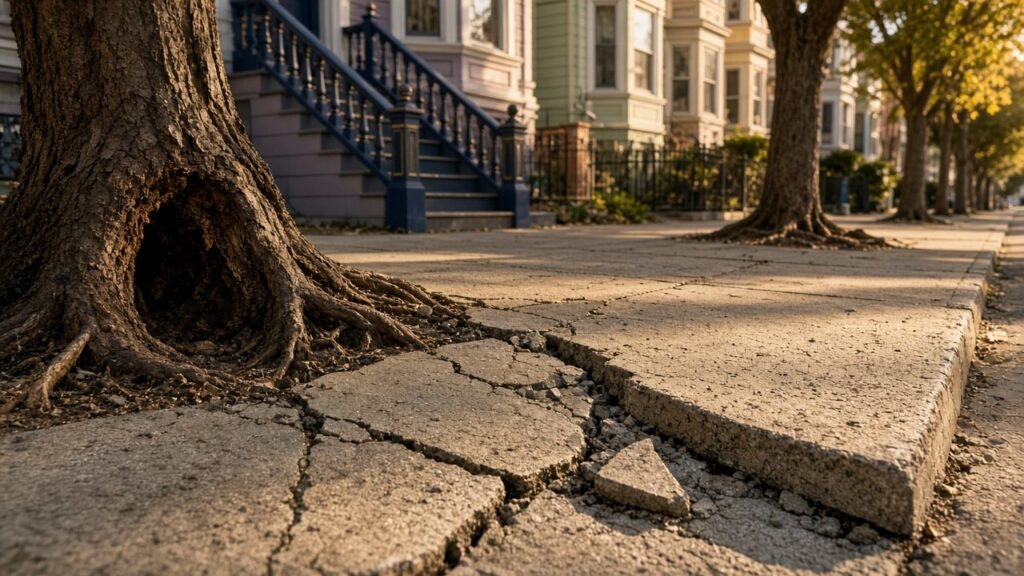
Most of San Francisco’s roughly 125,000 street trees are now maintained by SF Public Works under StreetTreeSF, the program that followed the 2016 ballot measure shifting street tree upkeep from adjacent property owners to the city, effective July 1, 2017. But some property owners opted out and kept maintaining their own trees under city standards, and pre-2017 sidewalk damage liability can still sit with the owner regardless of who maintains the tree today.
That matters here because it decides which set of rules applies to a falling street tree: if the city was responsible for that tree’s maintenance on the date it failed, the case is a § 835 dangerous-condition claim against the city, with the six-month claim deadline attached. If the adjacent owner had opted out and taken over maintenance, it can be an ordinary negligence claim against the property owner instead, on the two-year statute in Code of Civil Procedure § 335.1. The first job on a San Francisco street-tree case is pulling the maintenance record, not assuming the city automatically owns the problem.
Private property: ordinary negligence, not a special “tree” rule
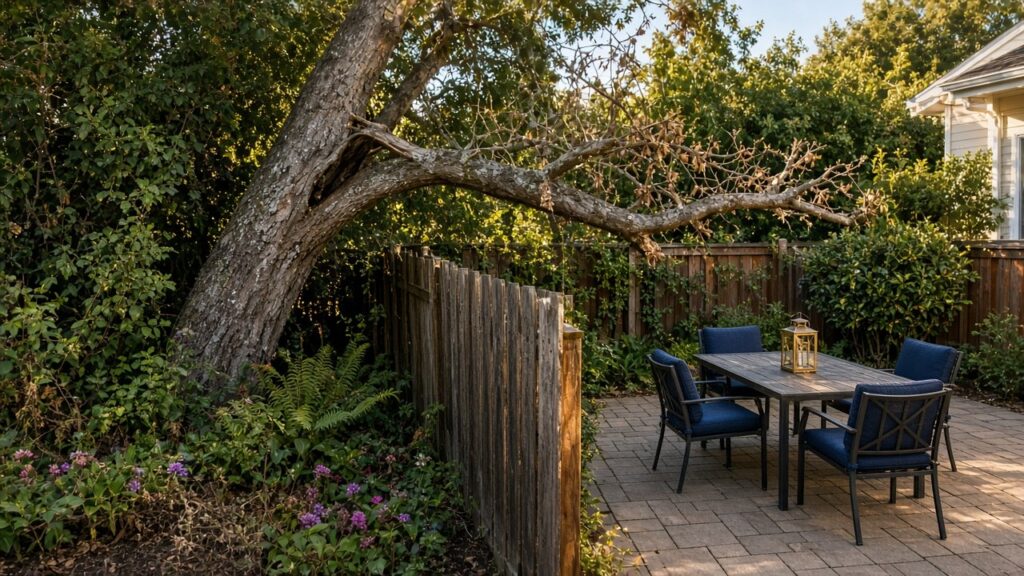
California has no separate liability statute for trees on private land. A private landowner’s duty comes from the same general rule that governs every hazard on their property: Civil Code § 1714, and the modern negligence framework the California Supreme Court set out in Rowland v. Christian (1968) 69 Cal.2d 108, which did away with the old licensee/invitee categories in favor of a single duty of reasonable care owed to anyone on the property — the same duty behind a slip-and-fall claim or any other premises hazard.
For a tree, that means the owner is liable if they knew or reasonably should have known — through a visible defect, a prior arborist report, a neighbor’s complaint, or an obvious lean or dead crown — that the tree posed a risk, and failed to act on it. A tree that fails suddenly during a genuinely extraordinary storm, with no prior sign of decay or structural weakness, is a harder case for a plaintiff; a tree that had been flagged as hazardous and simply never addressed is not.
Other potential defendants beyond the property owner
The property owner is not always the only name on the complaint. A tree-service company that pruned or inspected the tree and missed an obvious defect can face its own negligence claim, independent of the owner’s. An HOA that controls common-area landscaping — rather than the individual homeowner — is the proper premises defendant for a common-area tree. And a commercial landlord who contracts out landscaping duties can still owe the underlying duty of care to tenants and visitors, even if a contractor did the actual work. Pull the landscaping and inspection contracts early; they often name the party actually responsible for catching the defect.
When the tree sits on the property line
Ownership isn’t always obvious. Civil Code § 833 makes a tree whose trunk stands wholly on one owner’s land that owner’s tree alone, even if its roots or branches cross onto a neighboring lot. Civil Code § 834 makes a tree whose trunk stands partly on two or more adjoining lots the common property of all of them. On a boundary tree, the trunk’s actual location decides who the proper defendant is — and when it straddles the line, both neighbors can be.
What actually decides these cases
Every one of these theories comes down to the same kind of proof — the same evidence-preservation discipline that wins any premises case:
- Arborist and tree-risk records. A TRAQ (Tree Risk Assessment Qualification) inspection report, prior pruning records, or a documented hazard rating is the strongest evidence of notice on either side.
- Complaint history. For public trees, 311 reports and prior work orders; for private trees, any documented complaint to the owner or HOA.
- The break point itself. Photograph it before cleanup — decayed, hollow, or insect-damaged wood at the failure point tells a different story than clean, healthy wood that failed only because of extreme wind.
- Weather data. The nearest weather station’s recorded wind gusts versus sustained wind at the time, and whether neighboring, healthy trees in the same storm also failed. If this was the only tree down on the block, that cuts hard against a pure act-of-God defense.
- Maintenance responsibility. For a San Francisco street tree, whether StreetTreeSF or the adjacent owner had the duty on the date of the incident.
When a falling tree causes a death instead of an injury, the same forum questions govern the claim — public entity or private owner, § 831.2 immunity or ordinary negligence — but the family also has to bring the case as a wrongful death claim under California’s proper-plaintiff rules, and the six-month government claim deadline runs just as fast.
What to do in the first days
- Get medical care and keep every record.
- Photograph the tree, the break point, and the surrounding area the same day, before storm cleanup removes the evidence.
- Identify who owned or controlled the property — and, for a street tree, who was responsible for its maintenance.
- Do not accept an insurer’s “act of God” characterization before the maintenance and inspection history has been checked.
- If a public entity may be responsible, treat the six-month government claim deadline as running from the date of injury.
Frequently asked questions
No. Immunity under Government Code § 831.2 applies only to natural conditions of unimproved property. A tree in a maintained, landscaped area is generally not covered, and the entity can be liable under § 835 if it had notice of the hazard.
Most are now maintained by SF Public Works under StreetTreeSF following the city’s 2017 program, though some property owners opted to keep maintaining their own trees. Which applies to a specific tree affects who the proper defendant is.
Yes, for a claim against a private defendant, under Code of Civil Procedure § 335.1. A claim against a public entity is different — a written government claim must be presented within six months before any lawsuit can be filed.
Under Civil Code §§ 833–834, a tree owned wholly by one neighbor stays that neighbor’s even if roots or branches cross the line, but a tree whose trunk actually straddles the boundary is common property of both. Both can be proper defendants depending on where the trunk stands.
It can reduce or defeat liability if the tree showed no prior signs of hazard. It is not a defense if the tree already had a documented, known defect that made failure more likely.
Sometimes, in addition to the owner. A tree-service company or arborist who inspected the tree and missed an obvious defect can face its own negligence claim.
The same public-versus-private and notice rules apply, but the case proceeds as a wrongful death claim, and a public-entity claim still has to clear the six-month government claim deadline.
Talk to a lawyer if you were hurt by a falling tree
If you or a family member was hurt by a falling tree in San Francisco or the Bay Area, the ownership and maintenance history of that tree will decide the case — and if a public entity is involved, a clock is already running. I’ve represented injured people across the Bay Area since 2009, including premises and government-claim cases like this one. Call the Law Office of John J. Roach at (415) 851-4557 for a free consultation, or see my case results. There is no fee unless we recover for you. Hablamos español: visite mi página de abogado de lesiones personales en San Francisco. I also welcome attorney referrals on cases like this.
This article is general information about California tree-liability law. It is not legal advice about any particular incident.