

John Roach, Esq. | June 6, 2026 | Attorney Tips \ California Law
Discovery Best Practices for California Personal Injury Lawyers: Disclosing Non-Economic Damages Witnesses the Right Way

Few discovery questions generate as much disagreement among plaintiff-side practitioners as how to answer a special interrogatory asking for the witnesses who can speak to a client’s pain and suffering, emotional distress, and other non-economic damages. I’ve watched this argument play out among colleagues more than once, and it usually splits into two camps. One is cautious and client-protective: ask the client carefully, identify everyone who has observed the injury’s effects, and disclose them. The other is more aggressive: name only the people you’ve personally interviewed, lean hard on objections, and “wait to supplement.”
After working through the statutes, the controlling cases, and — just as important — what actually happens at trial and in arbitration, I come down firmly on the diligent side. And not only because it is the safer reading of the Discovery Act. Done correctly, early and complete disclosure of your non-economic damages witnesses is one of the most underrated sources of settlement and trial leverage a plaintiff has. Below I walk through the obligation, the real risk of getting it wrong, and the part most discussions skip: how to turn the defense’s own depositions of those witnesses into some of your strongest evidence.
The Core Discovery Obligation Every Plaintiff Lawyer Faces
California Code of Civil Procedure section 2030.220 sets the baseline. Interrogatory responses must be “as complete and straightforward as the information reasonably available to the responding party permits.” When the responding party lacks full personal knowledge, subsection (c) requires a reasonable and good-faith effort to obtain the information from other natural persons or organizations under the party’s control — unless that information is equally available to the propounding party.
The leading authority on the scope of that duty is Deyo v. Kilbourne (1978) 84 Cal.App.3d 771, which makes clear that a party cannot plead ignorance of information obtainable from sources within their control. For a plaintiff, those sources plainly include the client, the client’s family, and others with relevant knowledge of how an injury has changed the client’s life.
So when a special interrogatory asks specifically for the witnesses who support non-economic damages — the people who have seen the client’s pain, physical limitations, altered daily activities, and mood changes — the floor is straightforward. You ask the client a properly framed question about who has observed the effects of the injury, and you disclose those individuals after a reasonable inquiry. As a trial-tested attorney who has handled these cases since 2009, I treat this not as a box to check but as the foundation of the damages case.
The Real Risk: Witness Exclusion Under Thoren
The danger of the “only disclose who I’ve personally interviewed” or “wait to supplement” approach is illustrated by Thoren v. Johnston & Washer (1972) 29 Cal.App.3d 270. In Thoren, the court upheld the exclusion of a witness because the interrogatory response was deemed willfully false — either because counsel knew of the witness, or because counsel “deliberately refrained from determining whether he was such a person.”
That second prong is the trap. Deliberate avoidance through deliberately narrow client questioning is precisely what creates exclusion risk on a motion in limine right before trial or arbitration. And the consequences do not necessarily disappear just because you later disclose the witness with time for a deposition. The initial willful omission can still support sanctions or outright exclusion of the witness — which, in a case built on general damages, can be devastating.
Some practitioners point to Biles v. Exxon Mobil Corp. (2004) 124 Cal.App.4th 1315 for comfort, and it does establish that there is no general continuing duty to supplement interrogatory answers in California. But Biles is a narrow safe harbor. It assumes a good-faith, reasonably complete initial response. It does not protect a strategy of conscious under-inclusion from the start. Relying on Biles to justify a thin first response misreads what the case actually shields.
A Hard Lesson: When the Cure Only Half Works
I have lived the consequence of a bad initial disclosure firsthand, in a case I associated into as trial counsel about a month before trial. My client’s two most important non-economic damages witnesses were her husband and her mother-in-law — the only non-medical witnesses, other than my client herself, who could describe her before and after the collision. Prior counsel had identified both of them in written discovery, but under the wrong interrogatory: they were listed in response to the question seeking special (economic) damages witnesses rather than the question seeking general damages witnesses. An obvious mix-up — the kind of clerical transposition any honest lawyer recognizes on sight.
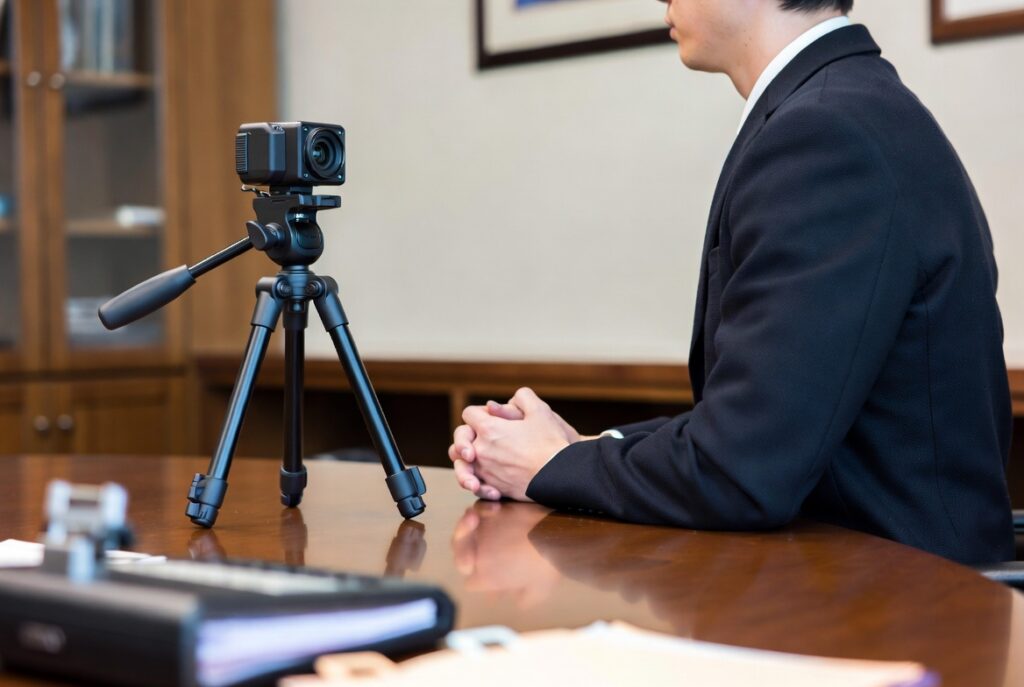
When I came into the case, I did everything the diligent approach calls for to cure it. I served supplemental responses correctly identifying both witnesses as general damages witnesses. I obtained a sworn declaration from prior counsel admitting the listing was a product of mistake, inadvertence, and excusable neglect — not willful suppression. And I offered, in writing, to produce both witnesses for deposition at my client’s expense, up to the day before trial, or alternatively for an informal interview by Zoom, so the defense could claim no prejudice. The defense took me up on it: both witnesses were deposed before trial, at my expense. I also had record evidence on my side: years earlier, in her own deposition, my client had identified her husband by name and testified about his firsthand knowledge of her physical restrictions.
The court split the ruling. My client’s husband — the witness whose role was already corroborated in the existing deposition record — was permitted to testify. Her mother-in-law — disclosed in the identical way, cured in the identical way, and fully deposed by the defense — was excluded. In my view that was wrong: under Saxena v. Goffney (2008) 159 Cal.App.4th 316, the Court of Appeal reversed the exclusion of witnesses identified in supplemental discovery on the first day of trial, and exclusion is reserved for willful suppression — which a sworn declaration of inadvertence squarely negates. But trial courts have broad discretion over discovery sanctions, and that discretion cuts both ways. Sometimes you do everything available to fix a predecessor’s error and still lose half the ruling.
The lesson is sharper than “judges sometimes get it wrong.” Notice which witness survived: the one whose knowledge was independently anchored in the record — my client’s own deposition testimony — before the dispute ever arose. The cure I built was the same for both witnesses; the record was not. A supplemental response, a declaration of mistake, and even completed depositions at your own expense may only carry a witness as far as the existing record supports them. That is the hard truth behind Thoren, and it is why I will not cut corners on the initial disclosure. You may never get the chance to fully cure a thin or inaccurate first response — the only reliable protection is getting it right, and getting it on the record, the first time.
How I Frame the Client Inquiry
The reasonable inquiry that satisfies the statute is not complicated, but it has to be done right. A vague “Who are your witnesses?” produces a thin list and invites the very willful-blindness argument Thoren warns about. Every attorney develops their own phrasing; mine is open and effect-focused:
“Who has observed how this injury has affected your daily life — your pain levels, your activities, your mood, your work, your time with family, your social life? Think about your spouse, children, parents, siblings, friends, coworkers, neighbors, or anyone who knew you well before and after the crash.”
With that answer in hand, a response to a narrowly tailored interrogatory might read: “After a reasonable inquiry, Plaintiff is currently aware of the following non-party witnesses with knowledge of Plaintiff’s non-economic damages: [list known individuals]. Plaintiff will supplement this response as additional information becomes available.” Preserve appropriate objections — overbroad, vague, and the like — but answer fully to the extent of your actual knowledge. That phrasing satisfies section 2030.220, defeats the Thoren exclusion argument before it can be made, and still leaves room to add witnesses honestly as the case develops.
Turning Defense Depositions Into a Plaintiff Lawyer’s Advantage
Here is the part that gets lost in the cautious-versus-aggressive debate. When you disclose your non-economic damages witnesses properly, the defense will often depose them. Many lawyers treat that as a cost — a few extra depositions, a few exposed witnesses. I see it the opposite way. A well-prepared lay witness, deposed by defense counsel, frequently becomes one of the most powerful pieces of evidence in the case, and the defense pays to create it. The key is to stop thinking of these depositions as something happening to your client and start treating them as a tool you get to use.

Sworn, on-the-record damages testimony — on the defense’s dime
When defense counsel notices the deposition of your client’s spouse, adult child, supervisor, or longtime friend, they are doing your damages development for you. You get sworn testimony, locked in early, describing the “before and after” that is the heart of any pain-and-suffering claim. If the deposition is recorded by video — and you should make sure it is — you walk away with footage you can later designate, edit, and play at trial or at arbitration. A grown daughter describing, on camera, how her father can no longer pick up his grandchildren is worth more than any chart, and the defense funded its creation.
Locking in testimony while memories are fresh
Personal injury cases move slowly. By the time you reach trial or a UIM arbitration, years may have passed. Witnesses move, relationships change, and memories of how acute the client’s early suffering was begin to soften. A deposition taken within the first year preserves that testimony at its most vivid. If a key witness later becomes unavailable, you have prior sworn testimony you can use. The defense’s decision to take the deposition early is, in effect, insurance for your damages case.
Building the adjuster’s file and your settlement leverage
Strong lay testimony does not stay buried in a transcript. It becomes part of the claims file. When an adjuster reviews deposition testimony in which credible, non-party witnesses describe a client’s genuine and ongoing suffering, the evaluation of the case changes. It supports a demand for higher settlement authority and, where the carrier’s conduct warrants it, it strengthens the record on bad faith. Concrete human evidence of harm is far more persuasive than argument. It is the same reason I cite specific verdicts and settlements rather than vague claims — the concrete moves people, and adjusters are people evaluating risk.
Setting traps for defense experts
Properly disclosed and deposed lay witnesses create a no-win choice for defense experts. If the defense medical or vocational expert ignores the lay testimony about how the injury actually plays out in the client’s daily life, the expert looks unprepared and detached on cross-examination — you simply walk them through the testimony they failed to consider. If instead the expert reviews and accounts for that testimony, they frequently end up corroborating the very damages picture you are trying to prove. Either way, the lay testimony you developed through the defense’s own deposition tightens the case. This dynamic is especially sharp in traumatic brain injury cases, where the gap between a clean scan and a profoundly changed person is bridged almost entirely by the people who live with the client.
Preparation is the multiplier
None of this happens automatically. A defense deposition only becomes an asset if the witness is genuinely prepared — if they understand the questions coming, testify truthfully, stay within their own observations, and resist being led into minimizing what they saw. An unprepared witness can do real harm. So I treat every defense deposition of a damages witness as a trial preparation session in disguise, approaching it as the attorney who will ultimately try the case: thorough preparation, a clear understanding of the witness’s role, and a focus on the concrete, observed reality of how the injury changed the client’s life. Prepared correctly, the witness the defense wanted to neutralize becomes the witness who anchors the case.
Over-Disclosure vs. Under-Disclosure: Calibrating the Response
Diligence does not mean dumping every name you can think of into every response. There is a real difference between a vague, overly broad request and a narrowly framed interrogatory. To a fishing-expedition request, you object and you do not volunteer witnesses gratuitously. But when an interrogatory is properly framed to seek non-economic damages witnesses specifically, you comply fully to the extent of your knowledge after reasonable inquiry. The math is simple: the downside of a few extra depositions is minimal compared with the catastrophic risk of losing your best damages witnesses to a Thoren motion on the eve of trial.
Why This Matters More in Solo and Small-Firm Practice
In a solo or small-firm plaintiff practice, where I personally handle every case from intake through trial or arbitration as the only attorney on the file, discovery decisions are not delegated and they are not abstract. They flow directly into client outcomes. Cutting corners on reasonable inquiry to “push it as far as possible” may work until it does not — and a single Thoren motion can gut a case built on strong general damages. Properly identifying the lay witnesses who carry a non-economic damages narrative is not busywork; it is case preservation — a theme I have taken up in my own Plaintiff Magazine articles on trial practice. The diligent, good-faith approach complies with both the letter and the spirit of the Discovery Act, and it builds the kind of robust, defensible record that turns the defense’s own discovery into settlement and trial leverage.
Get It Right From the Start
Whether the case began with a rear-end collision, a San Francisco car accident, or a slip and fall on commercial property, the non-economic damages witnesses are usually the difference between a number the adjuster offers and the number a case is actually worth. Disclose them diligently, prepare them thoroughly, and let the defense’s depositions do the work of locking in your strongest evidence. At the Law Office of John J. Roach, that thorough, hands-on approach is how I have recovered $25 million+ for Bay Area clients while handling every case personally.
If you or a loved one has been injured in a car accident, slip-and-fall, or other incident in the San Francisco Bay Area, schedule a free consultation for a direct conversation with a trial lawyer who will handle your case personally — in English or in Spanish.
¿Lesionado en un accidente? Hable directamente conmigo, en español, sin intermediarios. La consulta es gratuita. Llámenos al (415) 851-4557.
Frequently Asked Questions
Non-economic damages compensate for harm that does not come with a receipt — pain and suffering, emotional distress, loss of enjoyment of life, and similar effects of an injury. Because there is no bill to point to, these damages are proven largely through testimony, including the observations of people who knew the injured person before and after the incident.
Typically the people who have observed how the injury changed the plaintiff’s daily life: a spouse, children, parents, siblings, close friends, coworkers, and neighbors. Anyone who knew the plaintiff well before the incident and can describe the difference afterward may be a valuable witness.
Yes, when a properly framed interrogatory asks for them. Code of Civil Procedure section 2030.220 requires responses that are as complete and straightforward as reasonably available information permits, including information obtainable from people under the responding party’s control, such as the client and the client’s family.
Under Thoren v. Johnston & Washer, a court can exclude a witness if it finds the interrogatory response was willfully false — including where counsel deliberately refrained from determining whether the person was a witness. A narrow, deliberately incomplete response can expose your best damages witnesses to exclusion right before trial or arbitration.
Biles confirms there is no general continuing duty to supplement interrogatory answers in California, but it assumes a good-faith, reasonably complete initial response. It does not protect a strategy of conscious under-disclosure from the start.
Yes. Trial courts have broad discretion over discovery sanctions. Even where an inaccurate disclosure is supplemented, prior counsel swears the error was inadvertent, and the defense actually deposes the witness before trial, a court may still exclude that witness based on the original response — and may even allow one witness while excluding another cured in the identical way. Witnesses whose knowledge is independently corroborated in the existing record, such as the plaintiff’s own deposition testimony, fare better. The safest course is a complete, accurate disclosure from the start.
A properly prepared lay witness, deposed by the defense, produces sworn — often video — testimony about the plaintiff’s suffering, locked in early and created at the defense’s expense. That testimony strengthens the claims file, supports higher settlement authority, can be played at trial or arbitration, and forces defense experts either to address it or look unprepared.
Treat it as trial preparation. The witness should understand the questions likely to come, testify truthfully, stay within their own observations, and avoid being led into minimizing what they saw. Preparation is what turns a defense deposition from a risk into one of the strongest assets in the case.
Yes. The same diligence applies, with the added care of making sure family-member witnesses are interviewed and prepared in their own language so their observations come through clearly and accurately. Direct bilingual representation matters most exactly here — in the human details that prove non-economic damages.