

John Roach, Esq. | September 12, 2026 | All Things Trial \ Attorney Tips
How a San Francisco Personal Injury Lawyer Approaches Voir Dire: Seven Practice Tips for Jury Selection

Most people picture a personal injury trial as a fight over medical bills and photographs of a wrecked car. In reality, a large part of the outcome is decided before a single witness is sworn in — during the process of questioning the jury panel, which in a properly prepared case can and should take considerably longer than the twenty or thirty minutes some courts have tried to impose. I’ve tried personal injury cases in San Francisco since 2009, with a 9-for-9 verdict record, and if there’s one lesson that record keeps confirming, it’s that jury selection is not a formality to get through on the way to opening statement — it’s where a case is quietly won or lost. Here are seven things worth knowing about how voir dire actually works in a San Francisco personal injury trial, and what separates a jury that was merely selected from one that was actually chosen.
1. What Voir Dire Is Actually Trying to Accomplish
Voir dire is an old Anglo-Norman phrase that literally means “to speak the truth.” That’s worth pausing on, because a common myth holds that it means “to see [them] say” — but the “voir” in the legal term has nothing to do with the modern French word for “to see.” It comes from the Latin verum, meaning true, paired with dire, to say. In a California civil trial, its legal purpose is specific: Code of Civil Procedure section 222.5 gives each side’s counsel the right to question prospective jurors directly, so they can intelligently exercise both peremptory challenges and challenges for cause. The statute directs the trial judge to permit a “liberal and probing examination” aimed at uncovering bias or prejudice connected to the specific case being tried — not a generic survey of hobbies and prior jury service.
The “liberal and probing” language matters more than it might sound like on first read. Courts have made clear that a topic covered generally by the judge’s own initial questioning doesn’t shut the door on counsel asking about it again, in more depth, tied to the specific facts of the case. A judge might ask the whole panel whether anyone has strong feelings about lawsuits; counsel gets to follow that up with what those feelings actually are, and whether they’d affect how this particular juror weighs this particular plaintiff’s evidence. Generic questions get generic, socially acceptable answers. Case-specific follow-up is what actually surfaces something usable.
There’s a second purpose, though, that experienced trial lawyers treat as just as important. Voir dire is often the only real, unscripted conversation an attorney gets to have with the people who will decide the case before those people start forming impressions. Many jurors begin leaning one way or another well before the evidence is in. That means the tone an attorney sets during jury selection — candid, respectful, and willing to talk about the hard parts of the case out loud instead of hiding them — starts shaping the outcome long before the first exhibit is shown.
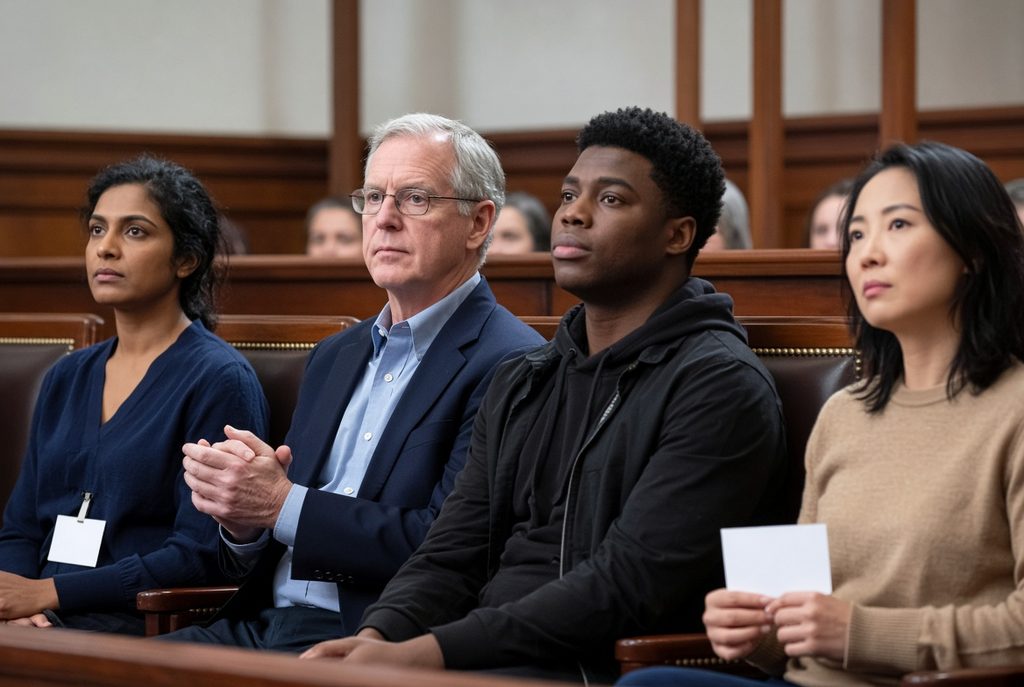
2. Build Your List of Topics Before You Ever Stand Up
The biggest mistake in voir dire usually isn’t a bad question. It’s not knowing which questions matter until it’s too late in the day to ask them. A more disciplined approach, used by top plaintiff’s trial lawyers around the state, is to build a written list of case-specific topics before trial and then work through that list with the panel deliberately, rather than improvising in the moment.
For a typical San Francisco personal injury case, that list might include: general skepticism about lawsuits and “lawsuit culture”; comparative-fault attitudes (can a juror still hold a defendant accountable if my client also made a mistake?); each individual category of non-economic damages a jury will eventually be asked to value — physical pain, mental suffering, loss of enjoyment of life, disfigurement, inconvenience; and, in bigger cases, how a juror feels about large verdicts in general, before they know what number is actually on the table.
The point of the list isn’t to interrogate every juror on every topic — courts won’t allow that, and jurors would tune out if they did. The point is to make sure nothing case-critical gets missed simply because the clock ran out or the conversation drifted. Building that list is also, quietly, where a case actually gets prepared: it forces an honest look at a case’s real weak points months before trial, not the night before.
The list also has to be built for the specific case, not recycled from the last one. A rideshare collision case calls for questions about how a juror views app-based drivers and “independent contractor” arguments. A premises case calls for questions about personal responsibility and whether a juror thinks people should simply watch where they’re walking. A San Francisco venire is genuinely wide-ranging — tech workers, small business owners, transit employees, retirees, people who’ve spent their whole lives in the city and people who moved here five years ago — and a topic list written for one case type will miss what actually matters in a different one.
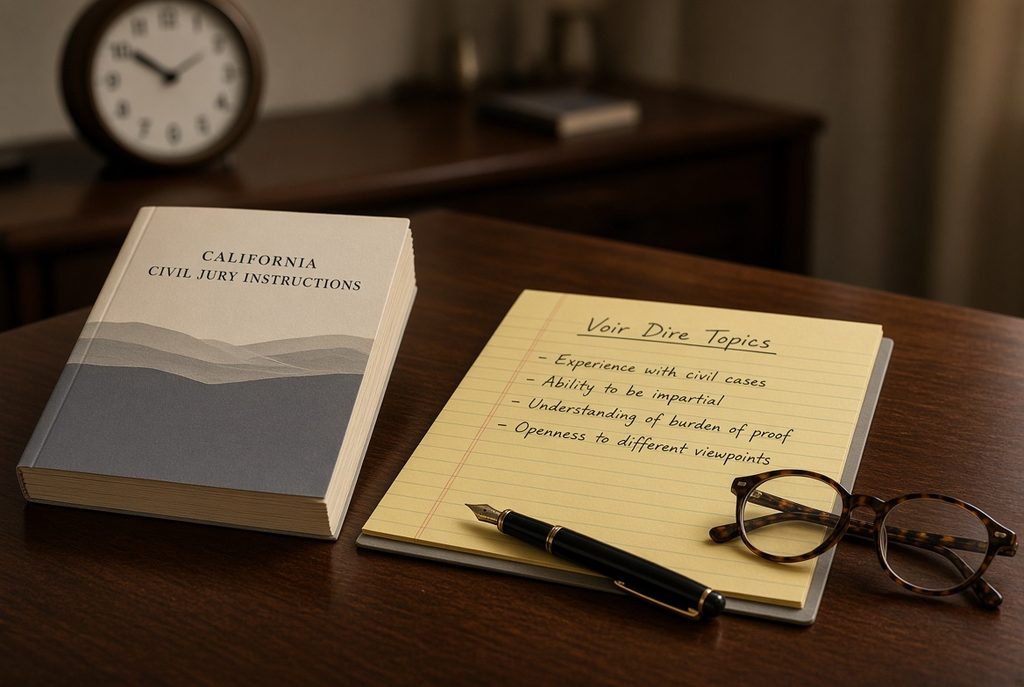
3. Tell the Panel the Number Before They Hear Any Evidence
Many attorneys avoid mentioning dollar figures during jury selection, worried it will make the case sound greedy before the jury has heard a single fact. The more effective approach — and one California law supports — is closer to the opposite.
California trial practice has long recognized that plaintiff’s counsel may ask prospective jurors, once liability is assumed for purposes of the question, whether they could return a verdict at the level the case actually seeks, and whether they’d hold liability to a higher standard simply because the number is large. Asking that directly, rather than dancing around it, does two things. It desensitizes the number so it doesn’t land as a shock during closing argument, and it surfaces — honestly and early — the jurors who simply cannot get comfortable with a substantial non-economic award no matter what the evidence shows. Those are the jurors worth spending follow-up time on, because a quiet “I don’t know, maybe” in jury selection has a way of hardening into an immovable position once deliberations start.
4. What It Actually Takes to Win a Challenge for Cause
California law recognizes three grounds for excusing a juror for cause under Code of Civil Procedure section 225: general disqualification, implied bias, and actual bias — a state of mind that would prevent the juror from acting with entire impartiality toward the case or the parties. In practice, actual bias is the ground that comes up most often in a personal injury trial, and it’s harder to establish on the record than most people assume.
A juror who says “I think I could be fair” hasn’t actually resolved anything — that’s a promise about intentions, not evidence of ability. The more useful technique is to name the specific attitude a topic touches on before asking about it, then follow up until the juror’s own words either confirm they can set it aside for this case or confirm they genuinely can’t. When comparative negligence, non-economic damages, or a large verdict amount sits at the center of a case, it’s often worth asking the trial judge for permission to read jurors the relevant jury instruction before questioning them on it — a juror can’t honestly say whether they’ll follow a rule of law they haven’t heard yet. And getting this right matters well past jury selection: California courts have granted new trials where a juror was later found to have concealed real bias during voir dire, which is exactly why the follow-up question matters more than the first answer.
5. Use Your Mini-Opening to Surface Bad Facts, Not Bury Them
Every case has at least one fact nobody wants to say out loud first — a treatment gap, a prior injury, a policy limit that sounds small next to what happened. The instinct is to protect those facts until they can be explained later, in context, on the attorney’s own terms. In voir dire, that instinct usually backfires.
Code of Civil Procedure section 222.5(d) gives counsel a specific tool for this: upon request, the trial judge must allow a brief, non-argumentative opening statement to the panel before oral questioning begins. Courts commonly hold these mini-openings to five or seven minutes, but that’s enough time to put a case’s real weak points in front of the jury before a single juror answers a single question, instead of after.
The instinct worth fighting is the urge to lead with the strongest facts. That’s backward. A juror who hears a case’s best facts in the mini-opening and reacts favorably becomes a target the other side will strike; a juror who never gets the chance to react well simply stays neutral and available. The bad facts are what actually earn their airtime — described neutrally, as what the evidence will show or what the defense will contend, rather than personally argued, so the statement stays within the non-argumentative limits the statute requires.
That connects directly to the cause-challenge standard above. A generic bias question draws a generic, socially acceptable answer. A question asked after the panel has actually heard, briefly and honestly, that this specific plaintiff had a prior back injury or went three weeks without treatment draws something closer to the truth, because the juror is reacting to a real fact instead of a hypothetical. Trial-practice literature on structuring a mini-opening makes the same point: jurors who are always going to lean against a case will say so once they’ve actually heard the case’s weak spot, and it’s far better to learn that in jury selection than to discover it for the first time in a defense verdict. That’s the difference between a vague assurance and the kind of concrete, case-specific answer that actually supports a cause challenge — which is also why it’s worth having someone other than the questioning attorney taking close-to-verbatim notes during this part of voir dire. Those exact words are what get cited back to the judge when the challenge is made.
6. Don’t Let an Arbitrary Clock Cut Your Voir Dire Short
Time is the resource attorneys fight over most in San Francisco jury selection, and the statute is squarely on the side of a thorough examination. Section 222.5 was specifically amended to stop trial courts from imposing blanket, one-size-fits-all time limits on civil voir dire. Instead, judges must weigh factors including how much time counsel has requested, the complexity of the case, the length of trial, and the number of parties and witnesses involved — and must grant supplemental time when a juror’s answers reveal attitudes inconsistent with impartiality, when the makeup of the panel calls for it, or when an unusually high number of cause challenges comes up.
The same section also bars a court from arbitrarily refusing a written juror questionnaire when one is requested, alongside the mini-opening right covered above. None of this happens automatically. It works best when counsel puts the request in writing before the trial date — a short pre-trial brief citing the statute, describing the case’s actual complexity, and asking specifically for adequate time, a mini-opening, and a written questionnaire — rather than raising it for the first time when a judge has already announced a limit from the bench. Waiting until the morning of trial to explain why a case is unusual is a much harder argument to win than making it in writing weeks earlier.
That matters more, not less, in a courthouse like San Francisco’s. Prospective jurors here are drawn at random from the City and County’s voter rolls, DMV records, and state tax-filer lists — a genuinely broad cross-section of neighborhoods, professions, and life experience. A panel that varied can’t be fairly understood in a few rushed minutes per person, which is precisely the situation the statute’s “liberal and probing” standard exists to prevent.
7. When a Jury Consultant Is Worth It
When the case value supports it, a jury consultant is worth serious consideration — not a luxury to talk yourself out of. Jury consultants are trial professionals in their own right, and the experienced ones have selected and analyzed juries across far more courtrooms and communities than any individual trial lawyer will see in a career. That volume brings something a single attorney’s instinct can’t fully replace: a systematic, tested read on what a given jury pool actually believes about lawsuits, damages, and shared fault, built on mock trial data and community attitude research rather than gut feel alone.
The honest calculus is about case value, not about whether the expertise is real. A one- or two-day mock trial with a professional consultant commonly runs into five figures once mock jurors, facilities, and consultant time are all counted, and that’s money well spent when a case carries the value and complexity to justify it — multiple defendants, several affirmative defenses stacked on top of each other, a government entity in the mix, or a liability theory that deserves to be pressure-tested before trial rather than discovered live in front of the real jury.
Even on cases where a consultant isn’t in the budget, the same discipline is worth borrowing. Consultants typically start by asking for a case summary and the key jury instructions, and deciding which handful of issues actually matter enough to test is valuable on its own — it’s the same exercise described above in building a topic list. For smaller cases, doing that version internally, paired with a questionnaire request and honest rehearsal with colleagues, is a reasonable substitute. For the cases where the value is there, though, bringing in someone who selects juries for a living is worth every dollar of the investment.
Jury Selection Is Where Trial-Tested Experience Shows
None of this replaces a courtroom’s worth of instinct. But instinct gets built the same way a topic list does — case by case, verdict by verdict, over years of actually standing in front of San Francisco juries rather than reading about doing it. Those trials are detailed on my results page, and every one of them sharpened how I approach the seven things above. I also write about courtroom practice for other trial lawyers — some of that work appears on my publications page — and this post continues that conversation for anyone facing a jury trial in San Francisco, attorney or client.
If you or someone you love has been seriously injured and a case may be headed toward a courtroom rather than a settlement table, schedule a free consultation to talk through what that would actually look like.
¿Necesita hablar con un abogado en español? Ofrezco consultas gratuitas directamente en español, sin intérpretes. Llame al (415) 851-4557 o visite esta página para una consulta gratuita.
It’s an Anglo-Norman French phrase that literally means “to speak the truth” — from the Latin verum (true) and dire (to say). A common myth holds that it means “to see them say,” but that’s a folk etymology; the legal term isn’t actually related to the modern French word for “to see.” In modern practice, voir dire refers to the process of questioning prospective jurors about their backgrounds and potential biases before they’re seated on a jury.
There’s no fixed statewide number. California Code of Civil Procedure section 222.5 specifically bars trial courts from imposing blanket, arbitrary time limits on civil voir dire, and requires the judge to weigh case-specific factors — complexity, trial length, number of parties and witnesses — when setting the scope of questioning, with supplemental time available in defined circumstances.
A challenge for cause removes a juror based on a specific, legally recognized reason — such as actual bias that would prevent impartiality — and must be justified to the judge. A peremptory challenge lets an attorney excuse a juror without stating a reason, subject to statutory limits on how many each side gets.
Yes. California trial practice allows plaintiff’s counsel to ask prospective jurors, assuming liability is established, whether they could return a verdict at the amount the case is actually seeking. It’s a legitimate and commonly used voir dire question.
Yes. A general promise to be fair doesn’t establish actual ability to set aside a specific attitude relevant to the case. That’s why experienced attorneys follow up with case-specific questions rather than accepting a broad assurance at face value.
It’s a brief, non-argumentative statement to the jury panel, allowed on request under Code of Civil Procedure section 222.5(d), given before questioning begins. Courts typically limit it to five or seven minutes. Its main strategic use is previewing a case’s weak points so jurors react to the actual facts during questioning, rather than to hypotheticals.
When case value supports it, yes. Jury consultants are trial professionals who select and analyze juries across far more courtrooms than any individual attorney sees in a career, and mock trial and community attitude research add a tested, systematic layer beyond instinct alone. The calculation is about whether a case’s value and complexity — multiple defendants, layered affirmative defenses, a government entity involved — justify the cost, not about whether the expertise is worthwhile.
Because it’s often the first, and sometimes the only, unscripted conversation an attorney has with the people who will decide the case — and many jurors begin forming impressions well before the evidence is presented.