

John Roach, Esq. | September 9, 2026 | California Law
San Francisco Dog Attack Lawyer: What the Tenderloin Attack Reveals About Suing an Owner With No Insurance

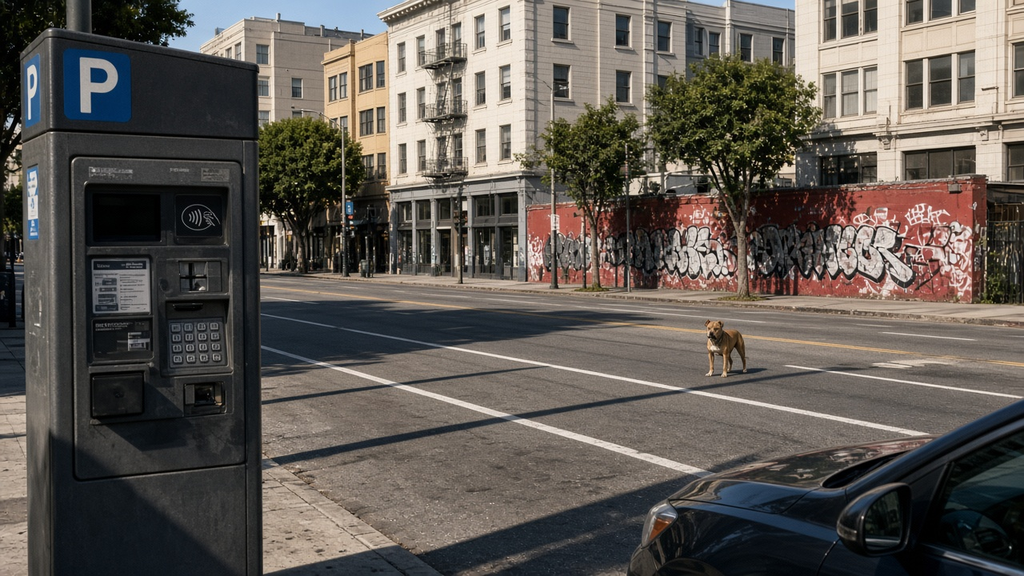
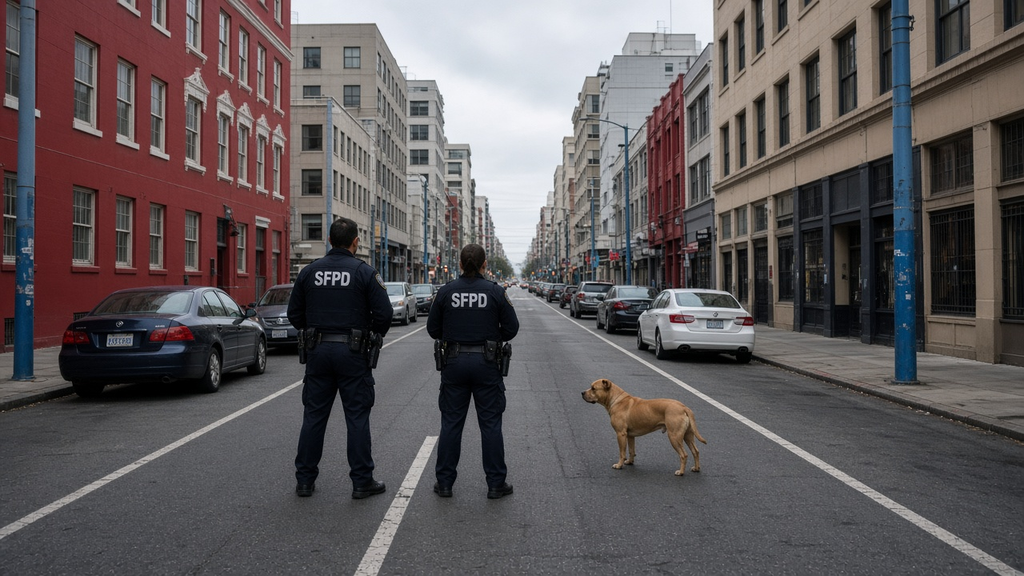
A dog attacked a woman on the 500 block of Larkin Street in the Tenderloin at around 9:20 a.m. on Tuesday, September 8, 2026, leaving her with serious, life-threatening injuries. San Francisco Fire Department paramedics treated her at the scene before she was taken to Zuckerberg San Francisco General Hospital. Police separated the dog — a large pit bull — from the victim. The animal became unresponsive while being restrained and died at or near the scene; San Francisco Animal Care and Control took possession of the remains. Officials have not publicly confirmed a cause of death.
As of this writing, the dog’s owner has not been publicly identified. The SF Standard reported that a nearby restaurant employee said an officer told her the dog had attacked someone before — a secondhand, unconfirmed account, not an official finding.
I’m not this victim’s lawyer, and I don’t know facts about this specific case beyond what’s been reported. But as a San Francisco personal injury lawyer who has litigated dog attack cases — including a $300,000 jury verdict in a case where the dog never even made contact — I get some version of the same three questions every time a story like this runs: Can anyone actually be sued? What if the owner has no insurance? And why does this keep happening in the Tenderloin specifically? All three deserve real answers, not just reassurance.
Is This Really About “No Homeowner’s Insurance”?
To be direct about something most coverage of this story will gloss over: nothing published about the Larkin Street attack confirms who the dog’s owner is, let alone that person’s housing situation. It would be wrong to assume unhoused ownership as fact here, and I’m not going to.
What is fair to say — because it’s been reported, not assumed — is that the Tenderloin has an outsized dog-attack problem, and outlets covering it (including the SF Standard) have specifically connected that concentration to the neighborhood’s high density of unhoused residents and the stress that street living puts on dogs and their owners. The Tenderloin alone accounts for more than a quarter of all dog attacks reported to SFPD citywide. So while I can’t tell you this particular owner is uninsured, I can tell you the fact pattern this post is built around — a dangerous dog with no clearly solvent, insured owner behind it — is common enough in this part of the city that every Tenderloin dog attack victim should understand it going in.
That distinction matters because it changes the entire shape of the case. Most dog bite claims are actually insurance claims: California law makes the owner strictly liable, but in practice it’s almost always the owner’s homeowner’s or renter’s insurance policy that pays, not money out of that person’s own pocket. When there’s no lease, no fixed address, and no policy behind the dog, liability and collectability come apart — you can be completely right about who’s responsible and still come up empty if that person has no assets and no coverage. The rest of this post is about both halves of that problem: who’s legally responsible, and how a lawyer goes about actually getting paid when the obvious defendant can’t.
Who Can Actually Be Sued for a Dog Attack in California?
The dog’s owner, under strict liability. California Civil Code section 3342 makes a dog’s owner liable for injuries the dog causes by biting someone who is in a public place or lawfully in a private place. The victim doesn’t have to prove the owner was careless, and the owner doesn’t get a defense just because “the dog never did this before.” California has no “one free bite” rule. A sidewalk on Larkin Street is about as squarely a “public place” as this statute contemplates, so once the owner is identified, Section 3342 liability doesn’t turn on anything the owner knew or should have known.
Whoever else was keeping the dog, if it wasn’t the owner. If someone other than the legal owner was watching, feeding, or otherwise caring for the dog — a friend, a partner, someone at a shelter or service program — California case law treats a “keeper” differently from an “owner.” A keeper isn’t automatically strictly liable the way an owner is; under Buffington v. Nicholson, a 1947 California appellate decision, a keeper is liable only if they knew or should have known the dog had dangerous tendencies. It’s a real path to a second, potentially insured defendant, but it takes more proof than the owner’s claim does.
A landlord, hotel, or business, in the right fact pattern. This doesn’t appear to be what happened on Larkin Street — this was a loose dog on a public sidewalk, not a building-specific incident — but it’s worth knowing for the many Tenderloin attacks that do happen in or around SRO hotels and apartment buildings, where a premises liability clam can run alongside — or instead of — a claim against the dog’s owner. Under Uccello v. Laudenslayer, a 1975 California appellate decision, a landlord can be independently liable for a tenant’s dangerous dog if the landlord had actual knowledge of the dog’s dangerous propensities and the ability to have it removed — for example, by enforcing a lease. Constructive knowledge (“should have known”) isn’t enough; the landlord has to have actually known and had the power to act.
Possibly the City — but this is the hard one, and the deadline is short. More on that below.
San Francisco’s Dog Court Has Been Dark for Most of the Past Year
This is the part of the story that has nothing to do with any one owner and everything to do with the system that’s supposed to catch dangerous dogs before they get to a moment like Tuesday’s.
California law (Food and Agricultural Code section 31601 and following) lets cities run their own hearings to declare a dog “potentially dangerous” or “vicious” and order it muzzled, confined, or in the worst cases euthanized. San Francisco runs its version of this through a hearing process — reporters and city officials call it “dog court” or “canine court” — administered through the Department of Police Accountability. According to reporting from the SF Standard and Mission Local, San Francisco’s dog court went dark in July 2025 after DPA’s director halted hearings in a budget dispute with the city, and it stayed suspended for roughly ten months. The backlog had already reached 61 cases by April 2026 and grew to 66 by May 2026, when the city announced a restart plan — a newly hired hearing officer, with hearings slated to resume by mid-2026 — for dogs already flagged as dangerous enough to warrant one, some of which had been sitting in limbo for the better part of a year. Board of Supervisors member Bilal Mahmood put it bluntly: “We wouldn’t let our civil or criminal courts go dark for a year.”
That suspension covers most of the same period in which the city’s dog-attack numbers climbed. The SF Standard reported San Francisco logged 926 dog bites in 2025, up from 868 the year before — and that the Tenderloin alone accounted for more than a quarter of the citywide total. Hearings were slated to resume by mid-2026 after that ten-month gap; whether the dog on Larkin Street would have been in that queue — or whether the prior-attack claim reported by the SF Standard would have held up — isn’t something anyone outside SFPD and Animal Care and Control can answer yet. What “proper dog control” has meant in San Francisco for most of the past year is a legally-created system for pulling dangerous dogs off the street that spent most of that time not hearing cases at all — and that matters to how a case like this gets investigated, and potentially who else besides the dog’s owner may bear responsibility.
The Six-Month Trap If the City Is Part of the Story
Here’s the piece of this that I want every Tenderloin dog attack victim to hear early, because it’s the one deadline that can quietly kill an otherwise strong case: if any part of your claim involves a public entity’s own negligence — for instance, a documented prior complaint about a specific dog that a backlogged or suspended city hearing process failed to act on — that piece of the claim isn’t governed by California’s ordinary two-year injury deadline. Under Government Code section 911.2, a claim against a city, county, or other public entity generally has to be formally presented within six months of the incident, not two years. Miss it, and that avenue is very likely gone for good, regardless of how strong the underlying facts are.
I want to be honest about the other side of this, too: suing a government entity over a failure to enforce its own dangerous-dog rules is a genuinely hard case. California law gives public entities broad immunity for exactly this kind of claim — Government Code section 818.2, for example, says a public entity isn’t liable for failing to enforce a law. Getting around that immunity generally requires showing the entity broke a mandatory duty, not just a discretionary one, and that takes real investigation into the specific rules DPA and Animal Care and Control were operating under. I’m not telling you this case exists here — I don’t know that it does. I’m telling you that if it does exist in a case like this one, the clock to find out starts running immediately, long before the two-year deadline most people assume they have. (I’ve written a full breakdown of how these government-claim cases work, and the notice and evidence they require, in my guide to claims against California government entities.)
What Happens When There’s No Insurance to Pay?
This is the practical question underneath everything else, and it deserves a straight answer instead of false comfort.
When a dog’s owner has a homeowner’s or renter’s policy, that policy almost always ends up paying a legitimate dog attack claim — it’s coverage the owner is already paying for, and using it isn’t “taking money” from anyone personally. That’s the normal case, and it’s the case I can usually resolve efficiently. When the owner has no lease, no fixed address, and no policy — or hasn’t even been identified yet — a valid claim under Civil Code section 3342 doesn’t disappear, but the path to actually collecting on it changes completely. Here’s what a case like that actually requires:
- Identify every possible defendant, not just the obvious one. Was anyone else feeding, sheltering, or caring for this dog — someone who might qualify as a keeper with their own renter’s policy? Did the attack happen near, or connect to, a specific property whose owner or manager had some knowledge of the dog and the ability to act?
- Use the official record the incident already created. Animal Care and Control’s custody of the dog, the SFPD incident report, and (if it exists) any prior complaint history are the beginning of identifying an owner who hasn’t come forward — and of proving what the dog court would have known if it had been open.
- Canvass for evidence fast. Larkin Street is dense with businesses; surveillance footage and witnesses who saw the dog before the attack are the kind of evidence that answers “whose dog was this” and “had it done this before” — and that evidence gets harder to find every day that passes.
- Get treatment now, sort out payment later. A victim’s own health insurance or Medi-Cal covers emergency and follow-up care regardless of who ultimately pays; any reimbursement or lien gets resolved out of a settlement or verdict, not before.
- Be honest about collectability from day one. Not every valid legal claim ends in a full recovery — that’s the uncomfortable truth an uninsured, unidentified, or judgment-proof defendant creates, in a dog attack case or any other kind. It’s exactly why identifying every possible defendant and every possible policy matters so much more in a case like this than in the ordinary dog bite claim.
What To Do If a Dog Attacked You in San Francisco
- Get medical care first, even if the injury looks minor at the time — bite wounds and crush injuries both carry serious infection risk, and your medical record becomes central evidence either way.
- Make sure the attack is reported to San Francisco Animal Care and Control. A bite triggers a required rabies-quarantine investigation, which creates an official record of the dog, its location, and often its owner.
- Get the SFPD incident report number before you leave the scene if you can, or request it as soon as possible afterward.
- Photograph your injuries immediately, and again as they heal — bruising and swelling change fast, and both stages matter for value.
- Get names and phone numbers of anyone who saw it happen, and ask nearby businesses whether their cameras cover the area.
- Don’t accept cash or a verbal promise from anyone at the scene — informal payoffs almost never cover the real cost of treatment, and they can complicate a legitimate claim later.
- Talk to a lawyer before you assume you know your deadline. Most dog attack claims run on California’s two-year clock, but if a public entity’s own negligence is part of the story, that piece may run on six months instead — and you want that question answered in the first weeks, not the first year.
Frequently Asked Questions
The dog’s owner, under California’s strict-liability dog bite statute (Civil Code § 3342), for any bite that happens in a public place or while the victim is lawfully present in a private one. Depending on the facts, a non-owner “keeper” who knew the dog was dangerous, or a landlord or property owner who knowingly harbored a dangerous dog and could have removed it, may also be liable.
The claim doesn’t disappear, but the case shifts toward identifying the owner and any other potentially responsible or insured party. Animal Care and Control’s custody record, the police report, witness accounts, and nearby surveillance footage are usually where that identification starts — which is why acting quickly matters.
No. California has no “one free bite” rule. Under Civil Code § 3342, an owner is strictly liable for a bite regardless of the dog’s history or what the owner knew. Prior incidents can still matter — they can support a separate negligence claim, affect damages, and, in the right case, factor into an argument that the city or the dog’s keeper should have acted sooner.
Liability and collectability are two different questions. You can win on liability and still face a defendant with no assets and no policy to pay a judgment. That’s why a case like this focuses heavily on finding every other potentially liable, insured party — a keeper, a property owner, or, in narrow circumstances, a public entity — rather than resting on the named owner alone.
Yes, in the right circumstances. California law (Uccello v. Laudenslayer) allows landlord liability when the landlord had actual knowledge of the dog’s dangerous propensities and the ability to have it removed, such as through the lease — but “should have known” isn’t enough; actual knowledge is required.
No. The city’s dangerous-dog hearing process (sometimes called “canine court”) is a separate administrative proceeding that can order a dog muzzled, confined, or euthanized — it doesn’t award a victim any compensation. A civil claim for your injuries is a completely separate process, though records from an animal-control hearing can become important evidence in the civil case.
It’s possible in narrow circumstances, but it’s a genuinely difficult claim — California law gives public entities broad immunity for failing to enforce laws. It generally takes proof of a specific, mandatory duty the city broke, such as a documented prior complaint a legally required hearing process failed to act on. Whether or not that theory applies here, any claim against a public entity must be formally filed within six months under Government Code § 911.2 — far shorter than the general two-year deadline.
Generally two years from the date of the attack, under Code of Civil Procedure § 335.1. But if a government entity’s negligence is part of the case, that portion of the claim must be presented within six months under Government Code § 911.2 — so don’t wait to find out which clock applies to your case.
If You or Someone You Love Was Attacked by a Dog in San Francisco
I’ve represented injured people across the Bay Area since 2009, including a $300,000 jury verdict for a client hurt by a dog that never even bit him. If a dog attacked you or someone you love — on Larkin Street or anywhere else in San Francisco — call the Law Office of John J. Roach at (415) 851-4557 for a free consultation. Se habla español — my free consultation and my guide to dog bite claims are also available entirely in Spanish.