
John Roach, Esq. | September 18, 2026 | Brain Injuries \ Premises Liability
SF Injury Lawyer’s Take: What the Six Flags X2 Brain Injury Lawsuits Mean for California Riders

Six Flags Magic Mountain’s X2 coaster, a ride built around a spinning car and a launch designed to disorient riders on purpose, is now the subject of multiple lawsuits alleging it caused catastrophic brain injuries and at least one death. One family’s wrongful death case settled in August 2026. A separate lawsuit filed this September alleges a rider suffered a traumatic brain injury when his head struck the headrest during the ride. According to recent reporting, the park’s own records reportedly documented dozens of prior head and neck injury complaints tied to the ride, and it has since been pulled from operation.
I don’t represent anyone in those specific cases. I’m a San Francisco brain injury and personal injury lawyer, and I’m writing about this because I get a version of the same question every time a story like this breaks: if I got hurt on a ride like that, or by a business that hands me a waiver before I can participate, does the waiver mean I don’t have a case? The honest answer is almost always no, not by itself, and the X2 litigation is a useful example of why.
What’s Alleged Against the X2 Coaster
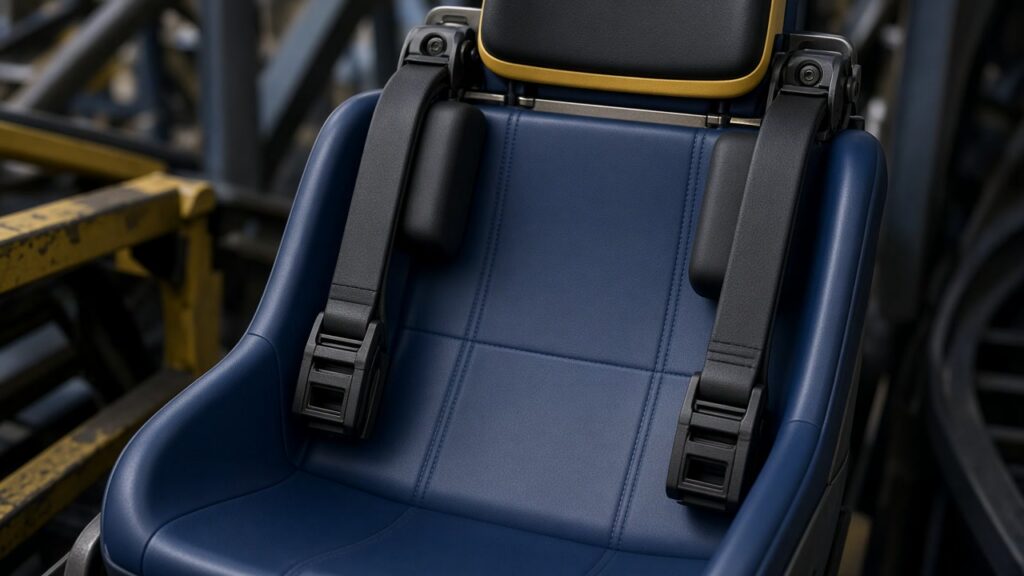
Court filings and news coverage describe a pattern going back roughly two decades: riders who report striking their heads against the ride’s headrests during its spinning, high-G launch sequence, several of whom were later diagnosed with subdural hematomas, the same type of brain bleed at issue in a family’s wrongful death case that settled this past August. A separate lawsuit filed in September describes a rider’s head repeatedly hitting the headrest during a 2024 ride, resulting in a traumatic brain injury. According to recent reporting, the park pulled the ride from operation this summer after further hospitalizations, and an expert retained in the wrongful death case testified that the park’s own internal records showed roughly 70 complaints of head or neck injuries tied to the ride over just a three-year span. Six Flags has disputed liability and, in at least one case, argued the injury stemmed from a rider’s pre-existing condition rather than the ride itself.
I’m not in a position to evaluate those specific claims, and I want to be direct about that: this isn’t a case I’m involved in, and nothing here should be read as commentary on how it should come out. What it does illustrate is a pattern that shows up across premises liability and product liability cases generally, not just this one ride: a business’s own internal incident history is often the single most important piece of evidence in a case like this, because it goes directly to whether the operator knew, or should have known, that something about the equipment or its operation was dangerous beyond what riders sign up for. A single injury can look like bad luck. A documented pattern of dozens of similar injuries over years looks like notice, and notice is often what separates an inherent risk of the activity from a business’s own negligence.
Why a Signed Waiver Doesn’t End the Conversation
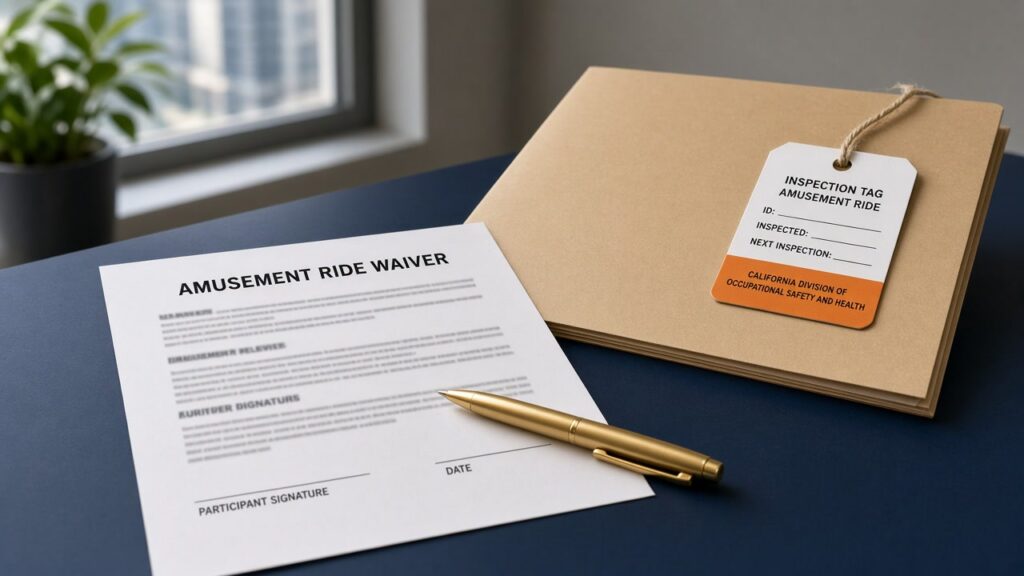
Almost every theme park ticket, gym membership, ropes course waiver, and rental agreement in California includes language purporting to release the business from liability. People often assume that language is the end of the story. It isn’t, for a few reasons that matter regardless of what kind of activity is involved.
First, California Civil Code section 1668 makes clear that a contract cannot lawfully exempt anyone from liability for their own fraud, willful injury to another person, or violation of law, and California courts have separately held that a release cannot shield a business from its own gross negligence. A poorly maintained ride, a known defect that wasn’t fixed, or a failure to act on a documented pattern of injuries can fall well outside what a waiver is legally allowed to cover.
Second, California’s assumption of risk doctrine, most often associated with sports and recreational activities, only protects a business from the risks that are inherent to the activity itself, the ordinary bumps and jolts a rider expects from a roller coaster, for example. It does not protect a business from risks it created or unreasonably increased through negligent design, manufacture, maintenance, or operation. Whether a specific injury falls on one side of that line or the other is exactly the kind of question that gets litigated, and it’s rarely as simple as “you signed something, so you’re out of luck.”
Third, a waiver only works if it’s clear, and it only covers what it actually says. Broad, generic release language doesn’t automatically bar every possible claim, and courts scrutinize these documents closely, especially where the injury is severe and the underlying conduct looks like more than an ordinary risk of the activity.
This isn’t unique to theme parks. I see the same waiver-isn’t-the-end-of-it pattern in gym injury cases, rideshare and delivery-app disputes, ropes courses, ski resorts, and construction sites where a subcontractor’s agreement tries to shift blame away from an unsafe condition. The name on the document changes. The legal question underneath it, whether the harm came from an accepted risk of the activity or from something the business did or failed to do, stays the same.
Brain Injuries Are Especially Easy to Underestimate at the Time
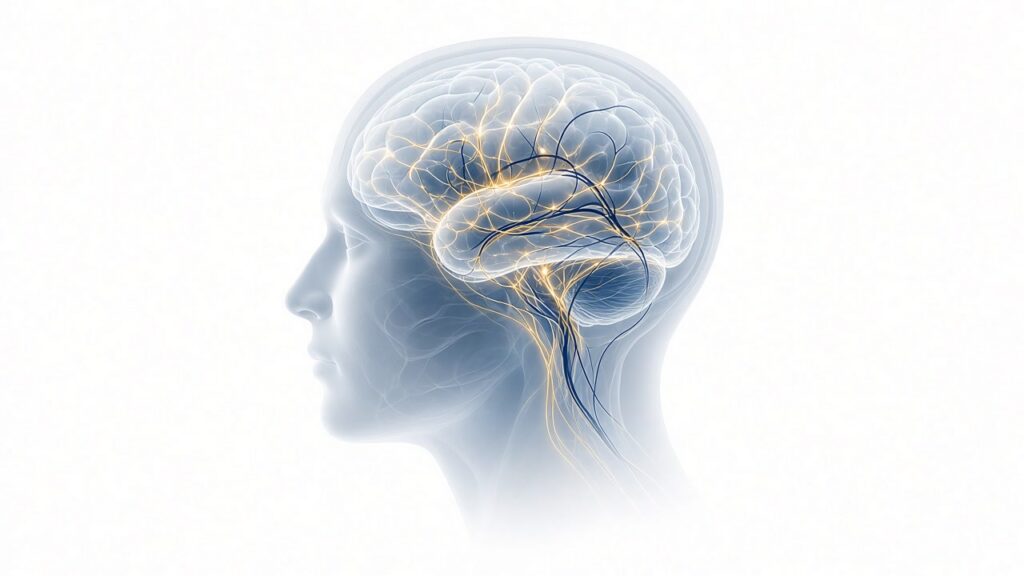
Subdural hematomas, the injury described in the X2 litigation, happen when blood collects between the brain and the skull, often after the kind of rapid acceleration and deceleration forces a coaster produces. What makes these injuries dangerous from a legal standpoint, not just a medical one, is that symptoms frequently don’t show up right away. A rider can walk off a ride feeling fine, or with what seems like an ordinary headache, and not develop the confusion, vision changes, slurred speech, or loss of coordination that signal a real brain bleed until hours or days later.
That delay matters because the connection between the ride and the injury gets harder to prove the longer it goes undocumented. Insurance companies and corporate defendants routinely argue that a gap between the incident and the diagnosis means something else caused the injury, a pre-existing condition, an unrelated event, anything but the ride. Six Flags has made exactly that argument in one of the pending cases. Closing that gap with prompt, well-documented medical care is one of the most effective things an injured person can do for their own case, long before a lawyer is ever involved.
If you or a family member hits your head on a ride, on equipment, or in any kind of incident and something feels off afterward, even if it seems minor, get evaluated promptly and make sure the visit is on the record. Don’t wait to see if it resolves on its own.
What California’s Ride Safety Rules Add to a Case
California regulates permanent amusement rides through Cal/OSHA’s amusement ride safety program, which requires regular inspections and requires operators to report certain injuries connected to ride operation. That regulatory paper trail, inspection records, maintenance logs, and injury reports, doesn’t just sit in a file somewhere. In litigation, it’s often the evidence that turns “the ride hurt me” into “the operator knew this ride was hurting people and kept running it anyway.” That’s the difference between an ordinary risk of riding a coaster and a claim a business can actually be held responsible for.
That evidence rarely surfaces on its own. Getting to it usually takes formal discovery, subpoenas for maintenance and inspection records, depositions of ride operators and engineers, and often independent experts who can explain the mechanics of what the ride actually did to a rider’s body. The joint statement from treating neurosurgeons described in the X2 reporting, attributing two of the July hospitalizations to the ride’s rapid acceleration and deceleration forces, is the kind of medical opinion that tends to carry real weight once litigation reaches that stage. None of that happens automatically, and it rarely happens quickly, which is part of why getting a lawyer involved early matters.
What To Do If You’re Hurt on a Ride or by Any Business’s Equipment
A few steps make a real difference if this happens to you or someone in your family:
- Get medical attention promptly, even if the injury seems minor at first, and describe exactly what happened so it’s on the record.
- Write down what you remember while it’s fresh: the ride or equipment involved, what happened, who else was around, and any symptoms, even ones that seem small.
- Photograph the ride, the area, and any visible injury if you’re able to.
- Ask the business for an incident report and keep a copy of anything you signed, including the ticket or waiver language.
- Don’t assume a waiver, a sign, or something an employee tells you settles the question of whether you have a claim. That’s a legal determination, not something printed on the back of a ticket.
Talk to a California Brain Injury Lawyer
If a theme park ride left you or a family member with a brain injury, don’t assume a signed waiver ends your options. Call the Law Office of John J. Roach at (415) 851-4557 for a free consultation.
Represento a víctimas de accidentes directamente en español, sin intérpretes. Si usted o un familiar sufrió una lesión cerebral en un parque de diversiones, llame para una consulta gratuita con un abogado bilingüe de lesiones personales.
Frequently Asked Questions
Yes, if the injury resulted from something beyond the ordinary risks of riding, such as a maintenance failure, a design or manufacturing defect, negligent operation, or a known hazard the park failed to address. California law does not treat every ride injury as an accepted risk with no legal remedy.
Not automatically. California law does not allow a business to use a waiver to escape liability for its own gross negligence, willful misconduct, or violations of law, and a waiver only covers the ordinary risks inherent to the activity, not risks the business created or unreasonably increased.
Assumption of risk is a legal doctrine that limits liability for the risks inherent to an activity, like the expected jolts of a roller coaster. It does not protect a business from risks caused by its own negligence, such as poorly maintained equipment or an unaddressed pattern of injuries.
Possibly, and this is common with brain injuries like subdural hematomas, which can take hours or days to produce symptoms such as confusion, vision changes, or loss of coordination. Get evaluated as soon as symptoms appear and make sure the connection to the incident is documented.
The general deadline for a personal injury claim in California is two years from the date of injury, though shorter deadlines can apply if a government entity is involved. Evidence like inspection and maintenance records can also become harder to obtain the longer you wait, so it’s best not to delay.
Permanent amusement rides in California are regulated through Cal/OSHA’s amusement ride safety program, which requires periodic inspections and reporting of certain injuries connected to ride operation. Those records can become important evidence in a claim.
Depending on the case, compensation can include medical expenses, future care costs, lost income, pain and suffering, and related damages. A brain injury case in particular often requires input from medical experts to fully account for long-term impact.
Get medical attention, document what happened while it’s fresh, photograph the scene if possible, request an incident report from the business, and keep any ticket or waiver paperwork. Then talk to a lawyer before assuming the waiver or anything you were told settles the question.