

John Roach, Esq. | July 6, 2026 | California Law \ Car Accidents
Commercial Truck Accidents on Bay Area Highways: Why a Truck Crash Is Not Just a Bigger Car Accident

A fully loaded big rig can weigh 80,000 pounds — roughly twenty times the weight of the car next to it on the 80, the 101, or the 880. When a truck like that crashes, the people in the smaller vehicle absorb forces that ordinary cars are never designed to survive. But the weight is only the beginning of what makes these cases different. A commercial truck crash pulls in federal safety law, corporate defendants with rapid-response teams, and layers of insurance most drivers never encounter. As a commercial truck accident lawyer handling these cases since 2009, I want Bay Area drivers to understand why a truck case has to be built differently from the first day.
Federal Rules Govern Trucks — and They Create Liability
Interstate trucking is regulated by the Federal Motor Carrier Safety Administration. Those rules are not bureaucratic background noise; they are the backbone of a strong truck case. When a carrier or driver breaks one, that violation can establish negligence. Understanding how FMCSA regulations shape these cases is what separates a full recovery from a quick lowball settlement.
The regulations that most often decide truck cases include:
- Hours-of-service limits. Drivers may only operate for set periods before mandatory rest. Fatigue is a leading cause of truck crashes, and electronic logging devices record the truth.
- Driver qualification and testing. Carriers must vet drivers and conduct drug and alcohol testing. A negligent-hiring claim can reach the company directly.
- Maintenance and inspection. Brakes, tires, and lighting must be inspected and maintained. Records often reveal a known, ignored defect.
- Cargo loading. Improperly secured or overweight loads cause rollovers and shifting-load crashes — and can point liability at the company that loaded the trailer.
A Truck Crash Usually Has More Than One Defendant
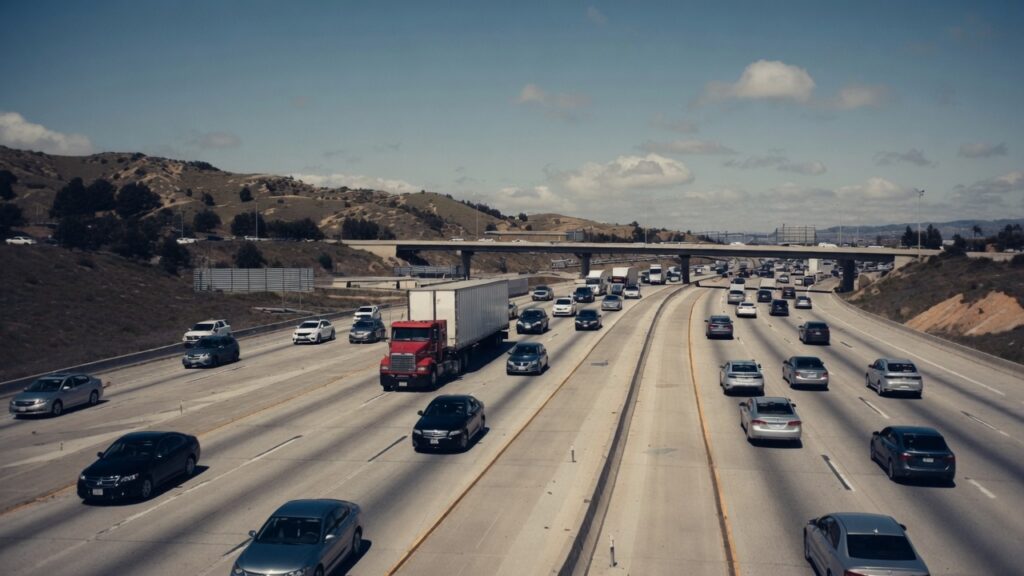
In a typical car accident, you are dealing with one driver. In a truck case, responsibility is frequently spread across several companies, and identifying every one of them is where real value is found:
- The driver, for negligent operation.
- The trucking company, both for the driver’s conduct and for its own negligent hiring, training, supervision, or maintenance.
- The broker or shipper that arranged or loaded the freight.
- A maintenance contractor that serviced the rig.
- A parts or equipment manufacturer, if a defect contributed.
This matters because interstate carriers are required to carry far higher insurance than ordinary drivers — federal minimums for many trucks start at $750,000 and routinely run to $1 million or more, with additional layers stacked on top. The severity of truck injuries is exactly why those policies exist. I have recovered significant results in catastrophic cases, including the the $6 million pedestrian TBI settlement, and truck crashes commonly produce that level of harm: severe traumatic brain injury, spinal cord injury, and, in the worst cases, the loss of a family member.
Evidence Disappears Fast — Which Is Why Timing Decides Cases

The single biggest difference in how I handle a truck case is speed. Trucking companies often dispatch investigators to the scene within hours. Meanwhile, the evidence that proves your case has a short shelf life:
- Electronic logging and engine-control data can be overwritten on a cycle of weeks.
- Driver logs, dispatch records, and inspection reports may only be retained for limited periods.
- Dashcam and yard-camera footage gets recorded over.
That is why one of the first steps in a truck case is sending a formal preservation (spoliation) letter demanding the carrier retain all of it. Wait too long and the most powerful proof of fault is simply gone. If a truck has hurt you, the smartest move is to talk to an attorney before the company’s team finishes building its defense — you can schedule a free case review today.
Common Bay Area Truck Crash Scenarios
Bay Area highways create their own hazards: stop-and-go congestion that leads to underride rear-end crashes, tight interchanges where trucks make wide turns across multiple lanes, steep grades on routes like the 17 and the 580 where brake failure is catastrophic, and blind-spot lane changes on crowded freeways. Each pattern points to different evidence and sometimes a different defendant, which is why a careful, fact-specific investigation matters more here than in almost any other Bay Area car accident representation.
Why a Bay Area Truck Accident Lawyer Matters
Trucking companies and their insurers are not waiting to see what you do — they are already working. As a trial-tested attorney practicing since 2009 with a 9-for-9 verdict record, I move immediately to preserve the federal records, identify every responsible company, and document the full scope of an injury before the defense can minimize it. For Spanish-speaking clients, I provide consultations in Spanish directly. And because I work on contingency, you pay nothing unless I recover for you.
Talk to a Truck Accident Lawyer for Free
If you or a loved one was hurt by a commercial truck on a Bay Area highway, the clock on critical evidence is already running. Call (415) 851-4557 or request a free consultation. Se habla español.
Frequently Asked Questions
Trucks are governed by federal FMCSA safety regulations, often involve several potentially liable companies, and carry much higher insurance limits. The injuries are also typically more severe, so the case must be investigated and built differently from the start.
Liability can extend beyond the driver to the trucking company, the broker or shipper, a maintenance contractor, and equipment manufacturers. Identifying every responsible party is often where the true value of a case is found.
Many interstate trucks are federally required to carry minimum liability coverage starting around $750,000, and policies of $1 million or more are common, frequently with additional layers. These limits exist because truck injuries tend to be catastrophic.
Electronic logging data, driver hours-of-service logs, maintenance and inspection records, and dashcam footage are critical — and they can be lost quickly. A preservation letter should be sent early to stop the carrier from destroying them.
The general personal injury deadline is two years, but key evidence in a truck case disappears within weeks. The safest approach is to consult an attorney promptly rather than wait.
This firm handles these cases on a contingency fee, so you pay nothing up front and owe attorney fees only if I recover compensation for you. The consultation is free.
No. California civil courts decide injury cases on the facts, not immigration status, and your conversations with your attorney are confidential. Your right to recover does not depend on your status.