

John Roach, Esq. | September 16, 2026 | California Law
San Francisco Cable Car Accident Lawyer: What the Lawsuit Means for Injured Muni Riders

San Francisco sells tourists a fantasy: hop on the cable car, ring the bell, coast down California Street with the bay in the distance. On December 15, 2025, that fantasy broke. According to the lawsuit filed this month in San Francisco Superior Court, Cable Car No. 51 hit a high rate of speed and then stopped so abruptly that windows shattered and passengers were thrown from their seats — on California Street between Hyde and Leavenworth, per the San Francisco Fire Department. SFFD evaluated 15 people at the scene; the complaint alleges 14 were hurt. According to the complaint, one man was hospitalized at Zuckerberg San Francisco General with fractured vertebrae in his neck (C6) and back (T11) and didn’t go home until March 23, 2026 — over three months later.
The suit (case no. CGC-26-640085) alleges the car was negligently maintained and operated. That sounds simple. Suing a government transit agency in California never is, and that gap is exactly what makes this case worth a closer look — and exactly what every rider hurt on Muni, BART, or a city sidewalk needs to understand before they assume their claim works like a normal car accident case.
To be clear: this firm does not represent the injured rider in this lawsuit. The complaint is a public record, and the discussion below is general — but the six-month government-claim deadline it illustrates applies to anyone hurt on Muni, not just the plaintiff in this case.
Why “Common Carrier” Status Changes the Analysis
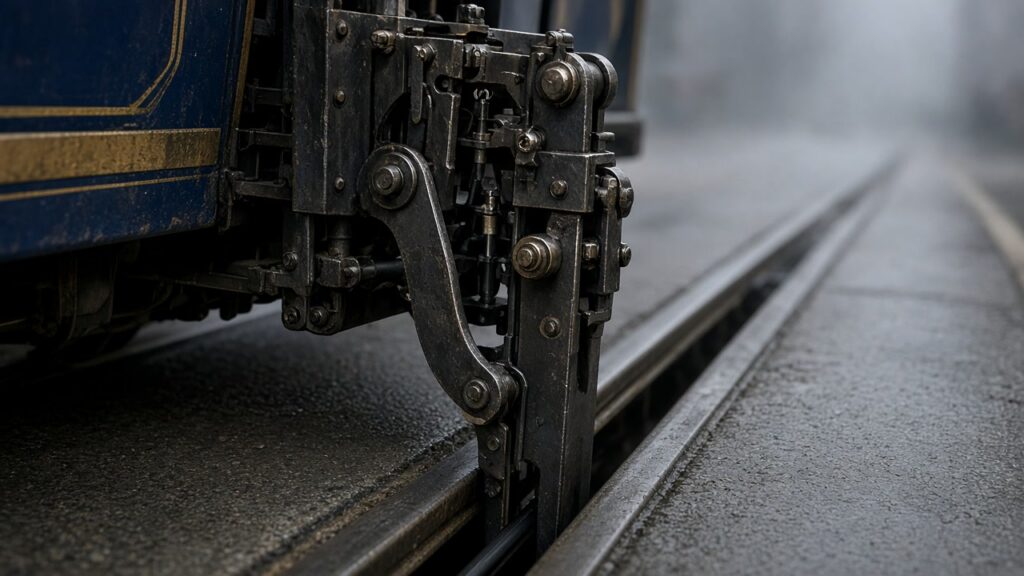
Under California Civil Code section 2100, a common carrier — and Muni’s cable cars plainly qualify — owes passengers “the utmost care and diligence” and is liable for even slight negligence. That’s a meaningfully higher bar than the ordinary reasonable-care standard that applies to, say, a driver who runs a stop sign. A cable car isn’t supposed to accelerate unpredictably and then slam to a stop hard enough to break glass. If the injured rider’s legal team can show the grip mechanism, brakes, or cable tension weren’t properly inspected or maintained, the elevated duty of care makes this a considerably easier negligence case to prove than a typical vehicle collision would be.
There’s also a strong argument for res ipsa loquitur — the doctrine that lets a jury infer negligence from the nature of an accident itself, without direct proof of exactly what failed mechanically. Properly maintained cable cars don’t suddenly speed up and violently stop. That’s the kind of fact pattern res ipsa was built for, and it can shift real weight onto the defense to explain what happened, rather than leaving the plaintiff to prove it from scratch.
This distinction matters beyond this one case. Any San Francisco lawyer evaluating a Muni, cable car, or public bus injury should be checking common-carrier status first — it changes both the standard of proof and the settlement value of the claim.
The Part Most People Miss: Suing the City Is a Different Game
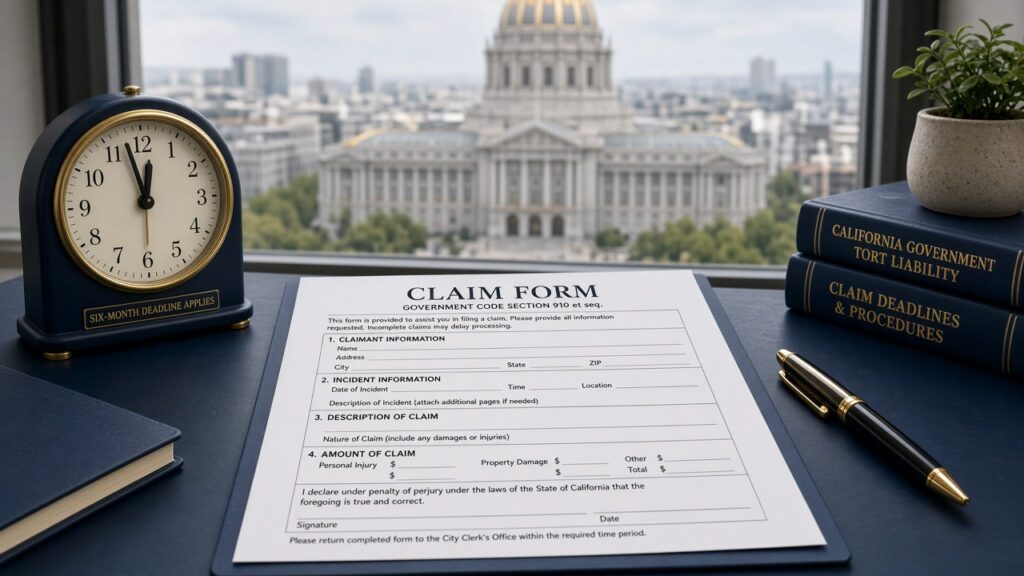
Here’s what separates this case from a typical car accident claim, and what every injured Muni or SFMTA rider needs to understand: you cannot simply sue a public entity in California the way you’d sue a private driver.
The Government Claims Act (Government Code section 910 et seq.) requires an injured person to file a formal administrative claim with the City and County of San Francisco within six months of the incident — not the two-year statute of limitations that applies to a claim against a private driver. Miss that six-month window, and the case is likely dead before it starts, absent a late-claim petition that courts grant only in narrow circumstances. This single procedural step trips up more meritorious injury cases against public entities than any defense on the merits ever will.
The timeline in this case illustrates exactly how unforgiving that window is. The injured rider was hurt December 15, remained hospitalized into March, and suit was filed in September — timing that only works if a timely government claim was filed and rejected (or deemed rejected by the City’s silence) well before that lawsuit was ever drafted. It’s the first question I ask every client who calls me after getting hurt on Muni, BART, or a city sidewalk: when did this happen, and has anyone filed a government claim yet? If the answer is “I didn’t know I had to,” we’re already racing a clock most people never knew existed.
This is also why a lawyer who only handles routine auto accident cases can be the wrong fit for a transit injury. The claim-presentation requirement isn’t optional, isn’t extendable by agreement, and isn’t something a claims adjuster is going to remind you about.
The six-month deadline isn’t even the only clock running. Once a government claim is filed, the City has 45 days to respond. If it denies the claim — or simply doesn’t respond, which counts as a denial by operation of law — the injured person then has six months from that denial to actually file the lawsuit under Government Code section 945.6. Two separate deadlines, back to back, both strict, both capable of ending a valid case on a technicality that has nothing to do with who was at fault.
Government Immunity Isn’t Absolute — But It’s a Real Hurdle
Public entities get statutory immunities private defendants don’t: discretionary-act immunity for high-level policy decisions, design immunity for public improvements built to an approved plan, and other carve-outs under the Government Claims Act. These immunities exist to keep courts out of second-guessing legislative and budgetary choices — should the City have installed a different braking system fleet-wide, for instance.
But operational negligence — how equipment already in service is run and maintained day to day — generally isn’t shielded the way high-level policy decisions are. Allegations of poor maintenance and negligent operation, as pled in this case, are designed to land the claim squarely outside those immunities and inside ordinary negligence territory, where the utmost-care standard under Civil Code section 2100 applies. The distinction between “we decided not to build it that way” (protected) and “we failed to maintain what we already built” (not protected) is where these cases are actually won or lost, long before a jury ever hears how badly someone was hurt.
What Discovery Looks Like in a Case Like This
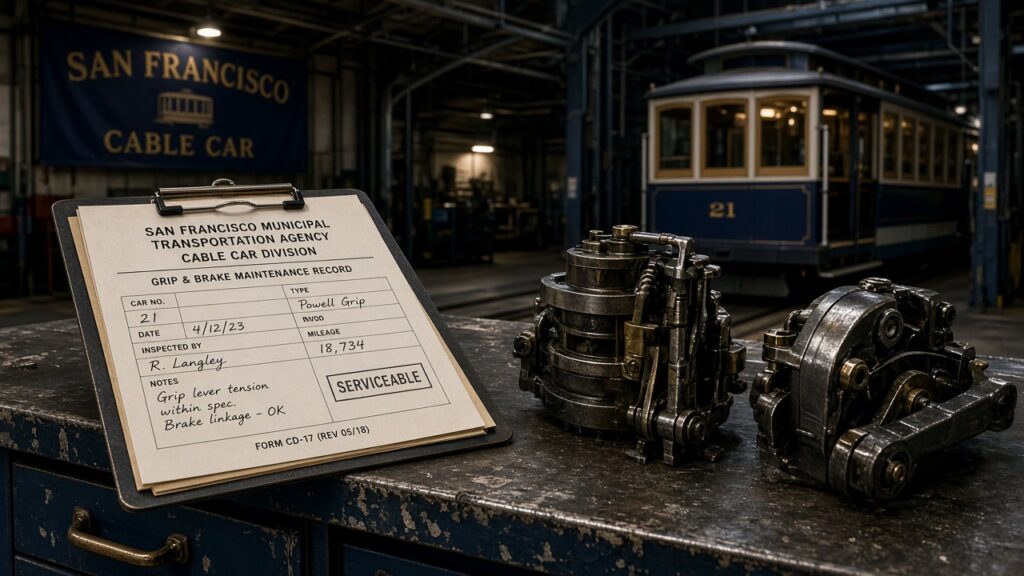
Cases against a transit agency are won or lost in the paperwork long before they reach a jury. Maintenance logs, inspection records, prior complaints about the same cable car or the same stretch of track, grip and brake testing schedules, and operator training files all become discoverable evidence. If SFMTA had prior reports of grip or braking issues on Car No. 51 — or a documented pattern of deferred maintenance across the cable car fleet — that history can turn a single-incident negligence claim into a much stronger case built on notice: the agency knew, or should have known, about a problem and didn’t fix it.
This is also where the six-month claim deadline does double duty. Filing the government claim promptly doesn’t just preserve the right to sue — it starts the clock on getting a public records request in early, before maintenance records get rotated out under routine retention schedules. Lawyers who wait to see if the City will “do the right thing” often lose access to the records that would have proven the case.
What Damages Can Include After a Catastrophic Transit Injury
The injuries alleged here — fractured cervical and thoracic vertebrae, followed by a three-month hospitalization — aren’t the kind that resolve around medical bills alone. Damages in a claim like this typically span past and future medical care (including the real possibility of additional surgery down the line), lost income during a recovery measured in months rather than weeks, any permanent loss of function or diminished earning capacity, and pain and suffering tied to the severity and permanence of the injury. Every case is different, and nothing here should be read as predicting how this particular lawsuit resolves — but the categories are the same ones any San Francisco lawyer evaluating a catastrophic transit injury needs to be building a record for from day one, not after the claim deadline has already passed.
Why This Is Nothing Like Suing a Rideshare Driver
When a rideshare driver rear-ends you — or a car strikes you as a pedestrian — the path is familiar: police report, insurance claim, two-year statute of limitations, negotiate or litigate against a private insurer. A cable car or Muni bus injury runs on an entirely different track from day one:
The defendant is a government entity, not an individual with a personal auto policy. The claim window is six months, not two years, and it starts running the day of the injury regardless of when you finish treatment. Immunity defenses exist that a private driver could never raise. And the standard of care is actually higher for the transit agency than for an ordinary driver, because common carriers owe passengers the utmost care, not just reasonable care.
That last point cuts in the injured rider’s favor — but only if the procedural requirements are met first. A strong liability case against a public entity that misses its claim deadline is worth nothing. A weaker case filed on time still gets a hearing.
What This Means If You’re Hurt on Public Transit in San Francisco
Get medical care and make sure it’s documented immediately — the medical record is what ties your injuries to the incident later, and gaps in treatment get used against you. Identify every agency and contractor that might be responsible; SFMTA runs the cable cars and buses, but maintenance, manufacturing, or inspection work is sometimes contracted out to third parties who carry their own separate liability. Photograph the scene, your seat, visible injuries, and get contact information for other passengers before everyone scatters — in a case where the mechanical cause will be disputed by the City’s own experts, independent witness accounts matter enormously.
Above all, talk to a lawyer well before six months pass, not after. By the time most people think to call, they’ve already lost weeks they didn’t know were on the clock.
Si usted o un familiar resultó lesionado en un accidente de transporte público en San Francisco — un cable car, un autobús Muni o BART — es importante saber que las reglas para demandar a una entidad gubernamental son distintas y el plazo es de solo seis meses. Llame hoy al (415) 851-4557 para una consulta gratuita en español.
If you or someone you love was hurt on a cable car, Muni bus, or any public transit vehicle in San Francisco, the six-month claim window may already be running. Call the Law Office of John J. Roach at (415) 851-4557 for a free consultation.
Frequently Asked Questions
No. Because SFMTA is a public entity, you must first file a government claim within six months of the injury under the Government Claims Act. Missing that deadline can bar your case entirely, regardless of how strong your evidence is.
A common carrier — including Muni’s cable cars, buses, and light rail — owes passengers the "utmost care and diligence" under California Civil Code section 2100. That’s a higher standard than the ordinary reasonable-care duty owed by a private driver, which can make liability easier to establish.
Sometimes not. Public entities have discretionary-act and design immunities for high-level policy choices. But day-to-day operational failures — like inadequate maintenance or inspection of equipment already in service — generally are not protected by those immunities.
In most cases, your claim is barred. Courts can grant permission to file a late claim, but only in narrow circumstances, such as excusable neglect, and there’s no guarantee it will be granted.
SFMTA operates the cable cars, but maintenance, parts, or inspection work may involve third-party contractors or manufacturers who carry independent liability. A full investigation should identify every potentially responsible party, not just the transit agency.
Res ipsa loquitur lets a jury infer negligence from the circumstances of an accident that wouldn’t normally happen without someone’s carelessness. It doesn’t eliminate the need for a strong case, but it can shift significant weight onto the defense to explain what happened.
Yes. Muni buses and light rail are also common carriers subject to the utmost-care standard, and claims against SFMTA for any Muni vehicle are still subject to the same six-month government claims deadline.
Consultations are free, and personal injury cases are handled on contingency — you pay nothing upfront and nothing at all unless there’s a recovery.