

John Roach, Esq. | September 1, 2026 | Car Accidents
San Francisco Bike Accident Lawyer: Why Market Street’s Streetcar Tracks Have Been Injuring Cyclists for 130 Years

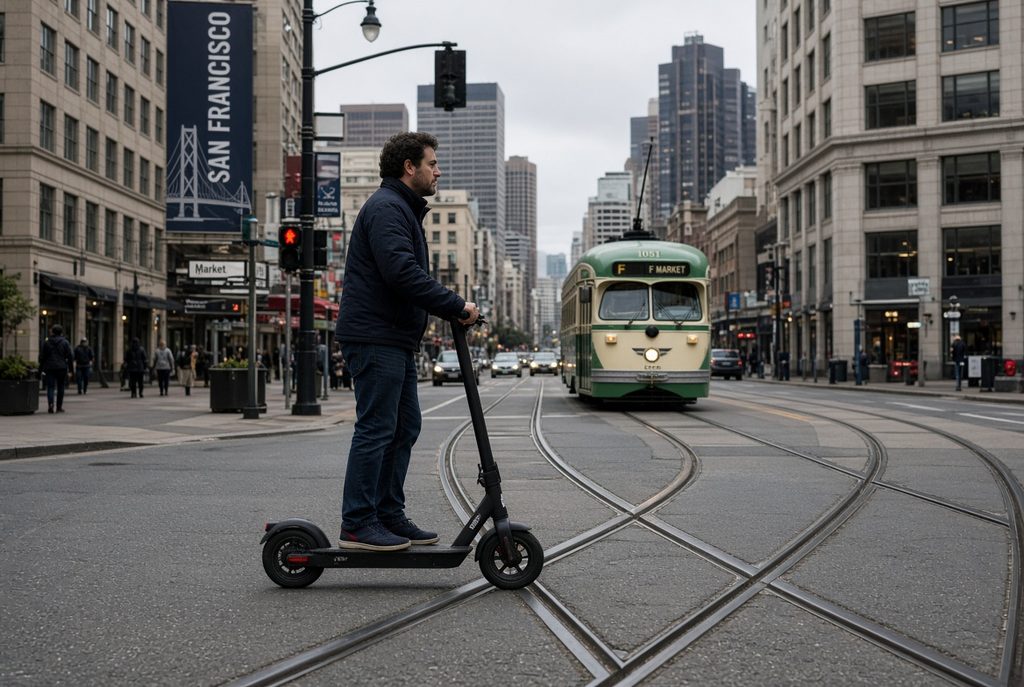
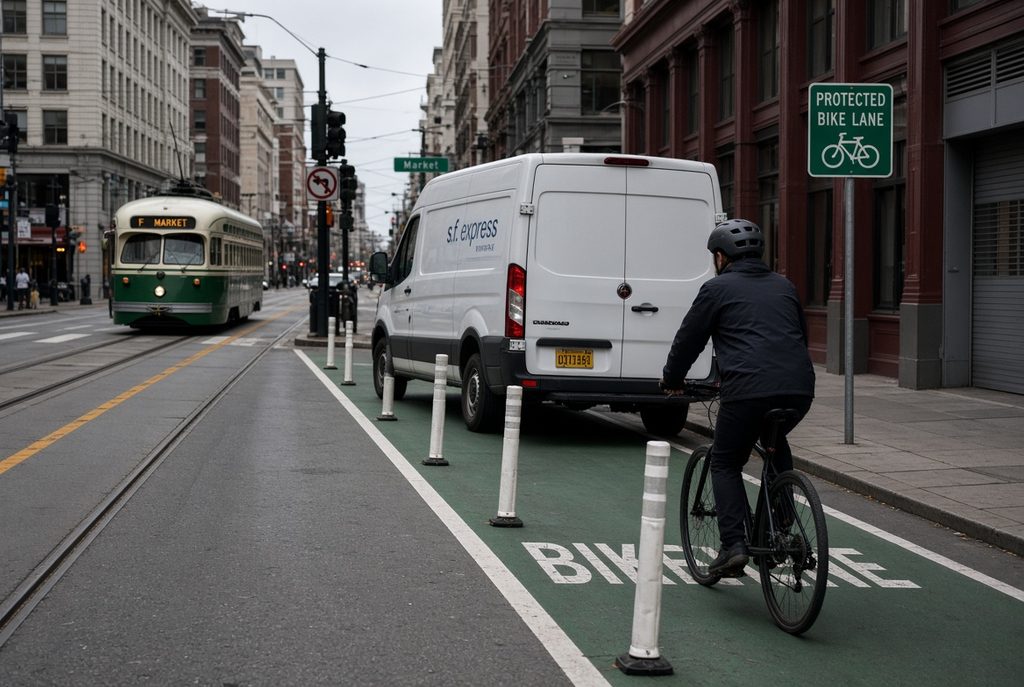
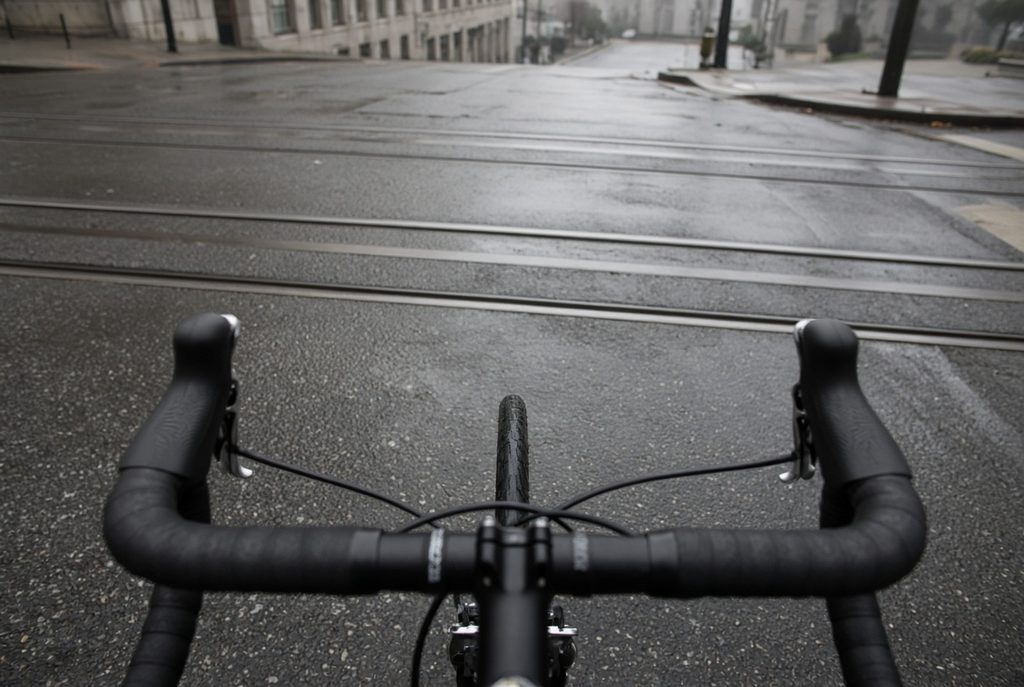
The pattern behind most Market Street bike and scooter falls is almost always the same: a rider swerves around a bus or a double-parked car blocking the bike lane, drifts into the track-lined portion of the roadway, and catches a wheel in the gap alongside the rail — often going down directly into the path of a following vehicle. I see these falls regularly, and the mechanism almost never changes.
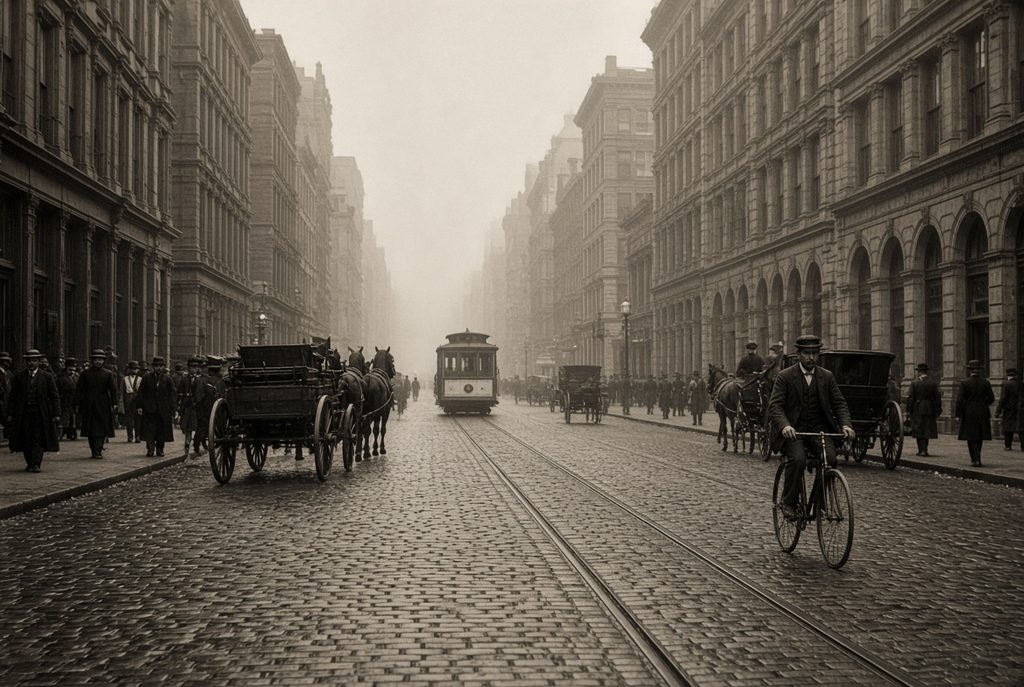
That pattern has a long history on this corridor. As the San Francisco Standard reported on August 28, a cyclist named A.W. Dunbar caught his wheel in a Market Street tram track in April 1894 and was run over by the vehicle behind him — he survived. Mark Heryer was not as fortunate: on October 11, 2015, his bicycle wheel caught in the same rail system in the 500 block of Market near Sutter Street, and he was run over by a 38-Geary bus — reported at the time, and cited again by the Standard as the corridor’s last fatality before this August. And this August 7, a 32-year-old scooter rider was killed at Market and Powell when her wheel caught in the tracks and a commercial truck struck her before she could get clear.
More than 130 years separate the first fall from the most recent one. The hazard hasn’t changed.
A Hazard the City Has Known About for Generations
Around 1900, Market Street was nicknamed “the Slot” for the cable car channels running down its center — a different piece of hardware than what catches wheels today. The cable car’s slot was a continuous channel for gripping a moving underground cable; the hazard modern riders hit is the flangeway, the narrow gap that lets a train or streetcar wheel’s flange pass alongside the running rail on today’s F-line and Muni Metro track. Different geometry, same result: a bike or scooter wheel drops in, and the rider goes down, often into the path of a following vehicle.
The same Standard reporting found that San Francisco police recorded 53 cyclist and scooter crashes on Market Street in 2025, down only slightly from 60 in 2019 — even as ridership on the corridor dropped from roughly 1.3 million bikes and scooters in 2019 to about 966,000 last year. Safety advocates believe both figures understate the real toll, since most falls are never reported to police.
Why the City Usually Can’t Be Sued Over the Tracks Themselves
This is the part that surprises most people who call my office after a track-related fall: in most cases, you cannot sue the SFMTA simply because your wheel caught in an approved rail design.
Under California Government Code § 830.6, a public agency has design immunity for injuries caused by an approved plan or design, so long as the design was approved by someone with the authority to approve it and a reasonable engineer could have signed off on it. Courts give this defense significant deference — even where a design turns out to be dangerous in practice, a plaintiff’s own expert disagreeing with the original engineering decision usually isn’t enough to defeat it (Cornette v. Department of Transportation, 2001). Because Market Street’s tracks were engineered and approved as part of the transit system, the city can point to that approval as a shield — even though everyone, including the SFMTA, knows the tracks cause falls.
That doesn’t mean an injured cyclist has no case. It means the theory has to fit somewhere specific.
Three Ways to Get Around Design Immunity
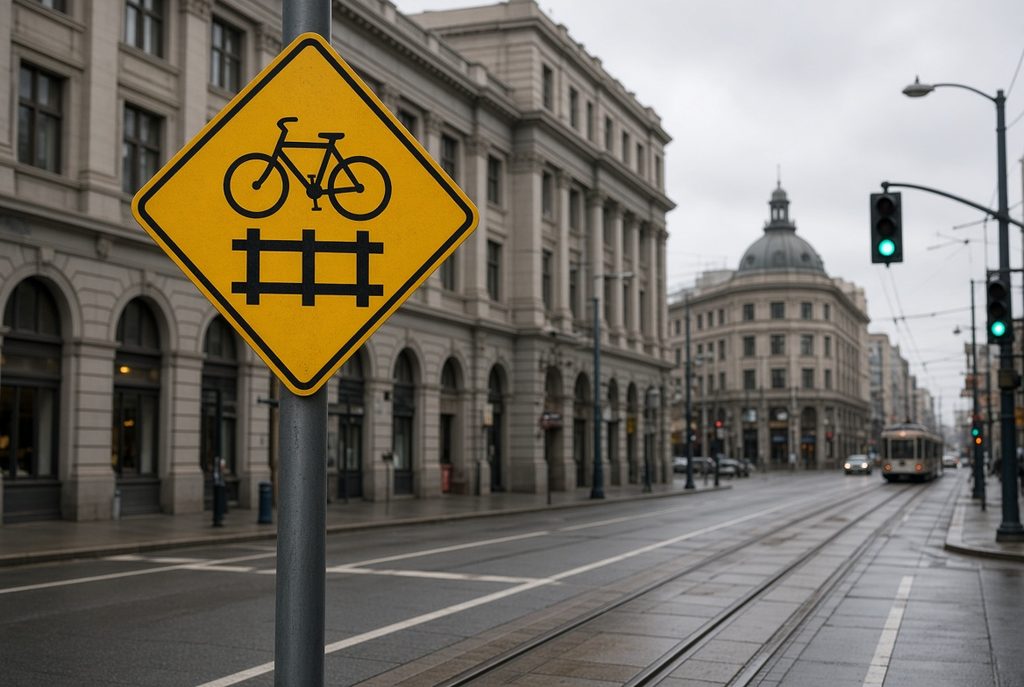
Failure to warn of a hidden danger. Design immunity protects the design itself — it doesn’t protect an agency that knows its design has created a hidden hazard and fails to warn people about it. The California Supreme Court confirmed this in a bicyclist’s case, Tansavatdi v. City of Rancho Palos Verdes (2023), holding that even a fully immune design can still expose a city to liability if it had notice the design created a dangerous condition, that condition amounted to a “concealed trap” a careful rider wouldn’t reasonably anticipate, and the missing warning was a real factor in the crash. San Francisco has posted rail-crossing warning signs at exactly two intersections on the entire Market Street corridor. Every other crossing has none.
That theory has a real limit, though: streetcar tracks on Market Street are plainly visible, and a defense lawyer will argue that visible is the opposite of hidden. The warning theory is strongest at crossings a first-time rider or a tourist would not read as a tire trap — an unfamiliar intersection, an odd-angle crossing, a spot where the rails blend into the pavement. It is weakest wherever the rails are obvious and the rider cut them at a shallow angle anyway. Tansavatdi still requires a concealed trap, not just a dangerous one, plus notice and causation — so how the fall happened, and where, does most of the work.
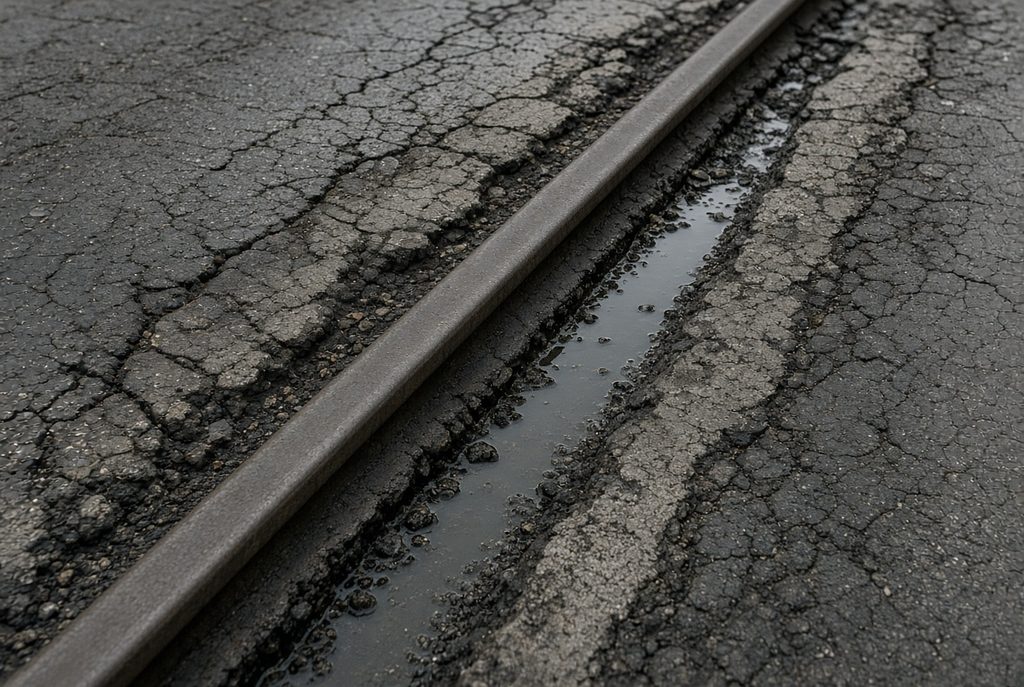
A track that no longer matches its own design. Design immunity covers the design the city approved — not a track that has since worn down or widened beyond that design’s tolerances. A rail gap that has degraded past its approved specification is a maintenance failure, not a design choice, and California law treats the two differently. It’s the same failure mode the European flangeway-filler trials keep running into: rubber inserts wearing into a dangerous divot within months. Steel tracks wear too, just more slowly.
Conditions that changed after the design was approved. If a design becomes dangerous because something about the physical site changed, the city can lose its immunity if it had notice and failed to fix it within a reasonable time. This exception has real limits, though — courts have specifically rejected “more people are riding through here now” as a basis for it on its own. It has to be paired with an actual physical change at the location, not just higher ridership.
None of these theories work as a blanket claim that “the tracks are dangerous.” Each one depends on the specific intersection, the condition of that stretch of track, and whether a warning existed at that exact spot.
The Clock That Runs Regardless: California’s Six-Month Government Claim Deadline
Whichever of these three theories might apply, one deadline applies no matter which door you’re going through: before you can sue San Francisco or SFMTA over a track-related fall, you generally have to present a formal government claim within six months of the injury under California Government Code § 911.2 — far shorter than the state’s standard two-year injury deadline. Miss that window and the claim against the city is typically over before it starts, no matter how strong the underlying theory. I’ve written a full guide to how that deadline and the claims process work; it’s the single most useful thing to know if a public entity is anywhere in the picture.
Other Parties Who May Be Liable
Design immunity only protects the city — it says nothing about everyone else involved in a fall:
- The driver who struck you. In both the Dunbar fall and the August crash, a vehicle operator hit the downed rider. Driver negligence — following too closely, failing to watch for a fallen cyclist, speeding through a known hazard corridor — is often the strongest claim.
- Obstructed bike lanes. If a parked or stopped vehicle forced you out of a protected lane and into the tracks, the party responsible for that obstruction may bear liability.
Sorting out which of these theories applies — and building the record to prove it — is exactly the kind of front-end diligence that determines whether a track-related crash claim succeeds.
The Fixes Nobody Can Quite Make Work
European transit agencies have experimented with flangeway fillers — compressible rubber inserts meant to let a train’s steel wheel through while smoothing the gap for a bike tire. Basel, Switzerland has run a test installation since 2021, and the results explain why San Francisco hasn’t followed suit: the rubber wears out every few months under tram traffic, the installation and upkeep have run well into six figures, and the transit agency still can’t say how many falls it has actually prevented, since most falls go unreported everywhere. SFMTA’s position is blunt — no rubber compound on the market today can survive San Francisco’s train volume.
The bigger fix — physically separating cyclists from the tracks — was actually approved once. The 2019 Better Market Street plan called for sidewalk-level, elevated bike lanes running the length of the corridor, similar to what Philadelphia has since built. The pandemic scrapped the elevated-lane portion of that plan, and advocates have been pushing to revive it ever since.
Until that happens, the tracks stay exactly as they are.
Protecting Yourself on Market Street
Until the infrastructure changes, the safest approach is the one the SF Bicycle Coalition teaches in its riding classes: cross tracks as close to a 90-degree angle as possible, since a sharper angle makes a tire far less likely to drop in and stall. Resist the instinct to swerve suddenly around a bus or double-parked car when a track is nearby — where you can, slow down and find a gap in traffic instead of cutting across the rail at a shallow angle.
What Evidence Actually Matters
If you’re building a case — yours or someone else’s — the evidence that matters most is rarely dramatic:
- The exact rail gap, photographed with a coin or your keys next to it for scale. A flangeway’s width is often the whole argument for or against design immunity.
- Whatever forced you toward the tracks — the bus, the double-parked van, the closed lane — photographed before it moves.
- Whether a warning sign was present at that specific crossing, or absent.
- The vehicle that hit you, if one did — plate, company markings, and the driver’s information before anyone leaves the scene.
If You’ve Been Hurt
If you caught a wheel in a Market Street track — or anywhere else in San Francisco with streetcar or cable car rail — and went down, don’t assume you have no case just because the tracks themselves are off-limits as a target. What matters is what happened around the fall: who was driving, what forced you out of the bike lane, and whether the track condition matched its approved design. Those are questions worth a real evaluation, not a guess.
The Law Office of John J. Roach has been representing injured cyclists, pedestrians, and drivers in San Francisco since 2009, with extensive trial experience taking cases the distance when insurers won’t offer a fair settlement. I offer free consultations in English and Spanish.
Frequently Asked Questions
Not usually on a straightforward “the tracks are dangerous” theory — California’s design immunity law shields approved transit designs from that kind of claim. But if the city knew a stretch of track was hazardous and failed to post a warning, or the track has physically worn past its approved condition, those are recognized exceptions that can support a claim directly against the city. A driver who hit you after you went down, or a vehicle that blocked the bike lane and forced you into the tracks, are separate claims against other parties entirely.
Design immunity is a legal protection under California Government Code § 830.6 that shields public agencies from lawsuits over injuries caused by a roadway or infrastructure design that went through proper approval — even if that design later proves dangerous. It’s why most straightforward “the tracks caused my fall” claims against SFMTA don’t succeed on their own, and why a viable claim usually has to be built around one of the recognized exceptions instead.
San Francisco police logged 53 reported crashes involving cyclists and scooter riders on Market Street in 2025. Safety advocates believe the real number is higher, since most falls go unreported.
Get medical attention even if the injury seems minor, photograph the exact spot where your wheel caught, note whether a parked vehicle or bus forced you into the track area, and get contact information for any witnesses before you leave the scene. And if the City or SFMTA may be a defendant, you generally have only six months to present a formal government claim — far shorter than the standard injury deadline.