

John Roach, Esq. | January 1, 2026 | Attorney Tips \ Brain Injuries
Case Study: How San Francisco Personal Injury Attorney John Roach Proved Catastrophic Injuries in a UIM Arbitration Victory

When an at-fault driver carries insufficient insurance to cover the full extent of a victim’s injuries, underinsured motorist (UIM) coverage becomes the critical safety net — and UIM arbitration becomes the arena where serious cases are won or lost. This is a detailed account of a recent UIM arbitration I tried against a major insurance carrier, resulting in a $750,000 award for a client who suffered a traumatic brain injury and PTSD in a rear-end collision on Interstate 880. The insurer’s opening position was $125,000. The arbitrator awarded six times that amount.
I’m John J. Roach, a San Francisco personal injury trial lawyer with extensive trial experience representing victims of catastrophic car accidents throughout the Bay Area. This case demonstrates what it takes to prove invisible injuries — TBI and PTSD — against an insurer committed to minimizing them. Expert development, deposition strategy, and the ability to humanize cognitive and emotional harm are what move these cases.

The Client: A Rear-End Collision on I-880
My client was a vibrant, independent woman in her late 70s, traveling as a front-seat passenger on Interstate 880 near Union City when an at-fault driver slammed into the vehicle at high speed. The impact was sudden and violent.
Immediately following the collision, she experienced a scalp hematoma on the back of her head, fragmented memory of the event, and a sensation of passing out. There was a notable gap in her recall from the moment of impact until someone spoke to her inside the vehicle. Her brother, who learned details from the driver, described her as appearing “slumped on one side” immediately after impact and requiring shaking to rouse — indicating a possible transient loss of consciousness. These early details became critical to establishing the severity of the traumatic brain injury.
Before the accident, she was known for her energy, self-reliance, and strong family presence. She handled daily tasks independently, maintained an active social life, and was a confident, engaged person. The collision changed all of that. By the time of the arbitration — nearly two years later — she remained significantly impaired.

The Injuries: TBI, Post-Concussive Syndrome, and PTSD
The core of the claim was a mild traumatic brain injury — mTBI — and PTSD, both causally linked to the rear-end collision. These are the injuries that insurers fight hardest to minimize precisely because they don’t always show on imaging and require expert interpretation to establish.
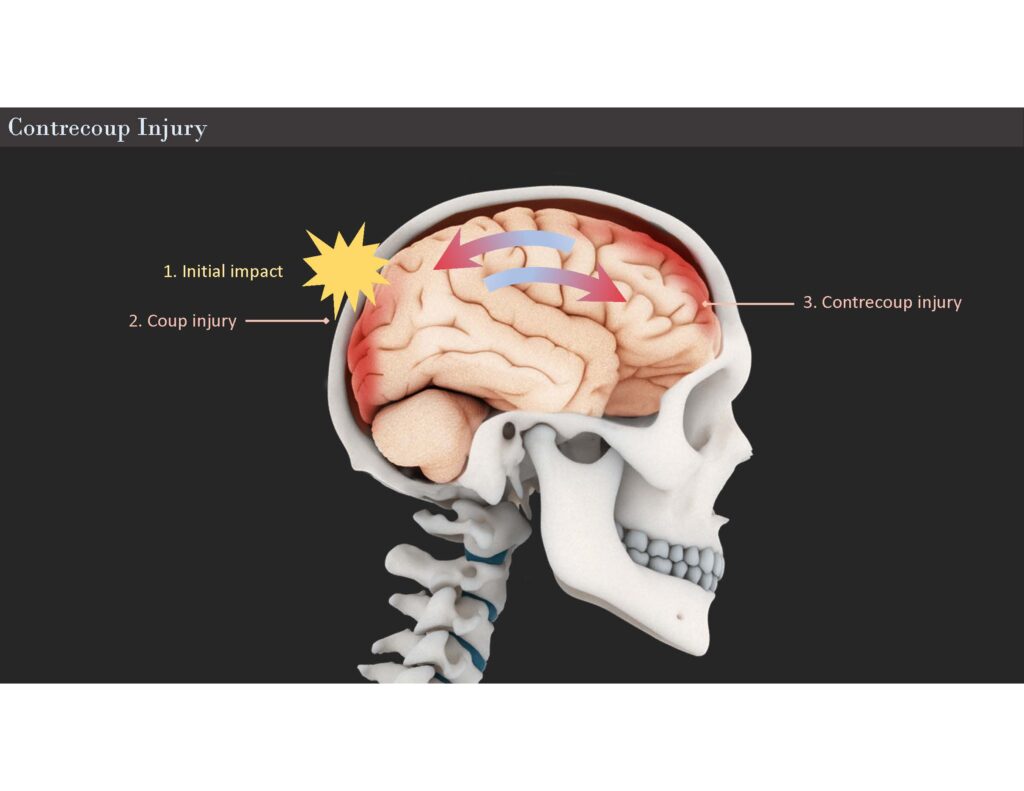
Physical symptoms included persistent headaches, dizziness, and bilateral tinnitus that continued throughout the two-year period leading to arbitration. The initial head trauma, exacerbated by the acceleration-deceleration forces of the rear-end impact, caused ongoing neurological disruption that her treating physician directly attributed to the crash.
Cognitive deficits were among the most significant and life-altering consequences. Post-accident, she struggled with decreased concentration, memory loss, mental fogginess, and an inability to focus on tasks she had previously performed without difficulty. These were entirely new impairments — her medical records showed no significant pre-existing cognitive complaints. The temporal relationship between the collision and the onset of these deficits was clear and well-documented.
Emotional and psychological harm manifested as anxiety, depression, frustration, and irritability beginning shortly after the incident. She was diagnosed with reactive depression and PTSD, requiring specialized psychiatric referrals. A woman who had been outgoing and self-sufficient became withdrawn, dependent on family members, and fearful of driving.
The ripple effects extended into every aspect of her daily life. She became increasingly reliant on her brother for assistance with tasks she had previously handled independently. Simple outings like grocery shopping led to disorientation, requiring her to call for help. Family members provided compelling before-and-after testimony describing a fundamental change in who she was.
Her pre-existing conditions — hypertension and prior dizziness — were acknowledged but shown to be clearly distinct from the abrupt, severe changes that followed the accident. This differentiation was essential to countering the insurer’s attempts to attribute her symptoms to pre-existing causes.
The Dispute: What the Insurer Argued
The insurer’s position was that the direct effects of the accident resolved within 12 months, with any lingering symptoms attributable to pre-existing anxiety, depression, and non-compliance with psychiatric treatment. Their opening offer was $125,000. They characterized the TBI and PTSD diagnoses as unrelated to the collision or exaggerated by pre-existing psychological conditions.
I argued that the damages extended across the full two-year period and would continue for the remainder of my client’s life expectancy — and that the insurer’s characterization of her pre-existing conditions directly contradicted the medical record. The arbitration presentation consolidated witness statements, medical records, and expert opinions to dismantle every defense argument in sequence.
The arbitrator awarded $750,000 — six times the insurer’s offer — validating the long-term impact of the injuries and providing my client with the resources she needed for ongoing care.
How I Proved the Injuries: Strategy and Execution
1. Medical Expert Development
Proving a traumatic brain injury when imaging is normal requires specialized medical expertise. I retained and meticulously prepared two key experts. The first was a cognitive neurologist who provided detailed testimony on diffuse axonal injury caused by the collision’s acceleration-deceleration forces, explaining how my client’s age amplified the lasting effects and how the immediate onset of symptoms confirmed causation — despite the absence of pre-accident cognitive complaints.
The second was a neuropsychologist who conducted comprehensive testing and diagnosed mTBI, post-concussive syndrome, major depressive disorder, and PTSD. I worked closely with both experts to frame their opinions around the specific defense arguments, ensuring their testimony addressed — and dismantled — the insurer’s causation theory directly.
Our neurologist used imaging and demonstrative evidence to explain the mechanism of injury to the arbitrator in accessible terms. Here is the videotaped testimony explaining the effects of the trauma:
2. Deposition Strategy
Depositions were central to establishing the injury record and exposing the weaknesses in the defense’s position. For the treating physician, I used targeted questioning to confirm that the cognitive problems were a new issue with a direct temporal tie to the head trauma — not a continuation of pre-existing conditions. This established both causation and the heightened vulnerability of an older adult victim.
Lay witnesses — including her brother and son — were examined to elicit detailed before-and-after comparisons: the shift from a confident, independent woman to someone marked by forgetfulness, irritability, disorientation, and fear. Her brother’s account of the immediate post-impact slump provided critical corroboration of possible loss of consciousness, directly countering the defense’s characterization of the injury as mild and fully resolved.
I also aggressively deposed the defense experts, probing for concessions and internal inconsistencies. In one key session, I secured an admission that the crash contributed to my client’s cognitive deficits — an acknowledgment that significantly undermined their overall position. I expedited a transcript for use in the final briefing to ensure that concession was in front of the arbitrator at the close of the case.
3. Arbitration Brief and Closing Advocacy
The arbitration ran two full days of testimony and argument. My arbitration brief synthesized the entire evidentiary record into a coherent, chronological narrative — tying the mechanism of injury, the immediate symptoms, the medical expert testimony, and the lay witness accounts into a single, unified argument for the full extent and duration of my client’s damages.
The brief methodically rebutted each defense argument: pre-existing conditions, non-compliance with treatment, and the claim of 12-month resolution. I exposed the logical gaps in the defense experts’ analyses and demonstrated why the medical record supported permanence, not resolution.
Following the hearing, I submitted a final written communication to the arbitrator reiterating the case’s key strengths. The $750,000 award followed.
What This Case Means for Seriously Injured Bay Area Victims
If you were seriously injured in a car accident in the Bay Area and the at-fault driver’s insurance is insufficient to cover your losses, a UIM claim against your own insurer may be your most important avenue of recovery. These claims require the same level of preparation and expert development as a full trial — insurers do not settle UIM claims fairly without a fight.
Invisible injuries like traumatic brain injury, post-concussive syndrome, and PTSD are the injuries that insurers most aggressively contest — and where the difference between thorough legal preparation and inadequate preparation is most stark. The insurer in this case offered $125,000. Thorough expert development, aggressive depositions, and a well-constructed arbitration brief produced a $750,000 result.
If you or a family member suffered a TBI, spinal injury, or other serious injury in a Bay Area car accident — including cases where the at-fault driver was underinsured — call me at (415) 851-4557 for a free consultation. I work on a contingency fee basis and handle every significant case personally. I am bilingual in English and Spanish.
Frequently Asked Questions: TBI, UIM Claims, and Bay Area Car Accident Cases
An underinsured motorist (UIM) claim allows you to seek additional compensation from your own insurance policy when the at-fault driver’s liability coverage is insufficient to cover your full damages. UIM claims are arbitrated under the terms of your own insurance policy and require the same level of evidentiary preparation as a full trial.
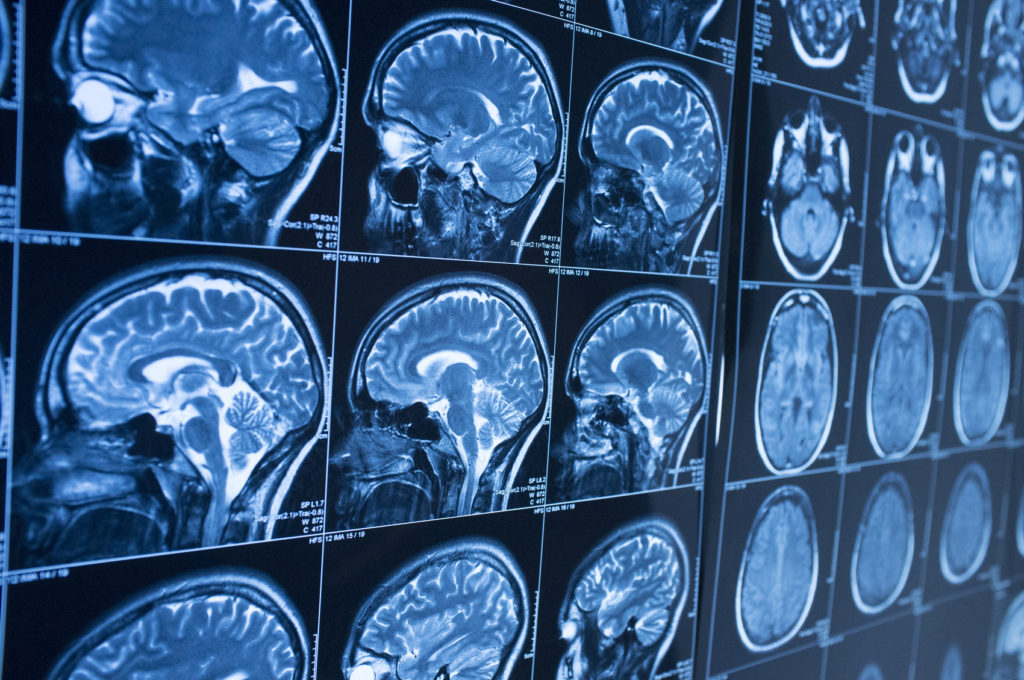
Many significant traumatic brain injuries do not produce visible abnormalities on standard CT or MRI imaging. Proof relies on neuropsychological testing, expert testimony from cognitive neurologists, treating physician records establishing the temporal relationship between the collision and symptom onset, and client and family testimony describing functional changes. The absence of imaging findings does not mean the absence of injury.
Symptoms may include persistent headaches, dizziness, memory loss, difficulty concentrating, mental fogginess, sensitivity to light or noise, tinnitus, personality changes, increased irritability, anxiety, depression, and sleep disturbances. These symptoms may appear immediately or develop over hours and days. Any head impact in a serious collision should be evaluated by a physician immediately.
No — not entirely. California’s eggshell plaintiff rule holds that a defendant takes the plaintiff as they find them. If a pre-existing condition made you more vulnerable to injury, the at-fault party is still responsible for the full extent of the harm they caused, including any aggravation of the pre-existing condition. This is one of the most common defense tactics in serious injury cases and one I prepare for in every TBI matter I handle.
PTSD is a recognized psychiatric condition compensable as a non-economic damage under California Civil Jury Instruction 3905A. Proof requires diagnosis by a qualified mental health professional, documentation of symptoms and functional impact, and expert testimony connecting the diagnosis to the accident. PTSD is often undervalued by insurers and requires aggressive advocacy to ensure full compensation.
Deadlines are governed by your policy terms and California statute. Arbitration demand deadlines can be as short as one to two years depending on the policy. Missing these deadlines can permanently bar your UIM recovery. Contact an attorney as soon as possible after a serious accident when the at-fault driver’s coverage appears insufficient.
No. Under California’s Proposition 103, an insurer cannot raise your rates, cancel your policy, or deny renewal based on a UIM claim when you were not at fault for the accident. You have the right to pursue the full value of your UIM coverage without fear of premium increases.
Disclaimer: This blog post is for informational purposes only and does not constitute legal advice. Prior results do not guarantee a similar outcome. Consult a licensed attorney for advice specific to your situation.




