

John Roach, Esq. | May 15, 2026 | California Law \ Car Accidents
Hit by a Car While Biking in Oakland: Your Legal Rights and Compensation Guide

Oakland is one of the most active cycling cities in the Bay Area. Bike lanes line Telegraph Avenue, Broadway, and Mandela Parkway. The Lake Merritt loop sees daily commuters and weekend riders. Neighborhoods from Rockridge to Fruitvale have substantial cycling populations who depend on their bikes for transportation, exercise, and recreation. With that activity comes risk — and Oakland’s mix of dense urban traffic, aging infrastructure, and competing demands for road space produces serious bicycle-versus-automobile collisions every week.
I’ve represented Bay Area bicycle accident victims since 2009, including cyclists hit on Oakland streets, in unmarked intersections, in bike lanes, and at parking-lot exits. The injuries are often catastrophic — a 4,000-pound vehicle striking a person on a bicycle produces fractures, head injuries, internal damage, and traumatic brain injuries that change lives permanently.
This post covers what every Oakland cyclist needs to know about their legal rights after being hit by a car: California law, evidence preservation, insurance complications, and how to recover full compensation for serious injuries. If you’ve been injured cycling in Oakland or anywhere in the Bay Area, call (415) 851-4557 for a free, confidential consultation. There is no fee unless I recover compensation for you.
1. California Cyclists Have the Same Rights — and Responsibilities — as Drivers
Under California Vehicle Code section 21200, bicyclists have the same rights and responsibilities as drivers of motor vehicles when riding on the road. This is the foundational legal principle of every bicycle accident case: you are a legitimate user of the roadway, not a tolerated nuisance.
That means cyclists are entitled to the full protections of California traffic laws. Drivers must yield to cyclists in their right-of-way. Drivers must signal lane changes. Drivers must obey traffic signals and stop signs. The same negligence standards that apply to driver-vs-driver collisions apply to driver-vs-cyclist collisions, with the cyclist as the protected party.
Common situations where drivers bear legal responsibility for hitting a cyclist include:
- Failure to yield at intersections — drivers turning right or left across a cyclist’s path of travel
- “Dooring” — opening a parked car’s door into a cyclist’s path. California Vehicle Code section 22517 specifically prohibits this
- Failure to give three feet of clearance when passing a cyclist (California Three Feet for Safety Act, Vehicle Code section 21760)
- Distracted driving — cell phone use, texting, or other inattention causing a cyclist strike
- Running red lights or stop signs
- Driving under the influence
- Backing out of driveways or parking spaces without checking for cyclists
One important piece of California law worth knowing: under Vehicle Code section 21202, cyclists riding slower than the normal speed of traffic must generally ride as close to the right side of the road as practicable, but with significant exceptions — including when passing, preparing for a left turn, avoiding hazards, or when the lane is too narrow to share safely with a vehicle. Insurance companies sometimes argue that a cyclist who was not in the far right of the lane was negligent. That argument frequently fails when the exceptions to section 21202 apply.
2. What to Do at the Scene of an Oakland Bicycle Accident
The first minutes after impact shape your case for years. Many cyclists are too seriously injured to perform these steps themselves — in those situations, the police investigation and witness accounts will fill in the gaps. To the extent you are physically able, here is what matters most.
Call 911 and request police response. A police report is essential to your case. Officers will interview the driver, take witness statements, document the scene, and produce a report that becomes the foundation for any claim. Insist on an official report even if the driver suggests “handling it” privately or downplays the severity.
Do not move your bicycle until photos are taken. The position of your bike and the vehicle, the location of any debris, the pavement marks, and the relationship of the impact to the bike lane or intersection are all critical evidence. Photograph from multiple angles before anyone moves anything.
Get the driver’s complete identifying information — full name, residential address, phone number, insurance company, policy number, license plate, and vehicle make/model. Photograph the driver’s license, registration, and insurance card directly if possible. The driver’s address is essential if your case eventually requires filing a lawsuit.
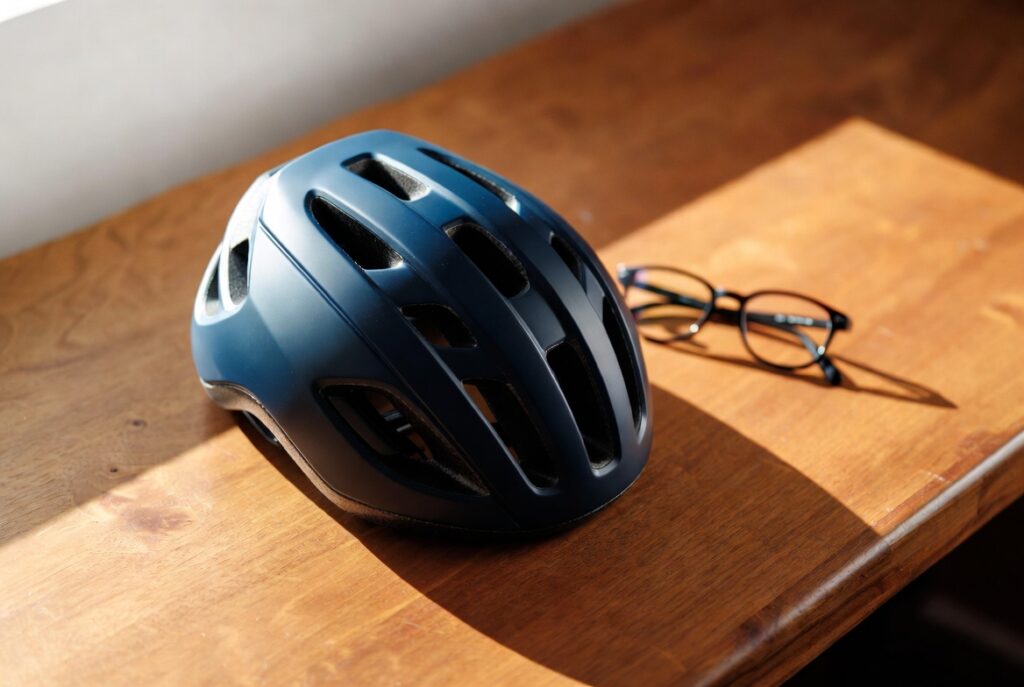
Preserve your damaged bike, helmet, and clothing. Do not throw away your damaged equipment, even if it seems beyond repair. The condition of your helmet — cracks, dents, scuffs — is direct physical evidence of the impact severity. Damaged clothing tells the same story. These items become exhibits at deposition and trial. Store them safely and unmodified.
Get witness contact information. Anyone who saw the accident — pedestrians, other cyclists, drivers in nearby vehicles, business employees — should be asked for their name and phone number. Witness testimony is invaluable, but witnesses move and forget. Capture them at the scene.
Get medical attention immediately, even if you feel fine. Adrenaline masks pain after trauma. Symptoms of traumatic brain injury, internal bleeding, fractures, and soft tissue injuries often emerge hours or days later. A same-day medical evaluation establishes the causal link between the collision and your injuries — far stronger evidence than a visit a week later. If you’ve been transported by paramedics, you’ll likely be evaluated at Highland Hospital, Oakland’s main trauma center, or another major Bay Area hospital.
3. Common Bicycle Injuries — and Why They’re Often More Serious Than They Appear
The injury patterns from bicycle-versus-vehicle collisions are different from those of car-versus-car collisions. The cyclist’s body is exposed and unprotected. The forces involved produce specific injury patterns that often appear less severe than they actually are in the immediate aftermath.
Traumatic brain injury (TBI). Head impact is common in bicycle accidents even when the cyclist is wearing a helmet. Helmets reduce the severity of impact but do not eliminate it. Mild TBI — concussion — often produces symptoms that emerge over hours or days: headaches, dizziness, fatigue, memory problems, mood changes, sleep disruption. Severe TBI can produce immediate loss of consciousness, cognitive impairment, and lifelong disability. TBI is one of the most underdiagnosed injuries in bicycle accident cases. If you have any head impact, insist on a thorough neurological evaluation.
Fractures. Collarbone fractures (clavicle), wrist fractures, shoulder fractures, hip fractures, and rib fractures are extremely common in cyclist-vehicle collisions. Many require surgical repair with hardware (plates, screws, rods) that becomes permanent. Recovery from significant fractures often takes 6-12 months and may produce permanent limitations.
Spinal injuries. Cervical strain, herniated discs, and more severe spinal cord injuries occur with significant frequency in bicycle accidents. Symptoms may emerge over days as inflammation develops. Even injuries that seem minor at the scene may require surgical intervention months later.
Road rash and lacerations. The cyclist sliding across pavement after impact produces severe abrasions and lacerations that can require extensive treatment, leave permanent scarring, and produce significant emotional impact. Visible scarring is its own category of compensable injury.
Internal injuries. Impact with a vehicle can produce internal bleeding, organ damage, and other injuries that are not immediately visible. Imaging is critical in the first 48 hours after a serious bicycle accident.
Psychological trauma. Many bicycle accident victims develop anxiety, post-traumatic stress, and fear of cycling that persist for years. These psychological impacts are real, compensable, and often substantially undervalued in early settlement offers.
4. Insurance Issues Specific to Bicycle Accidents
Bicycle accident cases involve insurance complications that don’t apply to standard car-vs-car collisions, and understanding them shapes your case strategy.
Your auto insurance may apply even though you weren’t driving. Most California auto insurance policies provide coverage that follows the policyholder, not just the vehicle. If you have Underinsured Motorist (UIM) coverage, that coverage may apply when you’re hit while cycling — particularly important if the at-fault driver carries minimum-limits coverage that won’t cover your injuries.
The at-fault driver’s insurance is usually the primary source of recovery. California requires drivers to carry minimum bodily injury coverage of $30,000 per person and $60,000 per accident (under Senate Bill 1107, effective January 1, 2025). For a serious bicycle accident with significant medical costs, that minimum coverage often falls short — making your own UIM coverage critical.
Health insurance does not eliminate the need for a personal injury claim. Even if your health insurance covers most or all of your medical costs, your personal injury claim still recovers lost wages, pain and suffering, future medical needs, and emotional impact — categories your health insurance doesn’t address. Health insurance also typically has a right of reimbursement (subrogation) from your settlement.
Hit-and-run scenarios are unfortunately common. Cyclists are sometimes hit by drivers who flee the scene. In those cases, your own Uninsured Motorist (UM) coverage becomes the source of compensation. UM coverage is one of the most undersold but most important parts of California auto insurance.
5. The Legal Path Forward: Investigation, Negotiation, and Litigation
Once you’ve stabilized medically and retained counsel, here is what the legal path looks like for an Oakland bicycle accident case.
Investigation. Your attorney sends preservation letters to nearby businesses for surveillance footage (which is overwritten within 24-72 hours), to the City of Oakland for traffic signal data and any prior reports of dangerous conditions at the location, and to the at-fault driver’s insurance to redirect all communication. Police reports are obtained. Witnesses are interviewed. The scene is photographed and measured. Expert accident reconstruction may be retained for disputed-liability cases.
Medical treatment to MMI. Treatment continues until you reach Maximum Medical Improvement — the point at which long-term impacts can be accurately assessed. For serious bicycle injuries, MMI can take 12-24 months. Settling before MMI risks compensation that doesn’t account for future surgeries, ongoing therapy, or symptoms that emerge later.
Demand and negotiation. Once treatment is substantially complete, a demand package is prepared and sent to the at-fault insurance company. The package includes medical records, lost wage documentation, expert opinions, photos of injuries during recovery, and a detailed legal analysis of liability. Most cases settle through negotiation, sometimes after several rounds of counter-offers.
Litigation if needed. If the insurance company refuses to offer fair value, the next step is filing a lawsuit in Alameda County Superior Court. Filing the lawsuit triggers formal discovery, where both sides exchange evidence under California civil procedure rules. Most cases that proceed to litigation still settle before trial, often at mediation or settlement conference. The credible threat of trial is what drives fair settlements.

Trial if necessary. Less than 5% of personal injury cases reach trial, but the cases that do typically involve disputed liability, low-ball settlement offers, or particularly serious injuries where the insurance company won’t acknowledge full value. Trial in Alameda County Superior Court typically takes 1-3 weeks. I have tried personal injury cases to verdict in Alameda County, including a recent $300,000 jury verdict in Converse v. Adkins.
Frequently Asked Questions: Oakland Bicycle Accidents
Yes. Under California Vehicle Code section 21200, bicyclists have the same rights and responsibilities as drivers of motor vehicles when riding on the road. This means cyclists are entitled to the full protections of California traffic laws — drivers must yield to cyclists with right-of-way, signal lane changes, and obey all traffic signals around them. The same negligence standards that apply to driver-versus-driver collisions apply to driver-versus-cyclist collisions.
Call 911 and insist on a police report. Photograph everything before anyone moves the bike or vehicle — the position of impact is critical evidence. Get the driver’s complete identifying information including residential address, which is essential for service of process if litigation becomes necessary. Preserve your damaged bike, helmet, and clothing as physical evidence. Get medical attention the same day even if you feel fine.
Damaged equipment is direct physical evidence of impact severity. Cracks and dents in your helmet, frame damage on your bike, and torn clothing all corroborate the force of the collision. These items become exhibits at deposition and trial and provide tangible proof of what happened to your body. Throwing them away — or having a bike shop dispose of them as part of a repair — eliminates evidence that strengthens your case.
California’s minimum bodily injury coverage is $30,000 per person and $60,000 per accident under Senate Bill 1107 (effective January 1, 2025). For a serious bicycle accident with significant medical costs, this coverage often falls short of full damages. If you have Underinsured Motorist (UIM) coverage on your own auto insurance policy, that coverage typically applies even when you were cycling — paying the difference between the at-fault driver’s limits and your full damages. UIM coverage is one of the most important and undersold parts of California auto insurance.
Hit-and-run scenarios are unfortunately common in cyclist accidents. Police can sometimes identify the driver through surveillance footage, witness reports, or vehicle damage. Your own Uninsured Motorist (UM) coverage on your auto insurance typically applies in hit-and-run cases — paying for your injuries even when the at-fault driver is never identified or has no insurance. Your attorney works to identify the driver while simultaneously pursuing your UM claim.
California’s general statute of limitations for personal injury is two years from the date of the accident under Code of Civil Procedure section 335.1. If a government entity is involved — for example, if a dangerous road condition contributed to the accident — a tort claim must be filed within six months. Don’t wait until close to the deadline. Evidence preservation, medical treatment, and case investigation work best when started early.
Free Consultation: Oakland Bicycle Accident Attorney
If you’ve been hit by a car while cycling in Oakland, Berkeley, or anywhere in the Bay Area, call (415) 851-4557 for a free, confidential consultation. I’ll give you an honest read on your case, including the realistic timeline, the documentation you’ll need, and the recovery you can expect.
Bilingual consultations in English and Spanish are available at no additional cost.
Related resources from my legal blog:
- Bicycle Accident Lawyer Practice Area Overview
- Oakland Personal Injury Lawyer — Practice Area Overview
- 5 Things Insurance Adjusters Won’t Tell You
- Five Decisions That Increase Your Bay Area Settlement
- Free Consultation — Schedule Your Case Review
Results mentioned are from prior cases handled by the firm and do not guarantee future outcomes. Every case is different.
Disclaimer: This blog post is for informational purposes only and does not constitute legal advice. Consult a licensed attorney for advice specific to your situation.




