

John Roach, Esq. | July 8, 2026 | California Law \ Car Accidents
Distracted Driving Accidents in San Francisco: How a Lawyer Proves the Other Driver Was on Their Phone

Almost everyone knows the feeling: the light turns green, the car ahead does not move, and the driver’s head is tilted down at a phone in their lap. Distracted driving is now one of the most common causes of crashes in San Francisco — and one of the hardest to prove. Drivers rarely admit they were texting, and a phone slips back into a pocket the moment metal stops crunching. Winning these cases is not about catching the driver in a confession; it is about evidence. As a San Francisco car accident lawyer practicing since 2009, I want you to understand exactly how distraction gets proven — and why the first two weeks after the crash usually decide whether it can be.
What Counts as Distracted Driving Under California Law
California has some of the strictest hands-free laws in the country. Under Vehicle Code § 23123.5, a driver may not hold or operate a phone while driving — it must be mounted and limited to a single tap or swipe. Under Vehicle Code § 23124, drivers under 18 may not use a phone at all behind the wheel, even hands-free. But legally, distraction goes far beyond texting:
- Visual distraction — taking eyes off the road to read a text, check a map, or look at a passenger.
- Manual distraction — hands off the wheel to type, eat, or reach for something.
- Cognitive distraction — mind off the task, including hands-free phone conversations that pull attention away.
When a driver violates the hands-free statute and that violation causes a crash, it can establish negligence. The challenge is rarely the law. It is proving what the driver was actually doing in the seconds before impact.
How a Lawyer Proves the Driver Was Distracted
This is where experience and early action change outcomes. The proof of distraction lives in records that have to be requested — and preserved — before they vanish:
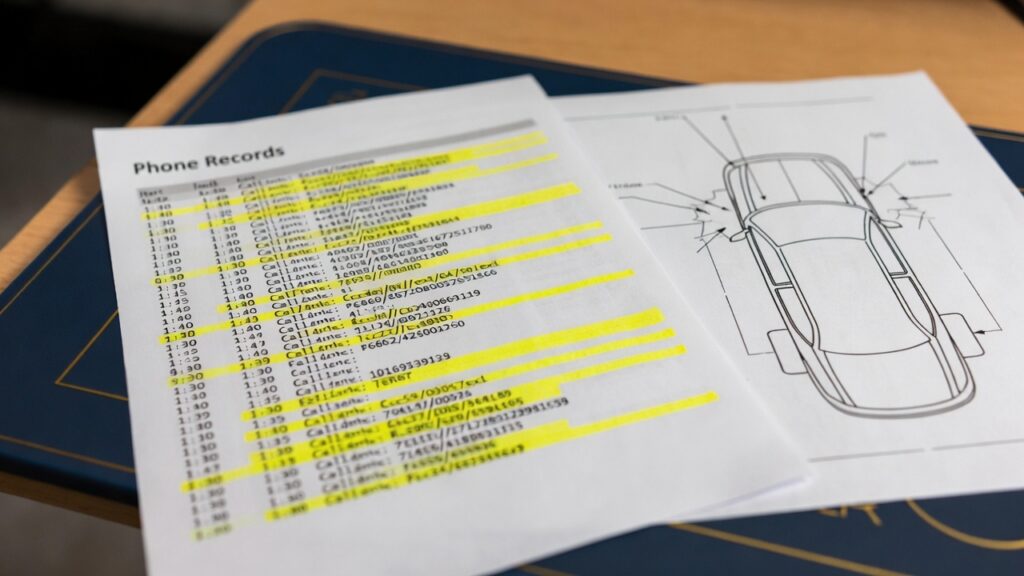
- Cell phone records. Subpoenaed carrier records show the timestamps of calls and texts. Lining those up against the moment of the crash can be devastating to a denial.
- App and device data. Messaging, navigation, and social apps log activity. So do many phones’ own usage logs — a screen-time record showing an app open at the moment of impact tells the jury everything.
- Vehicle telematics and the event data recorder. Modern cars record speed, braking, and steering inputs. An EDR showing no braking and no steering input before a full-speed impact is the signature of a driver who never looked up.
- Surveillance and traffic-camera footage. San Francisco is dense with cameras — businesses, doorbells, transit vehicles, intersections. Footage is often overwritten within days, so it must be secured fast.
- Witnesses and deposition testimony. Bystanders frequently see the phone in hand, and careful deposition questioning can lock a driver into admissions — starting with the innocent-sounding question of where the phone was mounted.
Because phone and camera evidence can disappear in days, the first move is a preservation demand — a formal letter putting the driver, their insurer, and any rideshare or delivery company on notice that this evidence must not be destroyed. Once that letter is out, deleting the data becomes spoliation, and courts punish it. If a distracted driver hit you, do not wait to talk to a personal injury attorney — the proof has a short shelf life.
How Deposition Questioning Locks Down a Denial
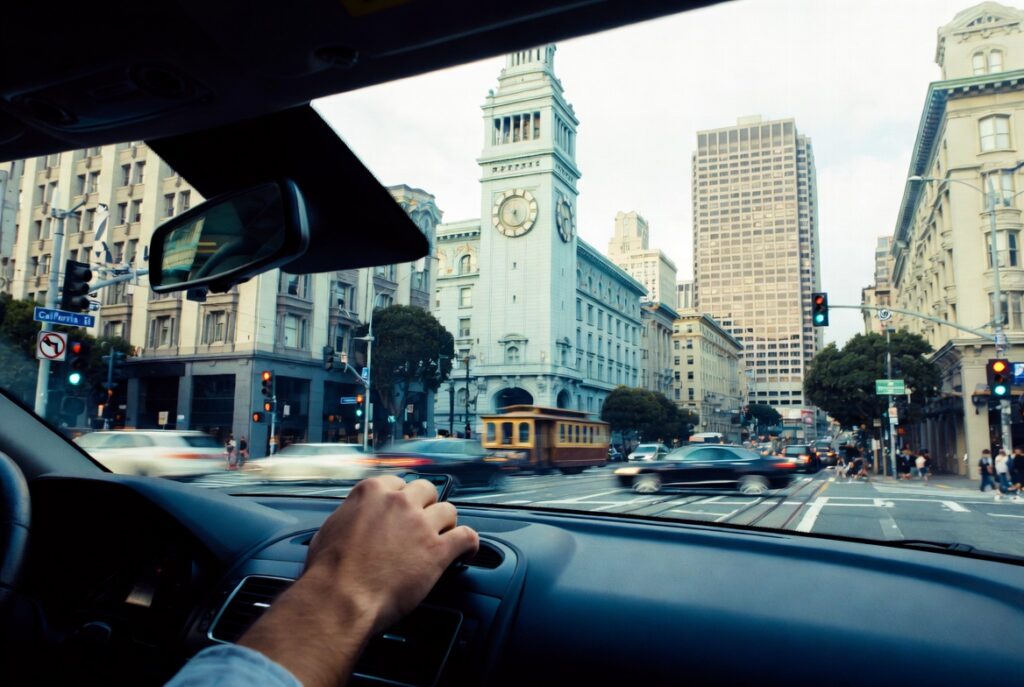
A driver who denies phone use at the scene rarely improves their story under oath. The deposition is built around commitments, not accusations. First the driver testifies they were fully attentive — eyes on the road, hands on the wheel. Then they explain their phone setup: was it mounted, where, running what app. Then they commit to the timeline — when they last touched the phone, when they saw you, when they braked. Every answer is now locked in before they see the records. When the subpoenaed carrier logs show a text sent eleven seconds before the 911 calls began, or the event data recorder shows no braking at all, the driver is not just distracted — they are impeached. Insurance companies price cases based on how a driver will perform in front of a jury, and a driver caught contradicting their own sworn testimony is a settlement driver like few others.
Why “I Only Looked Down for a Second” Is Not a Defense
Drivers minimize. “It was just a glance.” Here is what a glance actually means: at 30 miles per hour — ordinary city speed on Geary or 19th Avenue — a vehicle travels about 44 feet every second. A three-second look at a text message means roughly 130 feet driven completely blind, more than half a San Francisco city block, through intersections shared with pedestrians and cyclists. At freeway speed on 101 or 280, the same glance covers the length of a football field. The math is why “only a second” concedes the case rather than excusing it: the driver has just admitted that for 130 feet, nobody was driving the car.
Rideshare and Delivery Drivers: Distraction Built Into the Job
In San Francisco, a large share of distracted-driving crashes involve someone working off an app. Rideshare and delivery drivers navigate by phone, accept pings by phone, and get rated on speed — the distraction is structural. When an Uber or Lyft driver glances down to accept a ride request and rolls into a crosswalk, the case combines everything in this article with the coverage-period analysis I explain as an Uber and Lyft accident lawyer: the same app data that proves the distraction also proves which insurance policy applies.
Commercial drivers face even stricter rules. Federal FMCSA regulations (49 CFR §§ 392.80 and 392.82) prohibit commercial truck drivers from texting or holding a phone at all — a violation is powerful evidence of negligence in the delivery and commercial truck accident cases I handle. Amazon, UPS, and FedEx drivers working off routing tablets present the same proof opportunities: the device that distracted them also recorded them.
What If the Distracted Driver Was Operating a MUNI Bus or City Vehicle?
The rules change completely when the distracted driver works for the government. If you were hit by a distracted MUNI operator, a city vehicle, or any public-agency driver in San Francisco, your claim falls under the California Government Claims Act — and you generally have only six months from the date of the crash to file a formal written government claim under Government Code § 911.2. That is far shorter than the two-year deadline most people assume applies. Miss it, and an otherwise strong case can be lost before it begins. I cover the full process in my guide to the six-month government claim deadline for MUNI cases. One advantage on your side: transit vehicles carry onboard cameras, and preserved transit video is some of the best distraction evidence there is.
The Crashes Distraction Causes Most
Distraction produces predictable crash patterns. A driver staring at a phone does not brake, so the classic result is a rear-end collision case at full speed. Distracted drivers drift across lanes, run red lights, and fail to see vulnerable road users — which is why so many of my San Francisco pedestrian accident lawyer and bicycle crash case clients were hit by someone who simply never looked up. A driver who never reacts transfers the full energy of the impact to the victim, producing concussion and brain injury and serious back and neck injuries. That is also why distracted-driving cases tend to be worth more than the insurer’s first offer suggests: full-speed, no-braking impacts produce injuries that need to be documented completely, not settled quickly.
What Proven Distraction Does to the Value of Your Case
Liability disputes are where insurers save money. When distraction is proven with records rather than argued with words, the fault fight is over — and the negotiation shifts entirely to damages: your medical care past and future, lost income and earning capacity, and the pain and disruption to your life. A defendant who cannot contest fault, and who will look terrible telling a jury they were reading a message, has one move left: pay the full value. In the most egregious situations — a driver actively texting at speed through a crowded crosswalk — the conduct may even open the door to arguments for damages beyond ordinary compensation, which is a case-specific analysis worth having early. Either way, the rule is the same one that runs through my practice: cases built on documented proof settle for more than cases built on assertions.
When the Insurer Claims You Were the Distracted One
Expect this move. California follows pure comparative negligence (the rule from Li v. Yellow Cab), which means the insurance company can reduce your recovery by whatever percentage of fault it pins on you — so adjusters routinely suggest the victim must have been on their own phone, or “came out of nowhere.” The defense cuts both ways, and so does the evidence: your own phone records can affirmatively prove your phone was untouched, your EDR can show you braked and swerved, and the same camera footage that convicts the other driver clears you. Part of building a distracted-driving case is closing off this counterattack before the insurer ever makes it.
What to Do If a Distracted Driver Hits You
- Call the police and make sure the report notes any phone or distraction observations.
- If you safely can, note what you saw the driver doing — many victims glimpse the phone.
- Photograph the scene and look for nearby businesses or intersections with cameras.
- Get witness names; people who saw the phone are powerful at deposition.
- If the driver was working — rideshare sticker, delivery uniform, company vehicle — note it. It changes which insurance applies and which records exist.
- Get medical care right away, even for symptoms that seem minor.
- Do not give a recorded statement to the other insurer before consulting an attorney.
Why a San Francisco Distracted Driving Lawyer Matters
Proving distraction is a race against the clock and a fight over records that the other side would rather you never see. Practicing since 2009 with extensive trial experience, I send preservation demands immediately, subpoena phone and app data, secure camera footage before it cycles out, and depose the driver to lock down the truth. Full documentation produces full recoveries — I have secured results including the $750,000 UIM arbitration result. This kind of focused investigation is exactly what the car accident cases I handle require.
For Spanish-speaking clients, I am a direct Spanish-speaking attorney — no interpreter, no handoff. Si un conductor distraído lo lastimó, como abogado de lesiones personales en San Francisco manejo su caso completamente en español, incluyendo accidentes de Uber y Lyft.
Talk to a Distracted Driving Lawyer for Free
If a driver on their phone hurt you in San Francisco, the evidence that proves it is already at risk. Call (415) 851-4557 or request a free consultation. Se habla español.
Frequently Asked Questions
Proof comes from evidence, not confessions: subpoenaed cell phone records, app and device usage data, vehicle event-data recorders, surveillance and traffic-camera footage, and witness or deposition testimony. Lining phone timestamps up against the moment of the crash is often decisive.
Yes. Vehicle Code § 23123.5 prohibits holding or operating a phone while driving, and Vehicle Code § 23124 bars drivers under 18 from using a phone at all. A violation that causes a crash can establish negligence.
Quickly. Surveillance and traffic-camera footage can be overwritten within days, and phone data must be subpoenaed before it is lost. A preservation demand should go out as soon as possible.
The app or company device that distracted them also recorded them — trip logs, pings, and routing data become evidence. It also changes which insurance applies: commercial or rideshare policies with higher limits may cover the crash, and federal FMCSA rules bar commercial drivers from texting or holding a phone at all.
Claims against a government entity like the SFMTA fall under the California Government Claims Act, which generally requires a written claim within six months of the crash under Government Code § 911.2 — much shorter than the ordinary two-year deadline. Act quickly; transit vehicles also carry onboard cameras that can prove the distraction.
Yes. Even legal hands-free conversations create cognitive distraction that takes attention off the road, and that inattention can support a negligence claim if it caused the crash.
This firm works on a contingency fee — no fees up front, and you owe attorney fees only if I recover for you. The consultation is free.
No. California civil courts decide cases on the facts, not immigration status, and your discussions with your attorney are confidential. Your right to recover does not depend on your status.