

Peery was stopped at a red light when another driver hit her from behind. The impact was minor enough that the property damage photos barely tell a story — a low-speed hit, no dramatic wreckage, the kind of collision an insurance company looks at and decides, before any doctor has weighed in, that it can’t have caused much. That instinct is exactly what her own insurance company bet on for six years, through eleven depositions, dueling teams of medical experts, and a fight that didn’t end when the arbitrator ruled. They lost that bet by $659,000 — and then some.
This is Peery v. Encompass, and I’m identifying it the way the case itself is captioned rather than by her full name — a middle ground I use when a client is comfortable with her case being told in detail but prefers her own name kept out of it.
The Collision That Looked Like Nothing
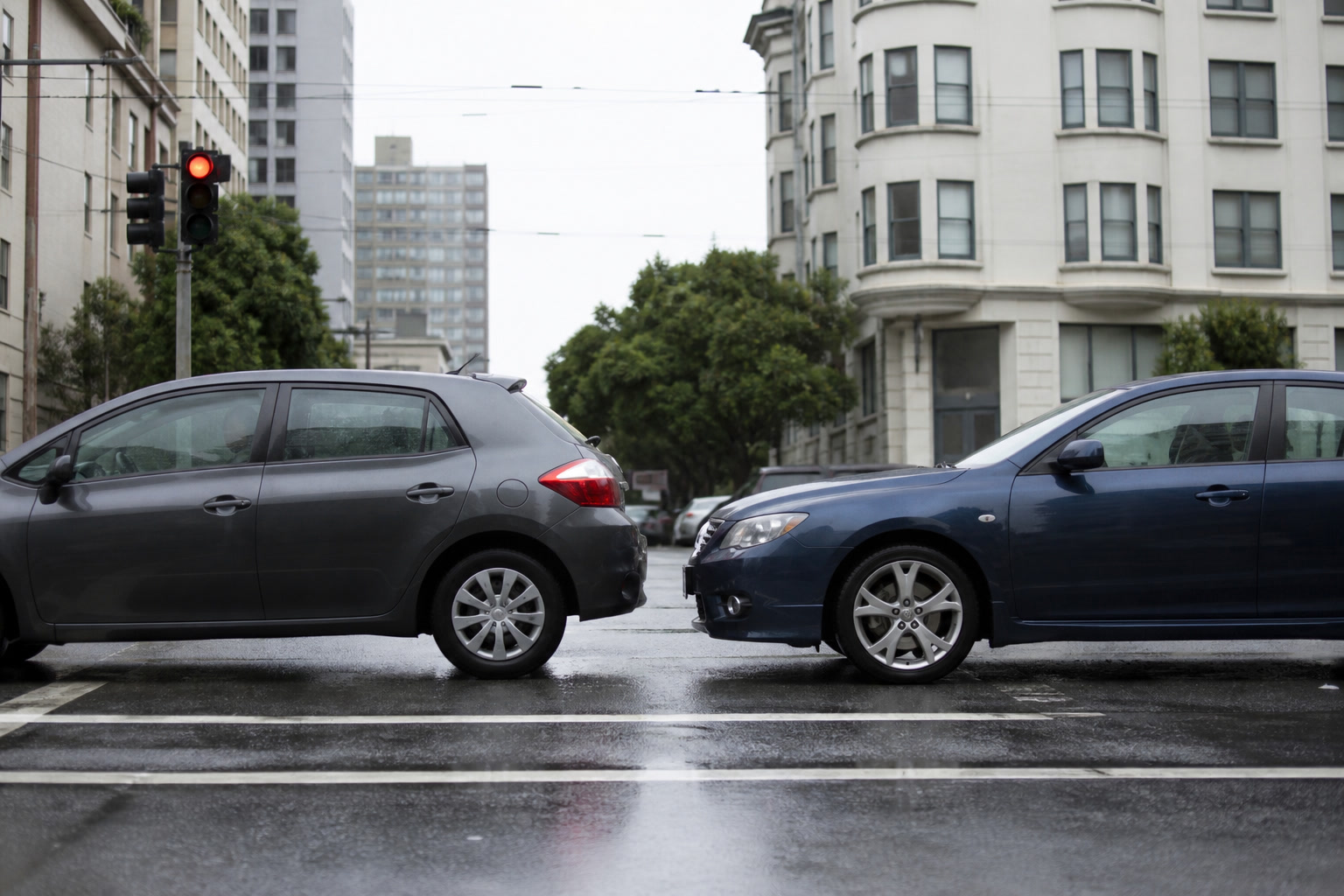
Peery was driving her son home from school on a Tuesday afternoon, stopped in the far-left lane at a red light, when a pickup truck rear-ended her at somewhere between 11 and 14 miles an hour. Her head snapped back into the headrest hard enough to make it malfunction. She’d later describe the moment to her doctors as seeing stars; her son, riding beside her, said it felt like getting hit by a football player.
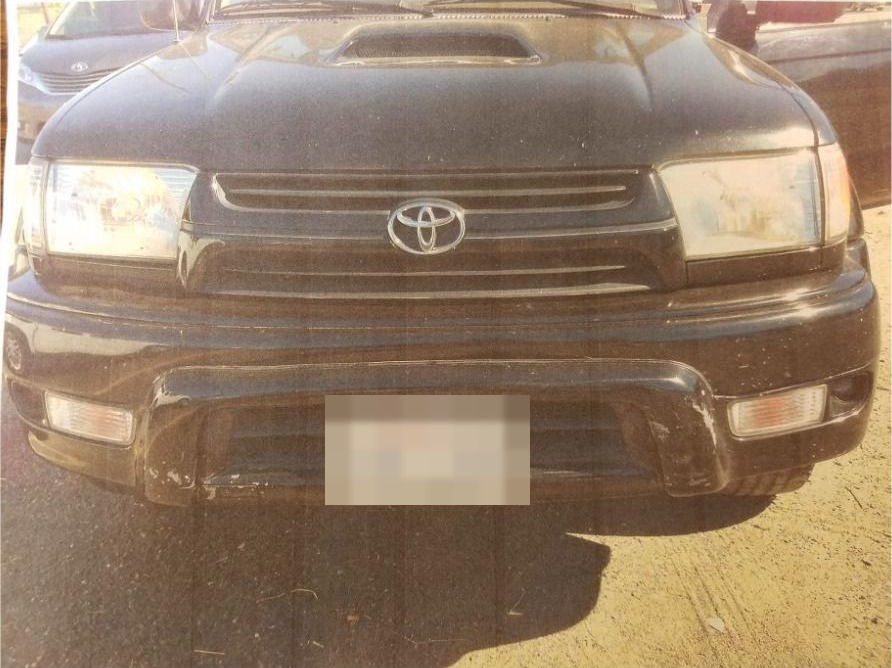
That photograph is close to the entire property-damage case Encompass had to work with. Both sides retained accident-reconstruction experts, and both arrived at the same figure: a delta-V — the change in velocity Peery’s own body actually experienced in the impact, as distinct from the striking vehicle’s approach speed — of 6 to 7 miles an hour. Her car was the heavier vehicle; the truck that hit her was lighter. That combination is exactly why the photo looks like nothing and the number sounds like nothing, while the person inside the car experienced something real.
Insurance companies are comfortable paying for injuries that come with dramatic photos. They are far less comfortable when the crash looks unremarkable and the injury is a brain injury — invisible in a photograph, invisible in most cases even on a scan, provable only through medical testimony and the accumulated weight of a life that changed the day of the crash.
A Business Built From Nothing, Interrupted in an Afternoon
Before the collision, Peery ran a real estate business she’d built herself, starting in her late teens, into something that generated roughly a million dollars a year — managed largely on her own, remotely, across a stack of ten or fifteen spreadsheets she kept running at once. She described the work as easy. She loved being busy.
Within hours of the crash, she couldn’t remember her own phone number. For three days afterward she couldn’t keep food down. The vertigo and nausea didn’t resolve in days — they lasted months, bad enough that she couldn’t tolerate simply looking around a room. She developed headaches localized to one side of her skull, sharp and specific in a way her doctors would later tie directly to nerve involvement from the impact. She lost, in the space of an afternoon, the ability to run the business she’d spent two decades building the way she’d always run it. She leaned on her family for things she’d never needed help with before, from getting her kids where they needed to be to keeping the parts of her business she could still manage from falling apart.
When Your Own Insurance Company Calls You a Liar
The at-fault driver didn’t carry enough insurance to come close to covering what this cost Peery. That’s precisely what underinsured motorist coverage exists for — insurance you pay your own company to protect yourself when the person who hits you doesn’t carry enough. Peery settled with the at-fault driver for what little was available, then turned to her own insurer, Encompass, to make up the difference her own policy was supposed to cover. Like most UIM disputes under an Encompass policy, this case never went to mediation — the policy’s arbitration clause sent it straight to a single neutral arbitrator the moment the two sides couldn’t agree on the value of the claim.
Encompass’s response was to hire a neuropsychologist, Charles Filanosky, whose own deposition testimony revealed that 95 percent of his work is done for insurance company defense. He administered two standardized tests specifically designed to catch people who are faking cognitive problems — the kind of test that exists precisely to answer the question Encompass wanted answered. Peery passed both of them. Passed them, according to the test publishers’ own scoring manuals, by a clear margin on one and by meeting the cutoff exactly on the other.
His report called her performance “probable exaggeration” anyway. To get there, he had to depart from the standardized scoring rules the tests are built on — using population statistics to second-guess a passing score instead of accepting what the test was designed to measure. It is one thing for an insurance company to disagree about how much an injury is worth. It is another to have their own hired expert override the actual rules of his own diagnostic tools to manufacture a conclusion the data didn’t support, and then use that manufactured conclusion to call a woman with a documented brain injury a liar.
Their Own Doctor Wouldn’t Say It
Encompass’s neuropsychologist wasn’t the only expert they retained, and he wasn’t the one who mattered most in the end. Their own retained neurologist, Marilyn Robertson, M.D., examined Peery, reviewed the same case, and testified to something very different: that Peery had, in fact, sustained a real concussion in the collision. When asked directly about the malingering accusation, she testified that she would not tell the arbitrator Peery was faking.
That is about as clean a concession as a case like this ever produces — not an expert I’d retained making my argument for me, but the insurance company’s own doctor declining to back up the position her own side was paying her to support. Their biomechanical expert had separately argued that a human body couldn’t sustain a concussion at a 6-to-7-mph delta-V at all — leaning, by his own admission at deposition, on published studies of football collisions. My own biomechanical expert, Katerina Blazek, made the obvious point at her deposition: football-player data doesn’t tell you what a middle-aged woman’s brain can or can’t survive at a red light, and it can’t rule out her concussion with any scientific certainty. Their own neurologist didn’t agree with their biomechanical expert either. When an insurance company’s own witnesses contradict each other on the central question of the case, that isn’t a detail — it’s the case.
Building the Record Encompass Couldn’t Argue Around
Beyond Dr. Blazek, I built Peery’s case around a full team: Tracy Newkirk, M.D., a treating neurologist, to establish the injury and its lasting effects; Sharon Berry, a neuropsychologist, to document the cognitive deficits with objective testing of her own — a direct counterweight to Filanosky’s manufactured conclusion; and Phil Allman, an economist, to translate a business built on the ability to concentrate and keep fifteen spreadsheets running at once into a defensible number. Dr. Newkirk’s records alone itemized more than $995,400 in future medical care Peery would need going forward — undisputed by Encompass’s own experts, even as they disputed nearly everything else. There was no formal life care plan in this case; Dr. Newkirk’s itemization of future care did that work instead, line by line, inside the medical record itself.
All eleven depositions in this case — Peery herself, her husband, her son, both plaintiff and defense experts — were taken or defended personally, months before the arbitration hearing, so that every concession, on both sides, was locked into a transcript long before anyone walked into the hearing room.
Six Years, Then a Number
On January 6, 2021, I served Encompass with a formal settlement offer under California Code of Civil Procedure Section 998: $450,000. They let it expire without responding. The case went the distance: full expert discovery, depositions of every treating and retained doctor, two full days of arbitration testimony on December 5 and 8, 2022. Arbitrator Tad Shapiro, Esq. issued his decision on February 6, 2023 — an award of $659,000, well above the number Encompass had already had the chance to accept and passed on.
The Fight That Continued After the Award
An arbitration award isn’t always the last word, and this one wasn’t. Because Encompass had rejected a reasonable 998 offer and lost that bet, California law entitled Peery to recover her post-offer litigation costs and expert fees on top of the $659,000 — but Encompass didn’t concede that any more than it had conceded the injury itself.
The day after the decision, I reached out to Encompass’s counsel directly to resolve the cost issue without more litigation, laying out the post-offer invoices — by then over $74,000 in expert fees, deposition costs, and arbitrator’s fees — and citing the controlling case, Storm v. Standard Fire Ins. Co., which holds that a policy’s arbitration cost-sharing language doesn’t override a claimant’s statutory right to recover costs under Section 998. Encompass refused, arguing Peery had missed her window to ask the arbitrator for costs. That forced a second round of litigation: a motion in superior court to confirm the arbitration award, met by Encompass’s own motion to tax — reduce — Peery’s costs.
I filed Peery’s opposition, walking the court through Storm line by line: the arbitrator’s authority in a UIM case is limited to deciding liability and damages, nothing more, so a request for post-arbitration costs belongs in front of a judge, not the arbitrator — and the roughly $75,000 in expert fees, deposition costs, and arbitrator’s fees Peery had actually paid to prove her case were exactly the kind of costs Section 998 is designed to shift onto the side that gambled on arbitration and lost. The court confirmed the award and Peery’s right to recover those costs on top of it. Six years after a collision that looked like nothing in a photograph, the fight over what Encompass actually owed was still going months after the arbitrator had already ruled — and Encompass still came out behind on that fight too.
I’ve represented people with obviously catastrophic injuries and people, like Peery, whose injury came wrapped in every disadvantage an insurance company looks for: a low-speed impact, minimal property damage, and a case where their own hired expert was willing to call her a liar in a written report. None of that made the injury less real. It just meant proving it took six years, eleven depositions, a full arbitration hearing, a second round of litigation just to collect what was owed, and the insurance company’s own witnesses undoing their own case one deposition at a time.
Frequently Asked Questions
Can an insurance company’s own expert really accuse me of faking an injury?
Yes, and it happens more often than people expect in brain injury and concussion cases, precisely because these injuries are harder to prove with a single scan or test. It’s one of the more aggressive tactics insurance companies use, and it takes a real medical and legal fight to unwind it in front of a judge, jury, or arbitrator.
What are “effort” or “validity” tests, and what happens if I pass them?
These are standardized tests built into neuropsychological exams specifically to detect whether someone is exaggerating or faking cognitive symptoms. They come with pre-set cutoff scores from the test publisher. Passing them is strong objective evidence of genuine effort — which is exactly why it matters when a retained expert passes a claimant on these tests and then argues around that result anyway.
Does winning an arbitration award mean the case is over?
Not necessarily. If the losing side rejected a reasonable settlement offer earlier in the case and the award beat that offer, the winning side is often entitled to recover its litigation costs and expert fees on top of the award under California Code of Civil Procedure Section 998 — but insurance companies don’t always pay those costs voluntarily either. In Peery’s case, collecting the costs Encompass owed on top of the $659,000 award took a second round of litigation after the arbitrator had already ruled.
Does a low-speed or minor-looking crash mean I can’t have a serious injury?
No. Property damage and injury severity don’t move in lockstep, especially with brain injuries, which depend more on the specific forces involved — what accident-reconstruction experts call “delta-V,” the actual change in velocity a person’s body experiences, as opposed to how fast the other vehicle was going — and individual vulnerability than on how dramatic the vehicles look afterward. Insurance companies know this, and some argue the opposite anyway when it benefits them.
If your own insurance company is disputing an underinsured motorist claim, or an insurance-retained doctor has questioned whether your injury is real, call my office at (415) 851-4557 for a free consultation. I handle every significant case personally. Ofrecemos consultas gratuitas en español.
This case is one example from my broader record of results. For more on how brain injuries are proven when insurance companies dispute them, see my guide to mild traumatic brain injuries and my page on rear-end collision claims. Past results do not guarantee a similar outcome in your case — read my full disclaimer.