

Gail Converse and her neighbors in Hayward shared a wall between their backyards. On the other side of it lived a young dog with a habit the whole block could probably hear: barking, scratching, and clawing at that wall, over and over — the unmistakable sound of an animal working out whether it could get over. On December 9, 2020, it found out it could.
The dog jumped the wall into Gail’s yard and came at her. She turned and ran. She didn’t get away clean — she fell, and the fall broke her shoulder. The dog never laid a tooth or a claw on her.
Four and a half years, nine depositions, and two failed settlement conferences later, a jury handed Gail a verdict of $300,000. By the time I finished collecting on it, the number was $399,889. This is the story of how a verdict grows by nearly a third after the jury has already gone home — and because this was decided by a jury after a full trial, rather than settled quietly behind closed doors, I can tell it using everyone’s real name: Gail Converse, and the neighbors she sued, Norman and Patricia Adkins.
A Dog That Had Already Shown What It Would Do
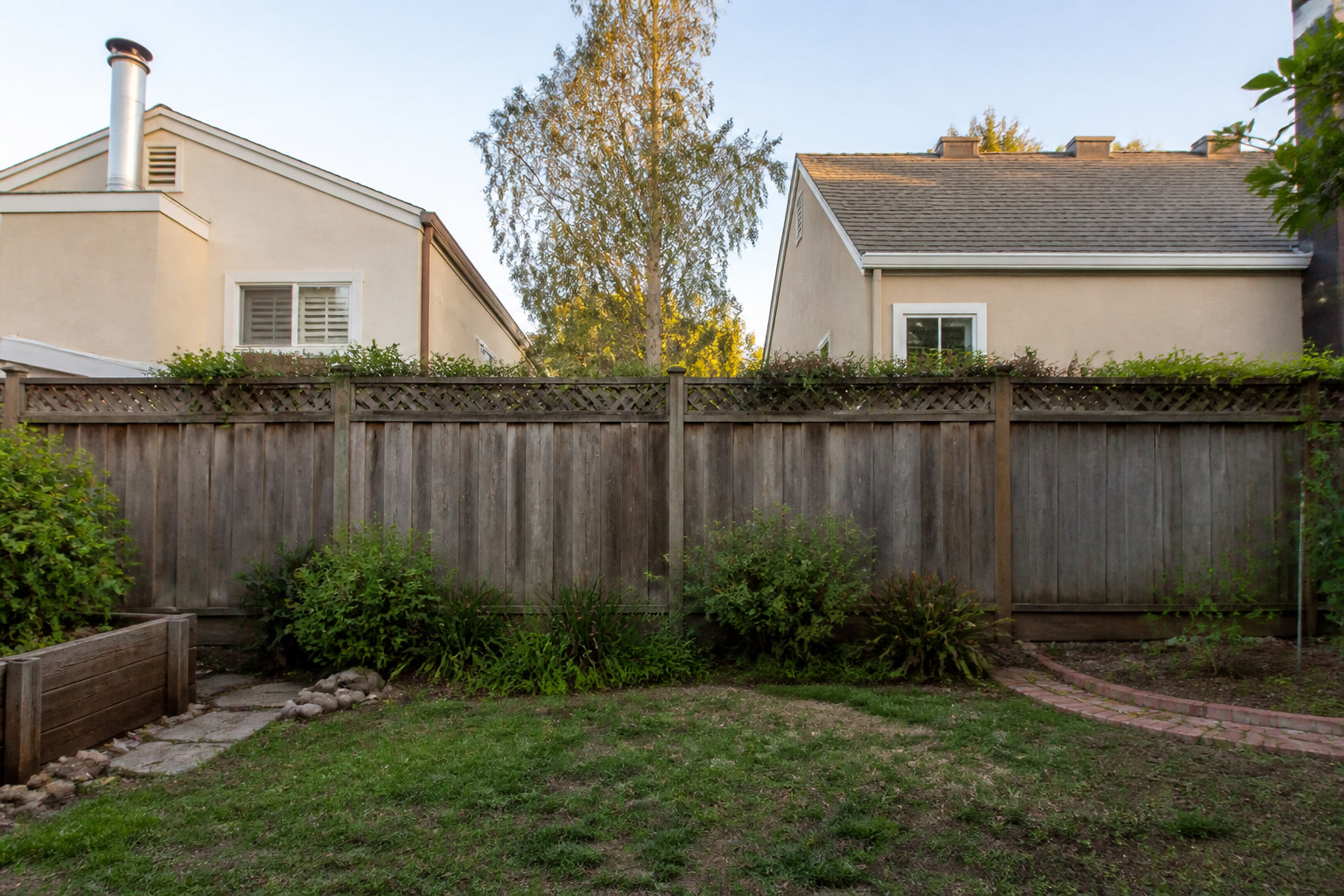
The wall between the two yards wasn’t a mystery to anyone. The Adkins’ dog — not even a year old — had a documented pattern of going after that wall: barking at it, scratching at it, clawing at it, testing it, the kind of behavior neighbors notice and usually mention to each other long before anything happens. It wasn’t a secret that the dog wanted to get to the other side. The only question was whether it could.
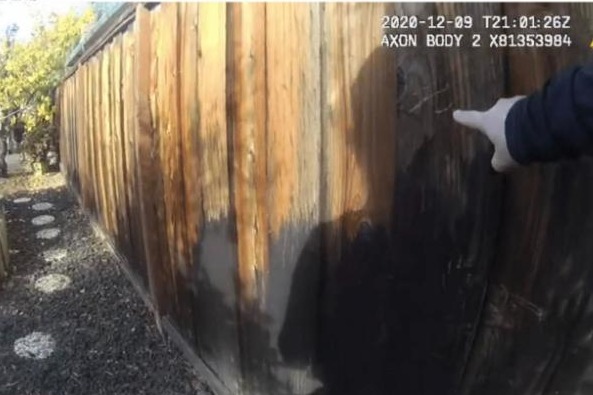
On the afternoon of December 9, 2020, it answered that question. The dog cleared the wall into Gail’s yard and came at her. She did what almost anyone would do — she ran. In the process of getting away, she fell and fractured her shoulder. That’s the injury at the center of this entire case, and it’s worth saying plainly: the dog never touched her. Every dollar of what follows was won without a bite, without a scratch, without a mark from the animal itself.
Does a Dog Have to Touch You?
That fact — no contact — is exactly what I expected the defense to lean on. It’s the obvious argument: no bite, no attack, and if she fell running from a dog that never reached her, isn’t that just an accident she caused herself?
California law doesn’t see it that way, and neither does Alameda County. I built Gail’s case on two legal theories. The first was ordinary negligence: the Adkins knew, or should have known, that their dog had already shown a pattern of trying to get over a shared wall, and they didn’t stop it from happening. The second was a violation of Alameda County’s own ordinance governing dog owners whose animals have shown a history of aggressive behavior and haven’t been kept properly restrained — a theory that doesn’t require me to prove the Adkins were careless in some abstract sense, only that they violated a specific rule the county put in place for exactly this kind of situation.
Together, those two theories answered the defense’s real question before they could finish asking it. A dog charging at you in your own backyard is dangerous whether or not it ever makes contact, and a person who gets hurt escaping that danger has suffered exactly the harm the law is designed to address. The injury doesn’t become less real because Gail was fast enough, or scared enough, to turn and run before the dog reached her. The Adkins’ own retained expert took the opposite position at trial — that scratching and clawing at a wall doesn’t, on its own, predict a dog will clear it — and that disagreement was ultimately for the jury to resolve, not the lawyers.
Two Chances to Settle This Quietly. The Adkins Passed on Both.
Nearly two years into the case, on November 28, 2022, the parties sat down for a private mediation. It didn’t resolve. Three days later, on December 1, 2022, I made the Adkins a formal offer under California Code of Civil Procedure section 998: resolve this now for $300,000, and it’s over. A 998 offer isn’t a negotiating tactic in the ordinary sense — it’s a specific, statutory tool built to reward whichever side turns out to have been reasonable and to penalize whichever side gambles on trial and loses that bet. Once made, it sits there with a clock running, waiting to be accepted or rejected.
The Adkins, through their insurer, let it expire without responding. At the time, that must have looked like the safer, more conservative choice — wait, see what a jury actually does, and avoid paying a number nobody had tested yet. It’s a decision I’ve seen plenty of insurance companies make. It doesn’t always work out the way they hope.
The case had one more chance to settle before a jury ever heard it. On March 11, 2025 — with trial less than seven weeks away — the court convened a mandatory settlement conference. That failed too. Both sides went to trial having already had two separate opportunities, eighteen months apart, to resolve this for a negotiated number. Neither side blinked.
A Jury That Never Heard About Any of It Landed on the Same Number
The case went the distance: full discovery, nine depositions, and a jury trial in April 2025. Juries are never told that a settlement offer was ever on the table, let alone two — the law keeps 998 offers and mediation discussions out of the courtroom entirely, specifically so a verdict reflects the evidence alone, uncontaminated by what either side once offered to accept. Whatever this jury decided, it was going to decide it blind.
At trial, I built Gail’s case around two experts. A retained physician, Dr. William Montgomery, testified to the shoulder fracture itself and what it meant for her going forward. And because the case turned on the Adkins’ dog and what its behavior at that wall should have told them, I retained a dog behavior expert, Nicole Snebold, to explain to the jury — in terms that didn’t require anyone to already know anything about animal behavior — exactly what a young dog repeatedly scratching and clawing at a shared wall is communicating about what it intends to do if it ever gets the chance. To make that testimony something the jury could follow without a background in animal behavior, we built demonstrative exhibits illustrating the wall, the yard, and the sequence of the attack itself — the same kind of visual aids that turn an expert’s explanation into something twelve jurors can actually picture.
On April 28, 2025, the jury came back. Their verdict for Gail Converse: $300,000 — the exact number the Adkins had turned down two and a half years earlier at both mediation and through the 998 offer, reached independently by twelve people who had no idea that number had ever been on the table at all.
Why $300,000 Became $399,889
A verdict that matches a rejected settlement offer isn’t the end of the math — under California law, it’s the beginning of a different calculation entirely. Once the ordinary costs of litigating the case through that point were added to the $300,000 verdict, the total came in at or above what the Adkins had already been offered two and a half years earlier. That’s what the law calls failing to do better than the offer you turned down, and it carries real consequences.
The first consequence is interest — and not interest starting from the day of the verdict. Under California Civil Code section 3291, once a plaintiff beats her own 998 offer, she’s entitled to interest on the verdict at 10% a year, running retroactively all the way back to the day the offer was rejected. For Gail, that was 880 days — from December 1, 2022 to April 28, 2025 — which came to $72,328.77 in interest alone, on top of the jury’s number.
The second consequence is expert fees. Section 998 lets a court shift the cost of experts a plaintiff had to keep paying for after the rejected offer onto the side that rejected it. In Gail’s case, that meant the continued work of Dr. Montgomery and Ms. Snebold after December 2022 — $14,225 that the Adkins ultimately had to cover, instead of Gail.
Add in the additional litigation costs the law separately allows a prevailing party to recover, and the final amount I collected for Gail Converse came to $399,889 — the $300,000 verdict, plus interest, plus expert fees, plus costs, nearly a third more than what the jury alone ever put on paper.
What This Case Is Really About
Every part of the extra $99,889 in this case traces back to one decision: the Adkins’ choice, two and a half years before trial, to say no — first at mediation, then to a formal statutory offer at the same number. Turning down a serious offer is always a bet that a jury will see the case for less than you’re being asked to pay. Sometimes that bet pays off. Here, a jury that knew nothing about either failed settlement conversation looked at the same case and arrived, on its own, at the identical number — and California law made sure that betting wrong twice cost more than settling once would have.
I’ve handled cases where the injury came from a bite and cases like Gail’s, where it never did. The law doesn’t grade the harm by how dramatic the mechanism looks. It grades it by what actually happened to the person — a fractured shoulder, sustained fleeing a real and foreseeable danger her neighbors had already been warned about, one clawed scratch on a shared wall at a time.
Frequently Asked Questions
Does a dog have to bite me, or make physical contact, for me to have a legal claim?
No. If a dog’s aggressive behavior creates a dangerous situation — charging at you, for example — and you’re injured trying to get away, that injury can be just as compensable as a bite would be. The question is whether the owner’s negligence created a foreseeable risk of harm, not whether the dog’s teeth or claws happened to make contact.
What is a “998 offer,” and why does turning one down matter so much?
It’s a formal settlement offer made under a specific California statute, Code of Civil Procedure section 998. Either side can make one. If the other side rejects it and then fails to do better at trial than what was offered, the statute shifts real financial consequences — often including expert fees, and in personal injury cases interest under Civil Code section 3291 — onto the side that gambled and lost. It’s designed to make both sides take a serious offer seriously.
If a case doesn’t settle at mediation, is that the end of the settlement discussion?
Not necessarily. Gail’s case had two separate chances to resolve before trial — a private mediation and, later, a court-ordered settlement conference — and California’s 998 statute gives a formal settlement offer its own independent legal weight regardless of what happens at either one. A case can fail to settle twice and still carry real, quantifiable consequences for the side that turned down a reasonable number.
If the jury awarded $300,000, why would the amount I actually collect be different?
A jury’s verdict and the final judgment aren’t always the same number. Interest, expert fees, and litigation costs the law allows a prevailing party to recover can all be added on afterward, sometimes substantially — particularly when, as in Gail’s case, the defendant already had the chance to resolve things for the verdict amount (or less) years earlier and chose not to.
If a dog that wasn’t properly restrained hurt you or someone in your family — whether or not you were actually bitten — call my office at (415) 851-4557 for a free consultation. I handle every significant case personally. Ofrecemos consultas gratuitas en español.
This case is one example from my broader record of results. For more on how California law treats dog attacks and owner liability, see my page on dog bite claims. Past results do not guarantee a similar outcome in your case — read my full disclaimer.