

John Roach, Esq. | April 2, 2026 | California Law \ Car Accidents
Uber and Lyft Injury Claims Near Daly City BART: What Victims Need to Know

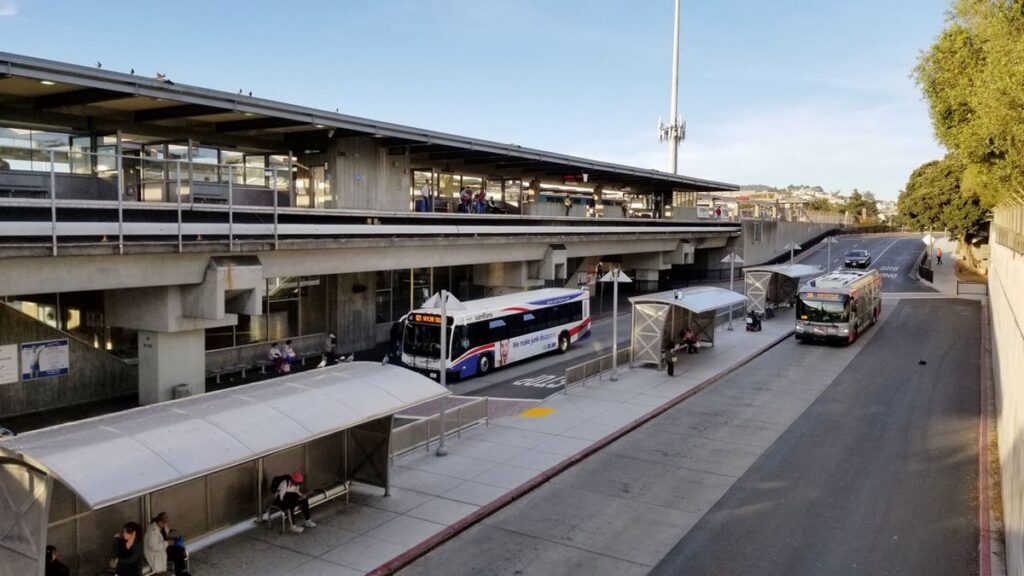
Daly City BART station is one of the busiest transit hubs on the Peninsula — and one of the highest-concentration rideshare pick-up and drop-off zones in San Mateo County. The combination of limited parking, heavy commuter traffic, and constant Uber and Lyft activity around Junipero Serra Boulevard, Geneva Avenue, and the I-280 access points creates conditions that produce serious accidents with regularity.
I’m John J. Roach, a San Francisco personal injury attorney with extensive trial experience representing victims of car accidents and Uber and Lyft rideshare accidents throughout the Bay Area, including Daly City and San Mateo County. This post covers the rideshare insurance framework, the liability questions that arise near transit hubs like Daly City BART, and what to do if you were injured in an Uber or Lyft crash in the area.
Why Rideshare Accidents Cluster Around Transit Hubs
The layout around Daly City BART creates specific hazards. Drivers circle the station lot waiting for ride requests, make abrupt maneuvers in congested pick-up zones, check the app while moving, and navigate unfamiliar streets under pressure to maintain high acceptance ratings. The result is a concentration of rear-end collisions, sideswipes, and T-bone crashes at the moments of pick-up and drop-off — exactly the moments when passengers are most vulnerable.
The Rideshare Insurance Framework: Which Coverage Applies
Rideshare accident claims are more complex than standard car accident claims because the applicable insurance coverage depends entirely on the driver’s activity status at the moment of the crash — not simply on whether the driver was in a rideshare vehicle.
Period 1 — App on, waiting for a request. The driver is logged into the platform but has not accepted a ride. Coverage is limited — typically $50,000 per person for bodily injury, $100,000 per accident, and $25,000 for property damage. This is frequently inadequate for serious injuries and is a common source of disputes in accidents that occur while drivers are circling a station waiting for assignments.
Period 2 — Ride accepted, en route to pick up the passenger. Once a driver accepts a request and is heading to the pick-up location, higher coverage applies. Many of the accidents that happen near Daly City BART occur during this period — the driver has accepted a ride and is navigating to the station or already pulling into the pick-up zone.
Period 3 — Passenger onboard. From the moment the passenger enters the vehicle through drop-off, the full $1 million liability policy applies, plus potential uninsured and underinsured motorist benefits. This is the strongest coverage period for injured passengers.
Correctly identifying which period applies at the moment of impact is one of the most important early steps in any rideshare injury claim. The insurer will not volunteer the most favorable interpretation. I obtain the app data and trip records from the carrier to establish the correct period before any settlement position is taken.
Proposition 22 and Rideshare Liability
California’s Proposition 22, passed in 2020, classifies rideshare drivers as independent contractors rather than employees. This affects driver benefits but does not shield Uber or Lyft from liability for crashes that occur during active trips. The companies remain accountable under vicarious liability and apparent agency theories for driver negligence during Periods 2 and 3. For a detailed analysis of how Prop 22 interacts with the full liability framework, see my post on Uber and Lyft liability in California after Prop 22.
Recent Development: The $8.5 Million Uber Verdict
In February 2026, a federal jury in Phoenix awarded $8.5 million in compensatory damages to a passenger who alleged sexual assault by an Uber driver during a 2023 trip. The jury found Uber liable under an apparent agency theory — the company’s branding and operational control created a reasonable belief that the driver was acting as its agent. Uber has announced plans to appeal. The case is the first of over 3,000 consolidated suits to reach a federal jury verdict. For my full analysis of what this means for passengers, see the Uber sexual assault verdict post. The liability principles established in that verdict are relevant to collision cases as well.
What to Do After a Rideshare Accident Near Daly City BART
Seek medical attention the same day — even if you feel uninjured. Traumatic brain injuries and soft tissue injuries from rideshare collisions frequently produce symptoms that worsen hours after impact. At the scene, photograph everything: both vehicles, all damage, the driver’s information, the surrounding area, and any visible injuries. Screenshot the Uber or Lyft app showing the active trip — this documents the period of coverage and the driver’s identity. Get witness contact information before anyone leaves.
Report the incident through the Uber or Lyft app promptly. Do not give a recorded statement to any insurance company — including your own — before consulting an attorney. The period of app activity at the time of the crash significantly affects which insurance applies, and the insurer’s first call is designed to establish facts that minimize their exposure, not maximize your recovery.
California’s statute of limitations for personal injury claims is two years from the date of the accident. If BART’s property or infrastructure contributed to the crash, a government tort claim against the transit agency must be filed within six months. Contact an attorney promptly.
If you were injured in an Uber or Lyft accident near Daly City BART or anywhere in the Bay Area, call me at (415) 851-4557 for a free consultation. Learn more about my San Francisco Uber & Lyft rideshare accident practice. I work on a contingency fee basis — you pay nothing unless I recover money for you. I am bilingual in English and Spanish.
Frequently Asked Questions: Uber and Lyft Accidents Near Daly City BART
Seek medical attention the same day even if you feel uninjured — serious injuries from rideshare collisions frequently worsen hours after impact. At the scene, photograph both vehicles, all damage, the driver’s information, and the surrounding area. Screenshot the Uber or Lyft app showing the active trip — this documents the period of coverage and the driver’s identity. Get witness contact information before anyone leaves. Do not give a recorded statement to any insurance company before consulting an attorney.
The $1 million liability policy only applies during Period 3 — when a passenger is actively onboard from pick-up through drop-off. If the driver was waiting for a ride request (Period 1) or en route to pick you up (Period 2), lower coverage limits apply. Correctly identifying the period at the moment of the crash is one of the most important early steps in any rideshare injury claim — the insurer will not volunteer the most favorable interpretation.
Yes. Despite Proposition 22 classifying drivers as independent contractors, Uber and Lyft can still be held liable for crashes that occur during active trips under vicarious liability and apparent agency theories. The $8.5 million federal jury verdict against Uber in February 2026 confirms that these theories are viable even post-Prop 22. California Public Utilities Code Section 5354 also attributes driver actions to the transportation network company during active trips.
Two years from the date of the accident for personal injury claims under California Code of Civil Procedure Section 335.1. However, if BART’s property or infrastructure may have contributed to the crash, a government tort claim against the transit agency must be filed within six months of the accident. Missing the six-month government claim deadline typically bars that claim permanently. Contact an attorney promptly after any serious rideshare accident.
A successful rideshare accident claim can recover medical expenses from the emergency room through the end of treatment, future medical costs, lost wages and future lost earning capacity, non-economic damages for pain and suffering and loss of enjoyment of life, and property damage. In serious injury cases, the $1 million company liability policy is the primary source of recovery and can produce substantially higher results than a standard personal auto policy.
Disclaimer: This blog post is for informational purposes only and does not constitute legal advice. Consult a licensed attorney for advice specific to your situation.




