
John Roach, Esq. | March 19, 2026 | Car Accidents \ Premises Liability
Pedestrian Rights in Daly City’s Foggy Crosswalks

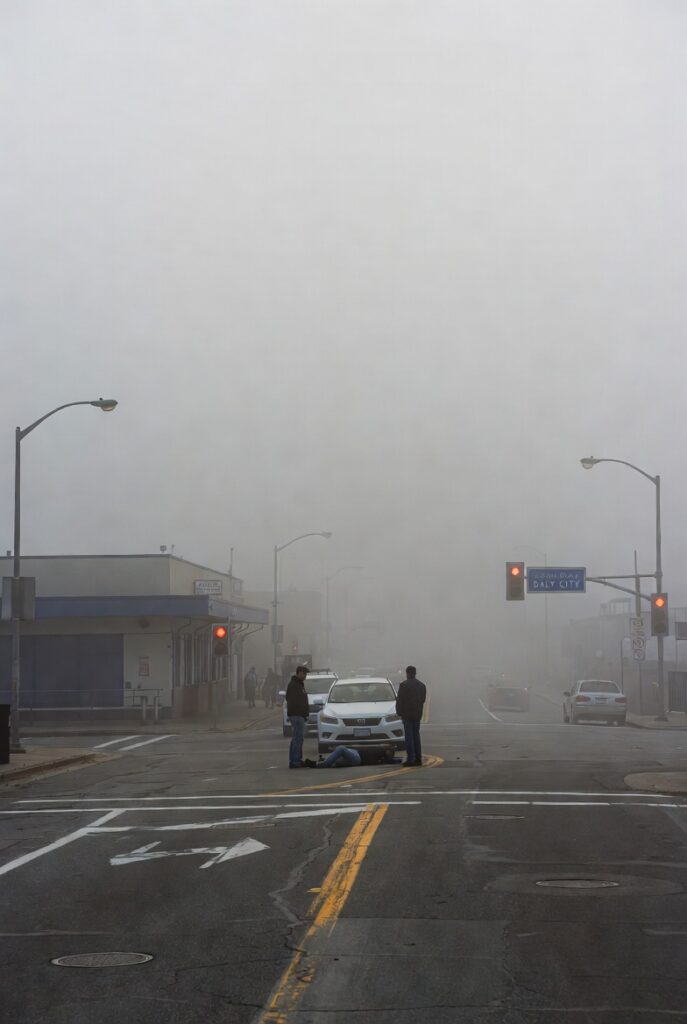
Daly City’s proximity to the Pacific Ocean produces persistent coastal fog — particularly around Skyline Boulevard, John Daly Boulevard, and crosswalks near Westmoor High School and Serramonte Center — that reduces visibility to under 100 feet and creates genuinely dangerous conditions for pedestrians. According to the California Office of Traffic Safety, Daly City recorded 53 pedestrian crashes in 2022, ranking second among similarly sized California cities for pedestrian incidents. When a driver strikes a pedestrian in low-visibility conditions, the legal questions that follow are serious and the deadlines are strict.
I’m John J. Roach, a San Francisco personal injury attorney with extensive trial experience representing pedestrian accident victims throughout the Bay Area, including Daly City and San Mateo County. This guide answers the most important questions about pedestrian accident claims in Daly City — what the law requires, who can be held liable, and what your case may be worth.
Pedestrian Rights Under California Law
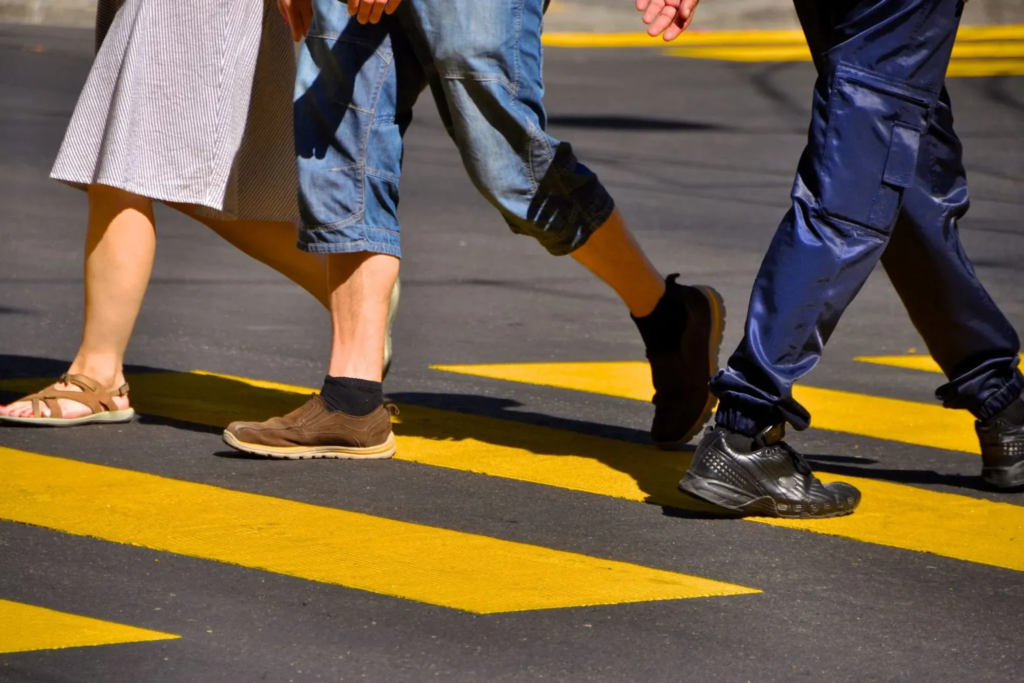
California Vehicle Code Section 21950 requires drivers to yield the right-of-way to pedestrians in both marked and unmarked crosswalks. This obligation does not diminish in fog or other adverse weather — if anything, it increases, because Vehicle Code Section 22350 separately requires drivers to reduce speed when visibility or road conditions make it unsafe to travel at the posted limit. A driver who fails to slow down in heavy fog and strikes a pedestrian in a crosswalk has potentially violated two separate provisions of the Vehicle Code.
Pedestrians are also subject to obligations — using sidewalks where provided, crossing at designated locations, and not stepping into traffic unexpectedly. When a pedestrian fails to follow these rules, California’s pure comparative negligence system applies. Fault is apportioned between the parties, and the pedestrian’s recovery is reduced by their percentage of fault. But critically, under California’s pure comparative negligence rule, a pedestrian can recover even if they bear majority fault — as long as the driver was also negligent. Insurance companies routinely try to inflate the pedestrian’s share of fault to reduce payouts, which is one of the most important reasons to have legal representation in these cases.
How Fog Affects Pedestrian Accident Claims in Daly City
Fog is not just a safety issue in these cases — it is a legal one. Meteorological data documenting visibility conditions at the time and location of the accident can directly support a negligence claim against the driver. A driver who proceeds at normal speed through fog that reduces visibility to 50 feet has objectively failed to adjust their driving to conditions. That failure is negligence, and it is documentable.
Fog can also create a potential municipal liability angle. If Daly City’s crosswalk markings, lighting, or signage were inadequate for known foggy conditions at a particular intersection — and the city knew or should have known — the city may share liability for the accident. Intersections on Junipero Serra Boulevard and Mission Street are identified on Daly City’s High Injury Network as pedestrian safety hotspots. Municipal liability claims are complex and have shorter deadlines, but they are worth evaluating in any serious pedestrian accident case.
What to Do Immediately After a Pedestrian Accident in Daly City
Call 911 immediately. If the accident occurred on a city street, Daly City Police will respond. If it occurred on a state route, contact the California Highway Patrol. Request an ambulance if anyone is injured — do not refuse medical evaluation at the scene. Traumatic brain injuries and spinal injuries from pedestrian accidents frequently produce symptoms that worsen hours after impact. Seton Medical Center in Daly City handles trauma cases and is a reasonable option for immediate care.
While at the scene, photograph everything: the crosswalk, the vehicle, your injuries, the surrounding fog or road conditions, any skid marks, and the position of traffic signals or warning signs. Collect names and contact information from witnesses. Do not admit fault or apologize — those statements can be used against your claim. Do not give a recorded statement to any insurance company before consulting an attorney.
Report hazardous crosswalk conditions — faded markings, broken signals, inadequate lighting — to Daly City Public Works. That report creates a record of the city’s notice of the condition, which is relevant if you pursue a municipal liability claim.
Who Can Be Held Liable for a Pedestrian Accident in Daly City?
The at-fault driver is the primary defendant in most pedestrian accident cases. If the driver failed to yield, was speeding in fog, was distracted, or was impaired, they — and their insurer — are responsible for the full scope of your damages. If the driver’s insurance limits are insufficient to cover your damages, your own underinsured motorist coverage can fill the gap. California law allows pedestrians to access UM/UIM coverage under their personal auto policy even when they were on foot at the time of the accident.
Daly City may share liability if inadequate infrastructure contributed to the accident — faded crosswalk markings, malfunctioning signals, or insufficient lighting at intersections known to be hazardous in fog. Municipal claims require filing a government tort claim within six months of the accident under the California Government Claims Act. Missing this deadline typically bars the claim permanently, which is why anyone seriously injured in a pedestrian accident should contact an attorney as soon as possible.
In hit-and-run accidents — which occur at higher rates in low-visibility conditions — the claim is treated as an uninsured motorist case. Daly City uses license plate recognition systems and traffic cameras at key intersections including Westmoor Avenue and Southgate Avenue. CHP will access that footage as part of the criminal investigation, and the footage can also be obtained for civil proceedings.
What Damages Are Available in a Pedestrian Accident Case?
A successful pedestrian accident claim can recover economic damages — past and future medical expenses, lost wages and future earning capacity, rehabilitation costs, and home modification costs if the injury causes permanent disability. Non-economic damages include pain and suffering, emotional distress, loss of enjoyment of life, and loss of consortium.
Pedestrian injuries are frequently severe. High-speed impacts cause orthopedic fractures, pelvic injuries, traumatic brain injuries, and spinal cord damage. Fog-related accidents often involve higher-speed collisions because drivers have less reaction time. The lifetime cost of a serious TBI can exceed $1 million; a significant spinal cord injury can be multiples of that. Calculating full damages — including future care needs — requires expert medical and economic testimony and should not be left to an insurer’s unilateral assessment.
Keep a detailed daily journal of your pain, limitations, and how the injury is affecting your life from the day you hire me. That journal is among the most persuasive evidence of non-economic damages at mediation or trial.
How Insurance Claims Work in Pedestrian Accident Cases
The at-fault driver’s liability insurance is the first source of recovery — covering medical bills, lost wages, pain and suffering, and other damages up to the policy limit. California’s minimum liability limits are $30,000 per person (as of January 1, 2025), but many drivers carry higher coverage. If the driver’s limits are exhausted, your own underinsured motorist coverage applies. If the driver has no insurance, your uninsured motorist coverage applies.
The claims process begins with notifying the insurer, submitting the police report, medical records, and evidence of damages. Insurers frequently offer initial settlements that significantly undervalue serious pedestrian injury claims — particularly before the full extent of your treatment is known. Do not accept any offer before you have reached maximum medical improvement and have consulted an attorney about the full value of your claim. Once you sign a release, you cannot reopen the claim regardless of how your injuries develop.
If you were injured in a pedestrian accident in Daly City or anywhere in the Bay Area, call me at (415) 851-4557 for a free consultation. I work on a contingency fee basis — you pay nothing unless I recover money for you. I am bilingual in English and Spanish.
Frequently Asked Questions: Pedestrian Accidents in Daly City
Yes. California Vehicle Code Section 21950 requires drivers to yield the right-of-way to pedestrians in both marked and unmarked crosswalks. This obligation applies regardless of weather conditions. Additionally, Vehicle Code Section 22350 requires drivers to reduce speed when visibility or road conditions make it unsafe to travel at the posted limit — meaning a driver who fails to slow down in Daly City’s coastal fog and strikes a pedestrian in a crosswalk may have violated two separate provisions of the Vehicle Code.
Yes. California follows pure comparative negligence — you can recover compensation even if you were partially responsible for the accident. Your recovery is reduced by your percentage of fault, but you are not barred from recovery entirely. For example, if you are found 20% at fault and your total damages are $500,000, you recover $400,000. Insurance companies routinely try to inflate the pedestrian’s share of fault to reduce payouts, which is why experienced legal representation is important from the start of any pedestrian accident claim.
Two years from the date of the accident for claims against private parties under California Code of Civil Procedure Section 335.1. If the city of Daly City may share liability for inadequate crosswalk maintenance or signage, a government tort claim must be filed within six months of the accident under the California Government Claims Act. Missing the six-month deadline typically bars the municipal claim permanently. Contact an attorney as soon as possible after any serious pedestrian accident.
Yes, potentially. Under California Government Code Section 835, a public entity may be liable if it created or knew of a dangerous condition of public property and failed to address it within a reasonable time. If Daly City’s crosswalk markings were faded, signals were malfunctioning, or lighting was inadequate at an intersection known to be hazardous in fog, the city may share liability for the accident. These claims require filing a government tort claim within six months of the incident and are more complex than standard personal injury claims.
A hit-and-run violates California Vehicle Code Section 20001, which is a misdemeanor or felony depending on the severity of injuries. Report all details to police immediately — make, model, color, and any portion of the license plate. Daly City uses license plate recognition systems and traffic cameras at key intersections that CHP will access. For your civil claim, a hit-and-run is treated as an uninsured motorist case under your own auto policy. California law allows pedestrians to access their UM coverage even when they were not driving at the time of the accident.
Disclaimer: This blog post is for informational purposes only and does not constitute legal advice. Consult a licensed attorney for advice specific to your situation.




