
John Roach, Esq. | April 8, 2026 | California Law \ Car Accidents
Motorcycle Crashes on Bay Area Bridges: Oakland Edition – Stats, Safety Tips, and What to Do This Spring

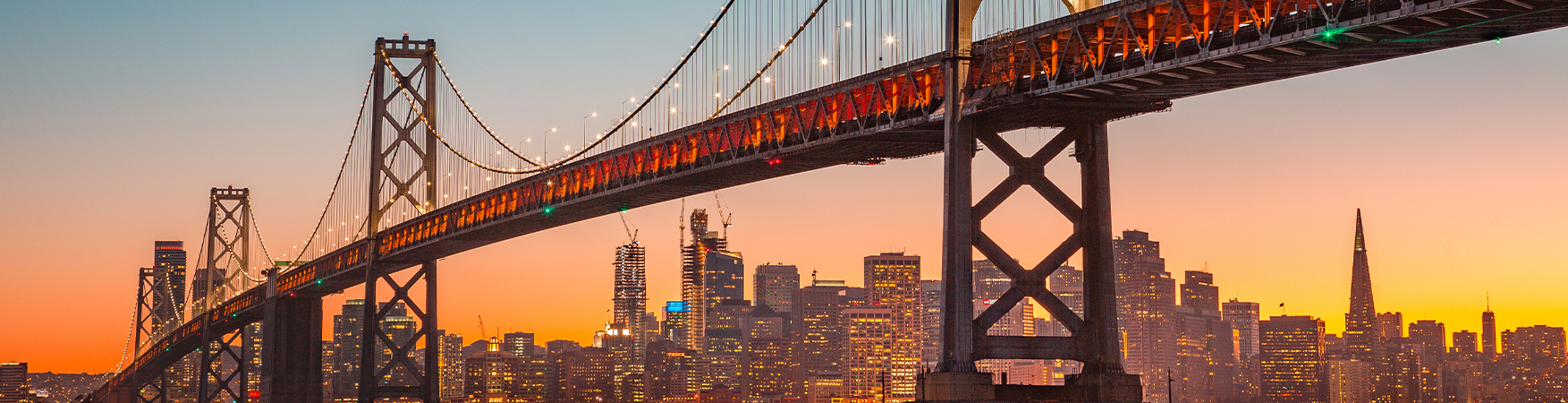
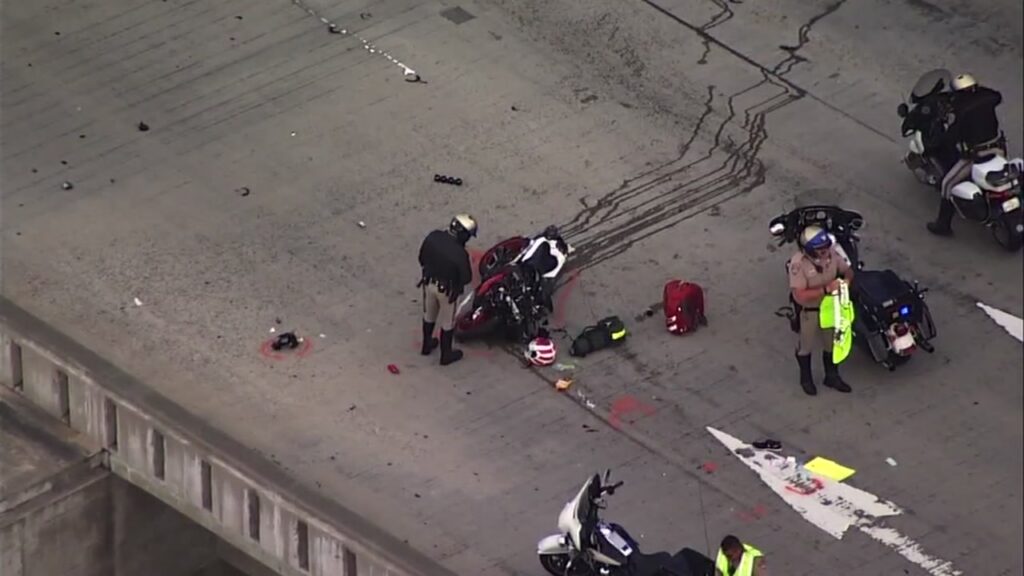
The San Francisco-Oakland Bay Bridge is one of the most hazardous stretches of road for motorcyclists in the Bay Area. Strong crosswinds on exposed spans, metal grates and expansion joints that reduce tire grip, high-speed lane changes by drivers who fail to see motorcycles, and congestion near the toll plaza create conditions that produce serious crashes with regularity. In March 2025, a motorcyclist was fatally struck twice on the Bay Bridge during a busy commute just west of the toll plaza. In January 2026, a motorcycle-vehicle collision on eastbound I-80 west of Treasure Island triggered a SigAlert and multiple lane closures. These are not anomalies — they reflect the structural risk of motorcycle travel on Bay Area bridges.
I’m John J. Roach, a San Francisco personal injury attorney with extensive trial experience representing motorcycle accident victims throughout the Bay Area, including Oakland and Alameda County. This guide covers the specific hazards on Bay Area bridges, California’s helmet law and how it affects your claim, how fault is determined, and what to do immediately after a crash.
The Specific Hazards Bay Area Bridges Pose for Motorcyclists
The Bay Bridge handles massive daily traffic — commuters, commercial trucks, and tourists creating unpredictable, high-speed conditions across all lanes. For motorcyclists, the hazards are compounded by the physical structure of the bridge itself. Strong crosswinds on open spans destabilize bikes in ways that car drivers never experience. Metal grates and expansion joints significantly reduce tire traction, particularly when wet or when crossed at an angle. Lane changes and merges happen at speed with limited sight lines. Congestion near the toll plaza creates sudden stops that rear-end crashes follow. And visibility for motorcycle riders is reduced at night and in the coastal fog that rolls in regularly from the Bay.
California recorded 583 motorcyclist deaths statewide in 2023 — approximately 14% of total traffic fatalities despite motorcycles representing a small fraction of registered vehicles. In Alameda County, Oakland sees approximately 125 riders killed or injured annually. Nationally, motorcyclists are 28 times more likely to die per mile traveled than car occupants. Unsafe speed, improper turning, and right-of-way violations are the leading crash causes — patterns that are intensified on bridge structures where there is no margin for error.
Common Causes of Motorcycle Crashes on Bay Area Bridges
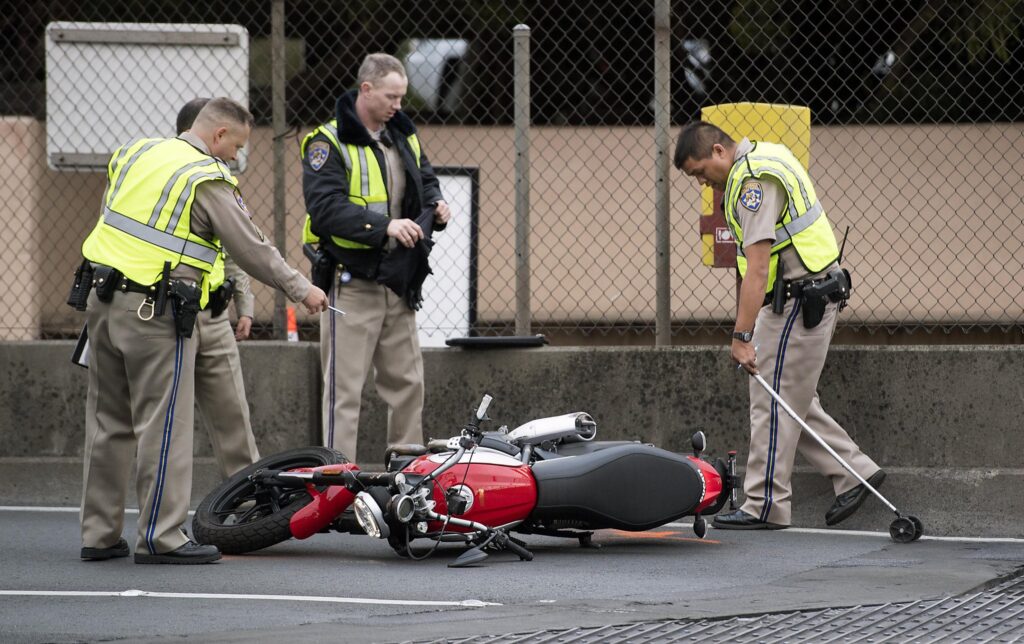
Driver negligence is the most common cause — cars frequently fail to spot motorcycles in blind spots during lane changes or merges, particularly in the high-volume traffic patterns approaching and leaving the Bay Bridge. Road surface hazards including grates, expansion joints, potholes, and debris cause loss of traction and control that would not affect a four-wheeled vehicle. Wind on exposed spans can push a motorcycle sideways faster than a rider can correct. Speeding and aggressive driving under pressure to match traffic flow is common on bridge approaches. And right-of-way violations at toll plaza approaches and bridge exits create high-risk intersection-equivalent situations at freeway speeds.
When a government-maintained road defect — a damaged expansion joint, unrepaired pothole, or debris left on the roadway — contributes to a motorcycle crash, there may be a claim against Caltrans in addition to or instead of a claim against another driver. Government claims have a strict six-month filing deadline under the California Government Claims Act, which is why contacting an attorney quickly after any bridge crash is critical.
California’s Helmet Law and Its Impact on Your Claim
California Vehicle Code Section 27803 imposes a universal helmet requirement — every rider and passenger must wear a DOT-compliant motorcycle helmet at all times, with no exceptions. The helmet must meet FMVSS 218 certification standards, visible as a DOT sticker, with a secure chin strap and proper fit. Novelty helmets that do not meet these standards do not satisfy the law.
Helmet compliance directly affects your legal claim in two ways. First, riding without a compliant helmet is a Vehicle Code violation that the defense will use to argue comparative fault — reducing your recovery by whatever percentage the jury attributes to your failure to wear required safety equipment. Second, if you suffered a head injury while not wearing a compliant helmet, the defense will argue that the injury would have been less severe or avoided entirely with proper protection. This affects the damages calculation even when it cannot change the liability finding. On Bay Area bridges where wind conditions amplify the risk of loss of control and head impact, a full-face DOT-approved helmet is both a legal requirement and the most important piece of protective equipment you can wear.
How Fault Is Determined in Motorcycle Bridge Crashes
California follows pure comparative negligence — you can recover compensation even if you were partially at fault for the crash. Your award is reduced by your percentage of fault but not eliminated. This matters in motorcycle cases because insurers routinely try to assign motorcyclists an inflated share of fault to reduce their exposure — citing speed, lane position, or lane splitting regardless of whether those factors actually contributed to the crash.
Lane splitting is legal in California under Vehicle Code Section 21658.1, which means a rider who was lane splitting at the time of a crash does not automatically bear fault for that reason alone. The question is whether the lane splitting was unsafe given the circumstances — speed differential, traffic conditions, road width. That is a factual question that requires evidence to resolve, not a presumption against the rider.
Strong evidence is the foundation of any motorcycle claim — the police report, witness statements, photographs of the vehicles and road surface, dashcam or traffic camera footage, and medical documentation connecting the injuries to the crash. I obtain that evidence and investigate the full liability picture before any settlement position is taken.
What to Do After a Motorcycle Crash on a Bay Area Bridge
Call 911 immediately. On the Bay Bridge, CHP has jurisdiction — they will respond and prepare the official report. Move to a safe position if you are able to do so without worsening any injury. Do not remove your helmet if you suspect a neck or head injury — let paramedics do that. Request medical evaluation at the scene even if you feel uninjured. Traumatic brain injuries and spinal injuries from motorcycle crashes frequently produce symptoms that worsen significantly in the hours after impact.
Document everything you can at the scene — photographs of all vehicles involved, your motorcycle damage, the road surface including any grates or joints near the point of impact, skid marks, debris, and your injuries. Get the other driver’s name, license, registration, and insurance. Get witness contact information before anyone leaves. Note the exact location on the bridge — mile marker, proximity to the toll plaza or Treasure Island — because that affects jurisdiction and evidence sources.
Do not give a recorded statement to any insurance company before consulting an attorney. The insurer’s first call is designed to establish facts that minimize your recovery. California’s statute of limitations for motorcycle accident personal injury claims is two years from the date of the crash under Code of Civil Procedure Section 335.1. If Caltrans or another government entity may share liability for a road defect, a government tort claim must be filed within six months — contact an attorney immediately.
If you were injured in a motorcycle crash on the Bay Bridge or anywhere in the Bay Area, call me at (415) 851-4557 for a free consultation. I work on a contingency fee basis — you pay nothing unless I recover money for you. I am bilingual in English and Spanish.
Frequently Asked Questions: Motorcycle Crashes on Bay Area Bridges
The primary hazards are strong crosswinds on exposed spans that destabilize bikes, metal grates and expansion joints that reduce tire traction — especially when wet or crossed at an angle — aggressive lane changes by drivers who fail to see motorcycles, sudden stops in toll plaza congestion, and reduced visibility in coastal fog. Spring and weekends see spikes in crashes as ridership increases. The March 2025 fatal crash just west of the toll plaza and the January 2026 SigAlert on eastbound I-80 near Treasure Island illustrate that these hazards produce serious crashes with regularity.
Yes, in two ways. First, riding without a DOT-compliant helmet under Vehicle Code Section 27803 is a Vehicle Code violation that the defense will use to argue comparative fault — reducing your recovery by the percentage attributed to that violation. Second, if you suffered a head injury without a compliant helmet, the defense will argue the injury would have been less severe with proper protection, affecting the damages calculation. Wearing a full-face, DOT-approved helmet is both legally required and the most important protective measure on Bay Area bridges where wind conditions amplify the risk of head impact.
Yes. Lane splitting is legal in California under Vehicle Code Section 21658.1, so a rider who was lane splitting does not automatically bear fault for that reason alone. California follows pure comparative negligence — you can recover compensation even if you were partially at fault, with your award reduced by your percentage of fault. The question is whether the lane splitting was unsafe given the specific circumstances — speed differential, traffic conditions, road width — which is a factual question requiring evidence, not a presumption against the rider.
If a road defect — a damaged expansion joint, unrepaired pothole, or debris left on the roadway — contributed to your crash, you may have a claim against Caltrans under California Government Code Section 835 for maintaining a dangerous condition on public property. Caltrans must have known or should have known about the defect and failed to correct it within a reasonable time. These claims require filing a government tort claim within six months of the accident — missing this deadline typically bars the claim permanently. Contact an attorney immediately after any crash involving a road surface condition.
Two years from the date of the accident for personal injury claims under California Code of Civil Procedure Section 335.1. However, if Caltrans or another government entity may share liability for a road defect, a government tort claim must be filed within six months of the accident. Bridge crash evidence — traffic camera footage, dashcam recordings — can be overwritten within days. Contact an attorney as soon as possible after any serious motorcycle crash on a Bay Area bridge.
A successful motorcycle accident claim can recover past and future medical expenses, lost wages and future lost earning capacity, non-economic damages for pain and suffering and loss of enjoyment of life, motorcycle repair or replacement, and future rehabilitation costs. Serious cases involving traumatic brain injuries or spinal cord damage have produced six- and seven-figure recoveries when liability is clearly established and future care costs are fully documented through expert testimony.
Disclaimer: This blog post is for informational purposes only and does not constitute legal advice. Consult a licensed attorney for advice specific to your situation.




