

Evangelina Co paid her insurance premiums for years for exactly this kind of day: the day another driver hits you and doesn’t carry enough coverage to pay for what they broke. The driver who rear-ended her carried only $15,000 in liability coverage — nowhere near enough for a brain injury. Evangelina settled that part of the claim quickly, for what little it was worth, then turned to the coverage she’d bought for exactly this scenario: her own underinsured motorist policy with CSAA Insurance Exchange.
CSAA didn’t pay her claim either. It fought her for nearly two years, sent three different doctors to say her brain injury wasn’t real, and opened arbitration with an offer of $125,000.
The arbitrator found her damages totaled $750,000. This is the story of how that number came to be — and why, unlike most of the case results on this site, I can tell it using her real name.
Most of my case results are anonymized. When a case settles, confidentiality is often part of the deal, and I honor that even when it isn’t required. An arbitration award is different. It’s a decision made by a neutral arbitrator after both sides made their full case — closer to a jury verdict than a negotiated settlement — and there’s no confidentiality agreement standing between Evangelina and her own story. She’s comfortable having it told, and it’s a story worth telling in full, including the parts that happened after the arbitrator’s decision.
The Crash on I-880
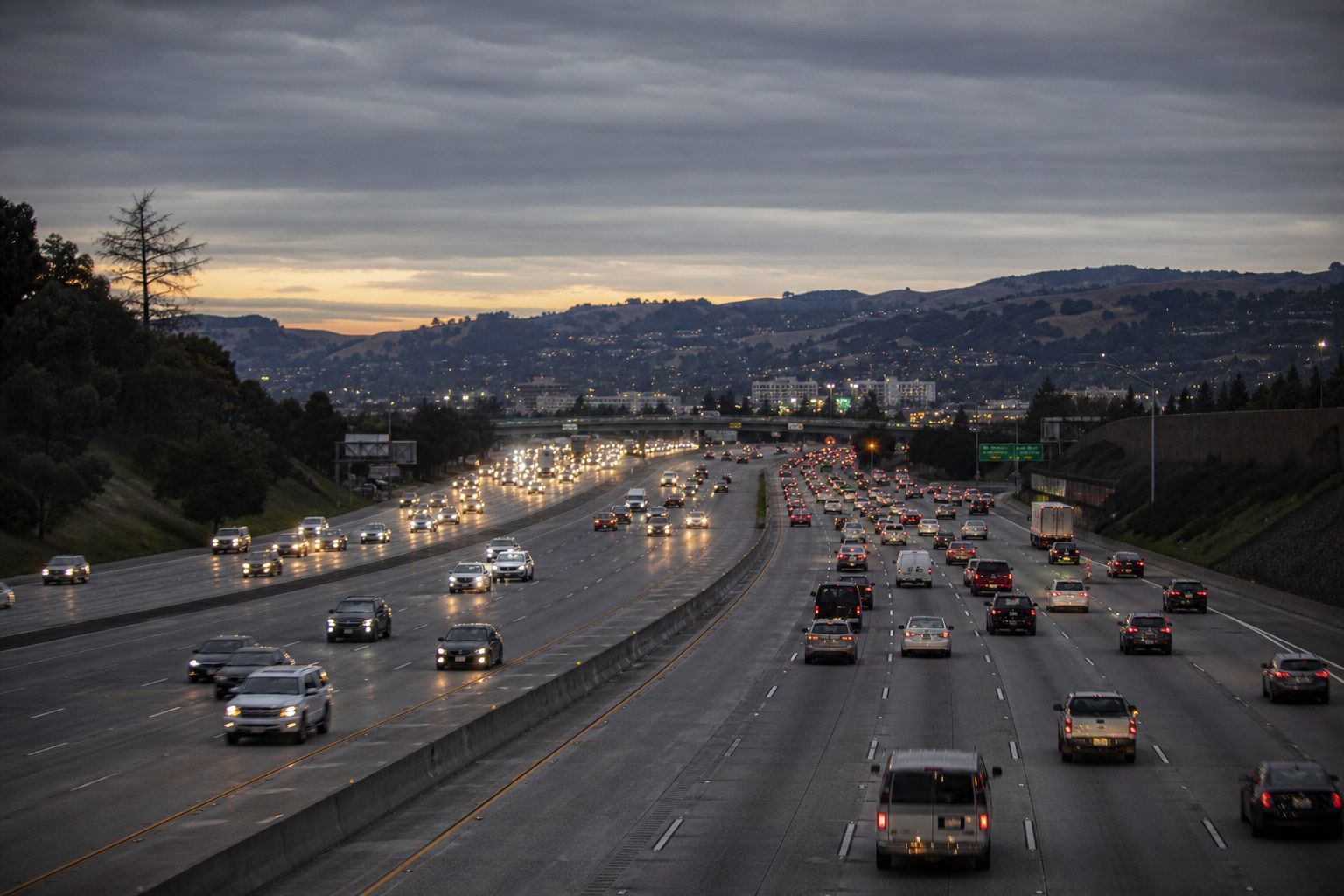
On September 25, 2023, Evangelina — 76 years old, recently retired from a career in accounting, active in her church and close with her family — was riding in a friend’s car on I-880 South when another driver rear-ended them. The impact was hard enough to cause visible property damage and hard enough that witnesses at the scene believed she’d lost consciousness. She doesn’t fully remember the moment of impact herself — her memory picks back up somewhere between the sound of the crash and a stranger’s voice asking if she was okay.
Paramedics took her to the emergency room with a scalp hematoma at the back of her head. Within 48 hours she was back in the office of her longtime primary care physician, who had treated her for years, with ringing in both ears, neck pain, and dizziness that came on when she turned her head too quickly. Her doctor diagnosed a concussion. Over the following months, that diagnosis grew into something more serious: post-concussion syndrome, persistent tinnitus, and a fog that didn’t lift — trouble concentrating, a shorter fuse, crossword puzzles that used to be easy suddenly weren’t. Eventually, PTSD and reactive depression were added to the record.
By the time the case reached arbitration two years later, Evangelina had stopped driving. Not because anyone told her to — because she didn’t trust herself anymore. “I don’t drive anymore because I get dizzy,” she said plainly in her deposition. For a woman who’d spent her whole adult life driving herself wherever she needed to go, that sentence said more than any medical chart could.
When Your Own Insurance Is the One Fighting You
This is what people don’t expect about underinsured motorist claims: the case isn’t against the driver who hit you. It’s against your own insurance company, the one you’ve paid every month, arguing that you don’t deserve what you’re asking for.
CSAA’s position was that whatever happened to Evangelina in the weeks after the crash was real, but that it should have resolved within six to twelve months — and that anything lingering past that point wasn’t the accident anymore. It was just age. She was 76, after all, with a handful of ordinary, well-managed conditions common to a woman her age: mild hypertension, a knee that gave her occasional trouble, a thyroid medication. CSAA’s retained experts built their entire defense around a version of Evangelina Co that had never really changed — a story where a 76-year-old’s brain naturally does this, accident or no accident.
There was a real medical problem working in the insurance company’s favor, and I want to be honest about it: the MRI of Evangelina’s brain came back normal. No bleed, no visible lesion, nothing a claims adjuster could point to on a film. That’s true of most concussions and mild traumatic brain injuries — the damage is at the level of individual nerve fibers, far too small for a hospital MRI to resolve — but it’s also exactly the gap an insurance company’s lawyers are trained to drive a truck through. No visible injury is the easiest claim in the world to argue down.
Building the Case Around an Injury You Can’t See on a Scan
The only way to beat that argument is to make the invisible injury impossible to dismiss, which meant building the medical case from the ground up.
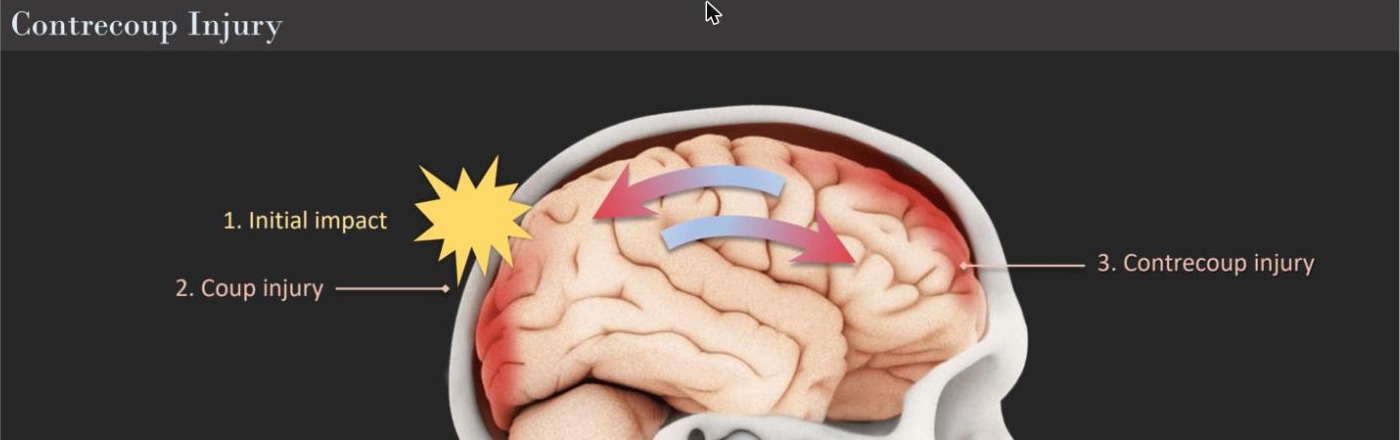
I retained a cognitive neurologist — a university researcher with decades of published work on exactly the kind of injury Evangelina had — to explain, in terms an arbitrator without a medical degree could actually follow, why a normal MRI doesn’t mean a normal brain: the forces of a rear-end collision shear the brain’s long axons in ways too small for routine imaging to catch, and that damage doesn’t heal the way a bruise does. He has a simple way of illustrating what that injury actually costs someone day to day — asking a patient to remember five ordinary words, then checking back a minute later. A healthy brain holds onto them without effort. A brain with this kind of injury often can’t, no matter how hard the person is trying. That was Evangelina’s daily experience of her own memory, described in a way a stranger could finally understand.
Alongside him, a neuropsychologist ran objective cognitive testing — the kind that measures processing speed and working memory against hard numbers, not impressions. And underneath both experts sat something CSAA couldn’t argue with: two full years of her own doctor’s pre-accident wellness visits, in which Evangelina was screened for memory problems and explicitly, repeatedly denied having any. There was no gradual decline in that record. There was a clean baseline, and then there was September 25, 2023.
Taking Apart the Insurance Company’s Own Experts
CSAA hired three doctors to build its defense. Under oath, each one handed us something we needed.
Their own retained neuropsychologist ran his own cognitive testing on Evangelina and got scores showing moderate impairment — a working memory score at the 9th percentile, processing speed at the 0.1 percentile. He’d built a report arguing her symptoms were pre-existing, but when I asked him directly at deposition whether the crash had contributed to her cognitive deficits, he couldn’t say no. “I’m not able to answer the question,” he testified. An insurance company’s own hired expert, unable to rule out the one thing his entire report was written to rule out.
Their neurologist ran into a different problem: consistency. She conceded, without hesitation, that Evangelina’s tinnitus was caused by the crash. But she wanted to attribute the dizziness and cognitive symptoms — which the medical literature ties to the exact same inner-ear and brain mechanisms as the tinnitus she’d already conceded — to unrelated anxiety instead. She never offered a medical reason why one symptom from the same impact would be accident-related and the others wouldn’t. That inconsistency became one of the clearest threads in my closing argument.
None of this happened by accident. It happened because I personally took or defended all ten depositions in this case — Evangelina herself, her longtime doctor, every treating provider, and every defense expert — built a record months before the hearing instead of scrambling the week of it, and made sure the concessions that mattered were sitting in an expedited transcript, ready to hand the arbitrator at the moment they mattered most. It also meant making smart choices about where to spend the case’s resources — videotaping expert testimony for use at the hearing rather than paying for additional live appearances — so that the money went toward building the record, not toward unnecessary overhead. At the hearing itself, that record didn’t just live in binders. I built a full set of hearing slides — opening and closing presentations walking the arbitrator through the medicine step by step, anchored by the same coup-contrecoup imagery above — so a 76-year-old’s invisible injury was something he could see, not just hear described secondhand.
This case never went to mediation. CSAA’s policy sends a disputed UIM claim straight to binding arbitration, so there was exactly one formal chance to resolve it before a hearing. Evangelina’s UIM policy carried a $500,000 limit; with $485,000 of that remaining available to her, I made CSAA a formal offer a year before the arbitration hearing: resolve this for the full $485,000, and it’s over. CSAA let it pass. The arbitrator, Ronald Schneider, Esq., heard the case in October 2025 and found Evangelina’s damages totaled $750,000 — well beyond even the full policy amount she had offered to accept a year earlier, and six times what CSAA had opened with.
The Fight Didn’t End With the Decision
A $750,000 damages finding on a $500,000 policy doesn’t mean CSAA simply wrote a check for $750,000 — an insurance company is never on the hook for more than its own policy limit, no matter how the arbitrator values the injury. What it does mean, under California law, is that CSAA had turned down a reasonable offer and lost that bet badly. Because the award exceeded the $485,000 Section 998 offer CSAA had let expire, Evangelina was entitled to something on top of the policy limit: her litigation costs and expert fees from the point of that offer forward, paid by CSAA as the penalty for guessing wrong.
CSAA didn’t concede that either. It objected to more than $22,000 of the cost bill, challenging fees for the neuropsychologist and several of the depositions that had done the most to prove the case. I filed a formal motion defending every dollar — the same expert and deposition work that had just produced a $750,000 finding was, CSAA now argued, somehow not “necessary.” The arbitrator largely rejected CSAA’s objections. Between the $485,000 policy limit and the additional costs awarded on top of it, Evangelina’s total recovery from CSAA came to $524,361.07.
That extra round — a contested motion fought and won after the arbitrator had already ruled — isn’t a footnote. It’s the same pattern as everything before it: CSAA looking for one more place to pay less than it owed, and losing there too.
What This Case Is Really About
I’ve represented people with catastrophic, unmistakable injuries, and I’ve represented people like Evangelina, whose injury is just as real and far harder to prove — because it doesn’t show up on a scan, because she’s older and insurance companies bet juries and arbitrators will assume age explains everything, and because the company fighting her was the one she’d trusted for years. None of those things made her injury less real. They just made it more work to prove.
There was no life care plan in this case, and there didn’t need to be one. Evangelina’s damages were almost entirely non-economic — pain, suffering, and the loss of a kind of independence no future medical bill can itemize — which meant every dollar of that $750,000 finding rested on how convincingly the injury itself could be proven, not on a spreadsheet of projected costs. That’s the part of this case I’m proudest of. Not the number, though the number matters — it’s the two years of building a record good enough that a neutral arbitrator looked at a 76-year-old woman with a normal MRI and said: this happened to her, and it’s worth three-quarters of a million dollars.
Frequently Asked Questions
Why does this case result use a real name when others on this site don’t?
Because it’s different in kind. A settlement is a private agreement between two parties, and confidentiality is often part of that agreement — I honor that by default even when I’m not required to. An arbitration award, like a jury verdict, is a decision made by a neutral third party after a full hearing. There’s no negotiated confidentiality to protect, and Evangelina was comfortable having her story told.
If the arbitrator found $750,000 in damages, why did CSAA only pay $524,361.07?
Because a UIM claim is always capped at the policy’s own limit — here, $500,000, of which $485,000 remained available to Evangelina. An insurer is never required to pay more than that limit no matter how a case is valued. What pushed her recovery above the policy limit was California’s Section 998 cost-shifting rule: because CSAA turned down a reasonable pre-hearing offer and the eventual award beat it, CSAA also had to pay Evangelina’s post-offer litigation costs and expert fees. That additional amount, on top of the policy limit, brought her total recovery to $524,361.07 — and CSAA contested even that before the arbitrator ordered it paid.
Can my age or pre-existing health conditions be used against me in a brain injury claim?
Insurance companies will try. California’s “eggshell plaintiff” rule holds that a defendant — or an insurer standing in for one — takes a claimant as they find them. If you were more vulnerable to a serious injury because of your age or health, the party responsible for the crash is still responsible for the full extent of the harm it caused. It’s a common defense argument, and it’s rarely as strong as insurance companies present it.
What can I do if my own insurance company is disputing my underinsured motorist claim?
Treat it like the adversarial proceeding it is. Your insurer’s retained doctors work for the same side that’s trying to minimize your claim, and a UIM arbitration requires the same level of medical and expert preparation as a jury trial — because in every way that matters, it is one. Don’t accept an opening offer as a measure of what your case is worth, and don’t assume the fight ends when the arbitrator rules — collecting everything you’re owed can be its own battle.
If you or a family member has a brain injury or other serious injury an insurance company is trying to minimize — including a claim against your own underinsured motorist coverage — call my office at (415) 851-4557 for a free consultation. I handle every significant case personally. Ofrecemos consultas gratuitas en español.
This case is one example from my broader record of results. For the detailed legal strategy behind this case — the expert testimony, deposition tactics, and arbitration brief — see Case Study: How I Proved Catastrophic Injuries in a UIM Arbitration Victory. Past results do not guarantee a similar outcome in your case — read my full disclaimer.