
John Roach, Esq. | September 2, 2026 | California Law \ Car Accidents
A Toddler Fell, a Waymo Kept Coming: A San Francisco Pedestrian Accident Lawyer on the Noe Valley Crosswalk Scare

Ben Fisher was walking his two-year-old daughter across Sanchez and Duncan streets in Noe Valley shortly after 9:30 a.m. last Friday when she tripped and fell, face-down, in the crosswalk. As she lay there, a Waymo robotaxi began moving into the intersection toward them, according to Fisher’s account reported by the San Francisco Chronicle, which first reported the incident. Fisher didn’t wait to see what the car would do next — he pushed her empty stroller into the vehicle’s path. The Waymo stopped roughly 13 feet away.
His daughter burst into tears; bystanders on the sidewalk started shouting. “I think my child could have very easily been killed,” Fisher told the Chronicle. Waymo says the vehicle “did nothing wrong” and had already stopped by the time Fisher intervened.
Both things can be true — a system that worked as designed, and a father who reasonably believed his daughter’s life was in danger. That gap is where the legal questions live.
What Happened at Sanchez and Duncan
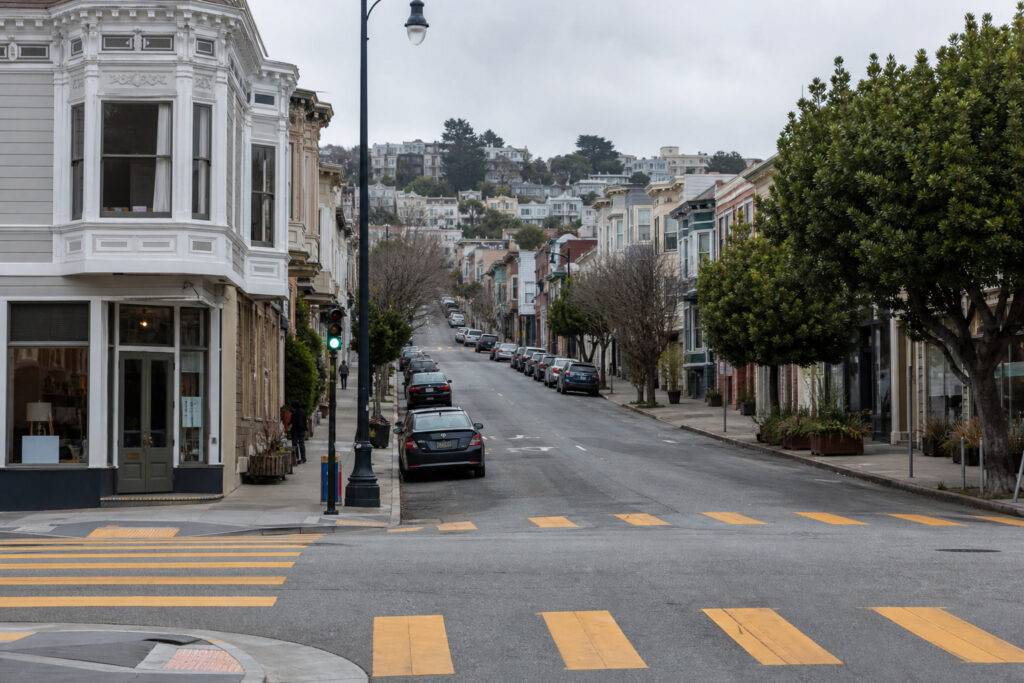
The fall happened on a stretch of Sanchez Street that San Francisco’s County Transportation Authority has designated a permanent Slow Street — a corridor engineered specifically to prioritize people walking and biking over car traffic, with the agency’s own planning data showing more than 1,000 pedestrian trips on a typical weekend day. Fisher and his wife filed a police report, submitted an incident report directly to Waymo, and filed a complaint through the city’s 311 system. A passenger who happened to be riding in the Waymo at the time separately reported the encounter to the company. Fisher also contacted the offices of Mayor Daniel Lurie and Supervisor Rafael Mandelman.
That paper trail matters. In any case involving an autonomous vehicle, the company’s own telemetry, sensor logs, and internal incident reports are usually the single most important piece of evidence — and they can be difficult to obtain once a claim is underway unless someone asks, in writing, that the data be preserved before routine retention policies touch it.
How a Waymo Is Supposed to “See” a Falling Child
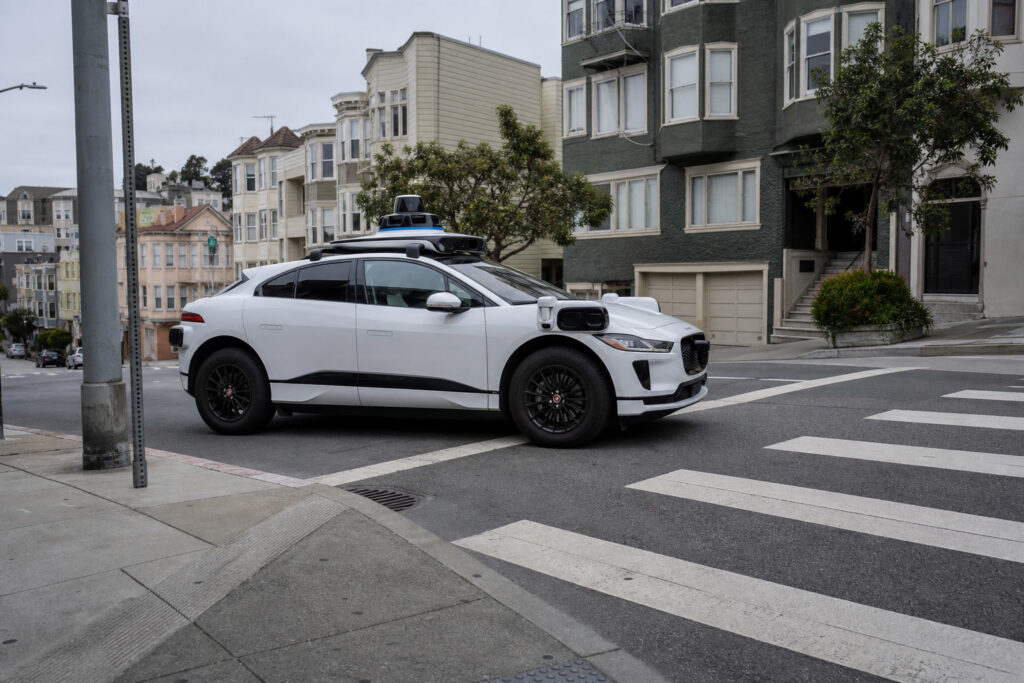
Waymo vehicles run on a sensor suite that fuses lidar, radar, and roughly two dozen cameras into a continuously updated 360-degree model of everything around the car. Lidar in particular is built to resolve three-dimensional shapes in real time, which is how the system is designed to tell an object from an actual person and track how that person is moving, not just where they’re standing. Fisher says the car’s lidar displayed a pedestrian-yield signal after detecting him and his daughter in the roadway — an external cue Waymo vehicles use to communicate that the car has registered a person and intends to yield.
What that means in practice is that “the car stopped 13 feet away” is not, by itself, proof the system worked well. It could mean the sensors caught the fall immediately and executed a smooth, controlled stop with margin to spare. It could also mean the car registered the danger later than it should have and braked hard enough to stop just short of contact. Those two scenarios look identical from the sidewalk. They look very different in the vehicle’s own logs — the exact moment of detection, the speed trace, the braking curve — which is exactly the data an attorney would want locked down before it disappears.
Is This What California Calls a “Darting Out” Case?
Insurance adjusters like to label a sudden pedestrian incident a “darting out” case, and California law does recognize something close to it: the sudden emergency doctrine, sometimes called the imminent peril doctrine. Under CACI No. 452, a driver who is suddenly and unexpectedly confronted with a danger they didn’t cause isn’t held to the same careful judgment expected in calmer moments. But the doctrine has real limits — California courts have held that a party loses the benefit of it if their own negligence caused or contributed to the perilous situation in the first place, and whether that’s true is a question of fact for a jury, not something a company gets to decide for itself.
More importantly, this wasn’t a child running into traffic from behind a parked car — the classic dart-out fact pattern. Fisher and his daughter were already lawfully inside a marked crosswalk when she fell. California Vehicle Code section 21950 puts an ongoing duty on every driver approaching a pedestrian in a crosswalk to exercise “all due care” and reduce speed as necessary to protect that pedestrian — and the statute is explicit that even careless conduct by a pedestrian “does not relieve a driver of a vehicle from the duty of exercising due care for the safety of any pedestrian within any marked crosswalk.” A sudden fall inside a crosswalk a vehicle is already approaching is not, legally, the same as someone appearing out of nowhere.
Should a Self-Driving Car Be Held to a Higher Standard Than a Human Driver?
This is the question every AV pedestrian incident eventually raises, and there’s a genuine argument on both sides.
The case for a higher bar: Waymo markets its technology on exactly the capabilities a human driver doesn’t have — 360-degree perception with no blind spots, no distraction, no fatigue, reaction times measured in fractions of a second. Waymo has reported that its fully autonomous vehicles were involved in 93% fewer injury-causing pedestrian crashes than a human-driver benchmark across more than 220 million miles. A company that tells regulators and the public its system sees and reacts better than any person can’t then ask a jury to measure its conduct against an average distracted driver. California law is already building out a parallel regulatory track, too: under Assembly Bill 1777, police can now send the vehicle’s manufacturer a formal Notice of Autonomous Vehicle Noncompliance (Veh. Code § 38752) when it’s operating in autonomous mode, which is reported to the DMV. That’s not a traffic ticket, and the statute is explicit that the notice doesn’t presume the vehicle was unsafe — but it’s a new regulatory paper trail naming the manufacturer, not a phantom human driver, and it’s the kind of record a plaintiff’s attorney can later point to as evidence, not proof on its own. Separately, California’s product-liability law gives an injured plaintiff a path that doesn’t require proving Waymo was careless the way ordinary negligence does — but it isn’t a free pass, either. The plaintiff still has to prove an actual design defect (typically that the perception or braking system’s risks outweighed its benefits, or that it performed below what an ordinary consumer would expect) and that the defect caused the harm.
The case against reading too much into this one: Waymo’s own aggregate safety numbers are real evidence a jury would have to weigh, and federal regulators evaluate these incidents individually rather than presuming fault. In January, the National Highway Traffic Safety Administration opened a preliminary investigation after a Waymo vehicle struck a child near a Santa Monica elementary school — a genuine dart-out case, where the child ran from behind a double-parked SUV — specifically to determine whether the vehicle “exercised appropriate caution” given the school-zone context. That’s the right question for Noe Valley too: not whether the sensors could theoretically see everything, but whether the car drove with the caution a residential Slow Street — where, as this incident shows, small children are a known and foreseeable presence — actually calls for.
Ben Fisher Did Exactly What Any Parent Would Do
There is nothing to second-guess about a father putting a stroller between a moving vehicle and his fallen two-year-old. That instinct doesn’t pause to calculate whether the car’s sensors have already registered the danger — it can’t, and it shouldn’t have to. Fisher put himself in the path of a two-ton vehicle to buy his daughter time, and by his account, bystanders on the sidewalk were shouting because they saw the same thing he did: a car closing distance on a child who couldn’t get up. Whatever Waymo’s telemetry ultimately shows, that reaction was not an overreaction. It’s the reaction any competent parent would have, and the law does not ask parents to wait for confirmation before protecting their kids.
The Claim Nobody’s Talking About: What a Near-Miss Like This Can Become
Every account of this incident, understandably, focuses on the fact that Fisher’s daughter wasn’t hurt. But it’s worth walking through what changes, legally, if the Waymo hadn’t stopped in time — because it illustrates a claim most people have never heard of.
Under California’s Dillon v. Legg line of cases, refined by the California Supreme Court in Thing v. La Chusa, a bystander who witnesses a close family member get injured by someone else’s negligence can bring an independent claim for negligent infliction of emotional distress — separate from the injured person’s own case. To qualify, the bystander must be (1) closely related to the injury victim, (2) present at the scene and aware, in the moment, that the victim is being injured, and (3) left with serious emotional distress beyond what an unrelated witness would experience. A father who watches his toddler get struck by a car while standing feet away checks every one of those boxes about as cleanly as this doctrine gets.
There’s a second angle worth flagging: Fisher didn’t just witness this from the sidewalk — he put his own body between the vehicle and his daughter. If the car had continued toward them, he would have been in its physical path too. That’s not a bystander scenario at all; it’s a direct claim for his own safety, evaluated the same way any other negligence case is, without needing Dillon v. Legg at all.
What a Pedestrian Accident Lawyer Wants Every Parent to Know
If you’re ever in a close call with a robotaxi — or any vehicle — in San Francisco, do what Fisher did: file a police report, submit a report directly to the company, and file a 311 complaint if it happened on a street with known safety concerns. Ask, in writing, that the vehicle’s telemetry and sensor data be preserved. Companies aren’t required to hold onto that data indefinitely, and once it’s gone, so is the clearest evidence of what actually happened in those two or three seconds.
If contact is made and someone is hurt — even what looks like a minor injury at first — get a medical evaluation the same day. Children in particular can look fine immediately after a scare and still be dealing with something that doesn’t show up until later. Our full guide on what to do after a pedestrian accident in San Francisco walks through the documentation steps in more detail. And if you’re the parent who reacted the way Fisher did, don’t assume that because your child wasn’t physically struck, there’s nothing worth talking to a lawyer about. An incident that ends without an ambulance doesn’t mean it ended without a story worth documenting properly.
A true near-miss with no contact and no physical injury is a difficult claim to bring on its own in California. But if you or your child were in the vehicle’s actual path and reasonably feared imminent injury, or the incident caused documented emotional distress, it’s worth having an attorney evaluate the specific facts — including the vehicle’s telemetry, which can show how close the call really was.
Potential defendants can include the company operating the autonomous driving system, the vehicle manufacturer, and component or software suppliers. Under California’s Assembly Bill 1777, police can send the manufacturer a formal Notice of Autonomous Vehicle Noncompliance (Veh. Code § 38752) when the vehicle is operating in autonomous mode — regulatory evidence naming the manufacturer rather than a phantom human driver, though the notice itself doesn’t presume the vehicle was unsafe or establish civil liability on its own.
It’s a legal doctrine (CACI No. 452) that can excuse a driver’s conduct if they were suddenly confronted with a danger they didn’t cause or contribute to. It doesn’t apply automatically, and California courts have held that a driver loses this defense if their own negligence helped create the dangerous situation in the first place.
Yes. California Vehicle Code section 21950 requires every driver to exercise “all due care” and reduce speed as necessary for a pedestrian already in a marked or unmarked crosswalk — and that duty continues even if the pedestrian does something careless.
Yes. California follows pure comparative negligence, meaning a pedestrian (or their parent) can still recover damages even if partly at fault, with the recovery reduced by their share of responsibility. A toddler is also not held to an adult standard of care, which matters if a company tries to shift blame onto a two-year-old’s own conduct.
It’s a California Supreme Court doctrine, refined in Thing v. La Chusa, that lets a close family member who witnesses a loved one’s injury bring an independent claim for emotional distress, separate from the injured person’s own case. It requires close relation to the victim, presence at the scene with contemporaneous awareness of the injury, and serious resulting distress. It didn’t come into play here because, fortunately, no one was struck — but it would apply directly on the same facts with a different outcome.
If a robotaxi, rideshare vehicle, or any driver has put your family in danger on a San Francisco street, John J. Roach has represented pedestrian accident victims in this city since 2009 — in English and directly in Spanish, with no interpreter in the room. Call (415) 851-4557 for a free consultation.
Si un vehículo autónomo, un conductor de Uber o Lyft, o cualquier otro conductor ha puesto en peligro a su familia en las calles de San Francisco, el abogado John J. Roach ha representado a víctimas de accidentes peatonales en esta ciudad desde 2009, en inglés y directamente en español, sin necesidad de intérprete. Llame al (415) 851-4557 para una consulta gratuita.