
Amazon delivery vans are now one of the most familiar sights on San Francisco streets — double-parked on narrow blocks, cutting through traffic on a tight schedule, making dozens of stops an hour. That volume means collisions with these vans are becoming more common too, and they are rarely as simple as an accident with an ordinary driver. As a San Francisco car accident lawyer who has handled these cases since 2009, I want you to understand why an Amazon delivery crash is different, and why identifying the right defendant matters as much as proving fault.
Why Amazon Delivery Accidents Are More Complicated Than a Typical Truck Crash
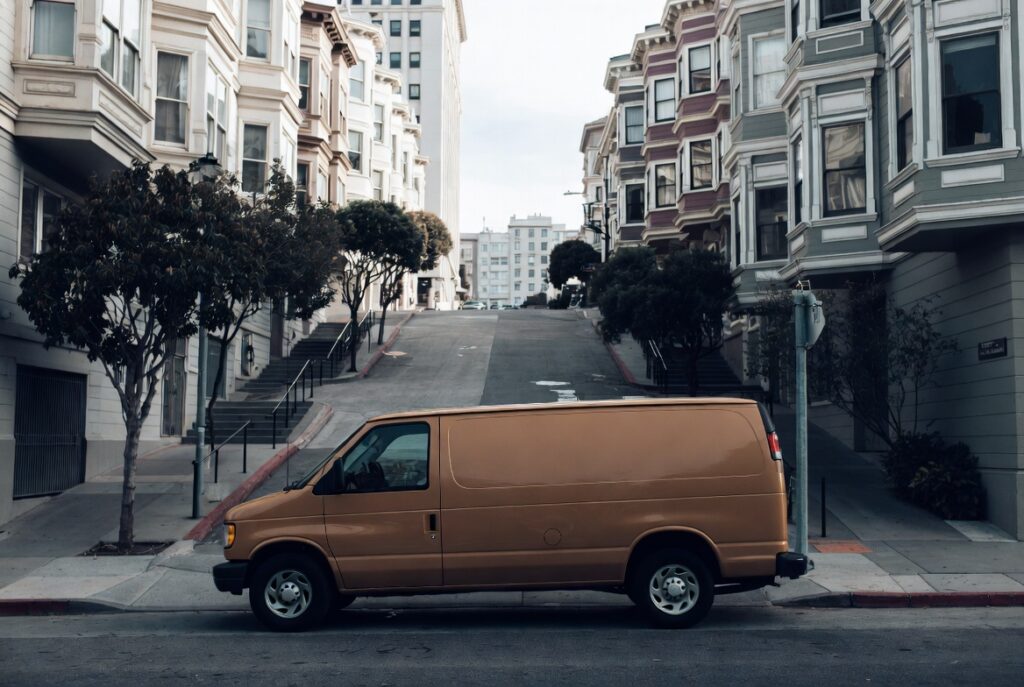
When you’re hit by an ordinary driver, there is usually one person and one insurance policy to pursue. An Amazon delivery van is different because Amazon almost never owns the van or employs the driver directly. Most vans carrying Amazon’s logo are operated by a Delivery Service Partner, or DSP — an independently owned company that contracts with Amazon to handle last-mile delivery in a specific area. A smaller share of Amazon deliveries are made by Amazon Flex drivers, individual gig workers using their own personal vehicles to deliver packages between other jobs.
That structure means a single crash can involve up to three potential defendants: the driver, the DSP company that employs them, and Amazon itself. Sorting out which one — or which combination — is legally responsible is the first real fight in a case like this, and it is exactly the fight Amazon’s business structure is designed to make difficult.
Amazon Flex vs. Delivery Service Partners: Why the Distinction Matters
Amazon Flex drivers are treated as independent contractors delivering packages in their own cars, closer in structure to a rideshare or food-delivery driver than to a traditional commercial trucker. If a Flex driver hits you, the liability questions look a lot like the ones I handle in rideshare accident representation cases — including whether the driver was actively logged into the delivery app at the time of the crash, and whether Prop 22 coverage gaps affect what’s available.
DSP drivers are usually W-2 employees of the DSP company, not of Amazon. Amazon’s contracts typically require every DSP to carry substantial commercial auto insurance, but Amazon has also historically tried to distance itself from liability for a DSP driver’s conduct on the road, arguing the DSP — not Amazon — is the employer.
That argument does not always hold up. California courts look past a contract’s label and examine how much real operational control a company exercises over the work — an approach with roots in cases like S.G. Borello & Sons v. Department of Industrial Relations and later sharpened by Dynamex Operations West v. Superior Court. Amazon dictates delivery routes through its own app, sets daily package quotas, requires specific uniforms and vehicle branding, and tracks drivers in real time. When a company controls the work that closely, its DSP’s “independence” is often more form than substance — and that gap is where a well-built case against Amazon itself can live.
What This Means for Your Claim
Because more than one company may share responsibility, an Amazon delivery accident often means more than one insurance policy to pursue — sometimes the driver’s own coverage, sometimes the DSP’s commercial policy, and in some cases a claim against Amazon directly. Identifying every available source of recovery early is one of the first things I do in a case like this, the same way I approach the car accident cases I handle across the city.
Early investigation matters more here than in an ordinary crash. Fleet numbers, DSP company names printed on the side of the van, and delivery-app data can all disappear or become harder to trace the longer you wait.
Common Amazon Delivery Van Accident Scenarios in San Francisco
I’ve represented people hurt in Amazon delivery accidents in several recurring situations:
- A van pulling out from a double-parked position without checking for cyclists, resulting in cyclist injury representation cases
- A pedestrian hit as a pedestrian while crossing near a delivery stop
- A rear-end collision caused by a van braking suddenly to make a stop
- A wide turn on one of San Francisco’s narrow streets that clips a car or motorcycle in the adjacent lane
What to Do After an Amazon Delivery Van Accident
- Call the police and get an incident report on file
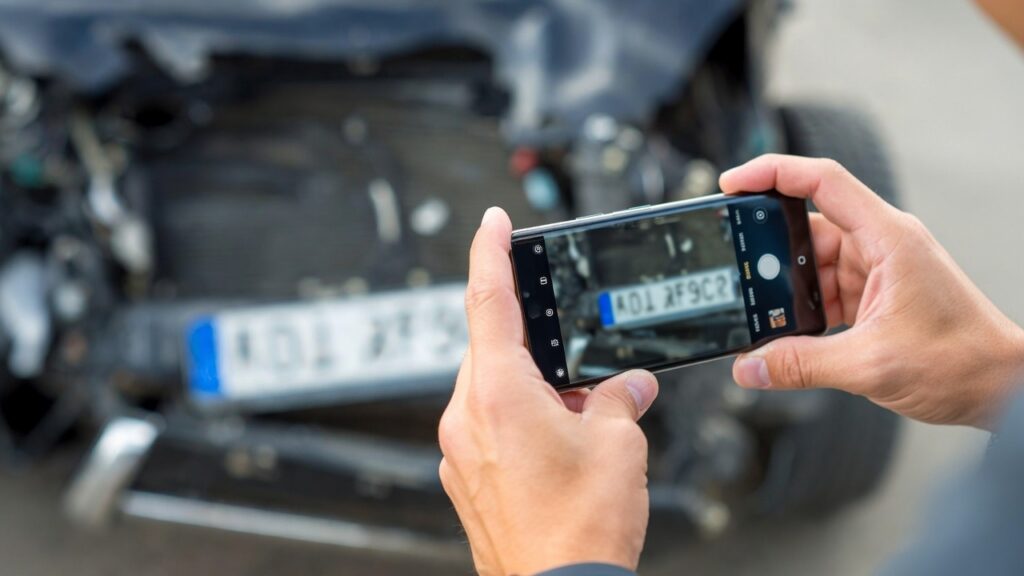
- Photograph the van, including its license plate and any DSP company name printed on the side — this is often the only record of which company actually operated the vehicle
- Get contact information for any witnesses
- Seek medical care right away, even if you feel only shaken
- Do not give a recorded statement to Amazon’s insurer, the DSP’s insurer, or anyone else before speaking with an attorney
Why You Need an Attorney Who Understands the Amazon Delivery Model
Amazon delivery cases reward the same preparation I bring to every case I handle: identifying every defendant early, preserving evidence before it disappears, and building the case as if it will be tried — because that is what produces full settlements. As a trial-tested attorney with extensive trial experience, I have recovered $25 million+ for Bay Area clients, and I bring the same approach to a delivery van case as I do to any commercial truck accident lawyer matter. For San Francisco’s Spanish-speaking delivery workers and accident victims, I also provide services as a direct Spanish-speaking attorney — no interpreter, no handoff.
Talk to an Amazon Delivery Accident Lawyer in San Francisco for Free
If an Amazon delivery van hurt you or someone you love, don’t let a maze of contractors and insurance companies decide your case for you. Call (415) 851-4557 or schedule a free case review today. Se habla español.
Frequently Asked Questions
It depends on how the van was operated. Most Amazon vans are run by independently owned Delivery Service Partners (DSPs), whose drivers are typically DSP employees. In some cases, Amazon itself can also be held responsible if it exercised enough operational control over the driver’s work. A smaller share of deliveries are made by Amazon Flex drivers using their own vehicles.
Amazon Flex drivers are independent contractors using personal vehicles, similar to a rideshare driver. DSP drivers are typically employees of a third-party delivery company that contracts with Amazon and drive Amazon-branded vans.
Amazon requires its Delivery Service Partners to carry commercial auto insurance, and Amazon Flex drivers may have coverage through the Flex program while actively delivering. The specific coverage that applies depends on which model was in place at the time of the crash.
It depends on the facts. California courts look at how much control a company exercises over the work, not just how a contract labels the relationship. In some cases, that control can support a claim against Amazon in addition to the driver and the DSP.
This firm works on a contingency fee basis, meaning there are no upfront costs and no attorney fees unless I recover compensation for you. The initial consultation is free.
The general deadline for a personal injury claim in California is two years from the date of the accident, though certain circumstances can shorten or extend that window. It’s best to consult an attorney promptly.
No. California civil courts do not decide injury cases based on immigration status, and your discussions with your attorney are confidential. Your right to recover for an injury does not depend on your immigration status.