

John Roach, Esq. | March 30, 2026 | California Law \ Car Accidents
Bicycle Safety Tips for Oakland Riders: Navigating Urban Traffic Safely with an Oakland Bicycle Injury Lawyer

Oakland’s streets are both a cyclist’s playground and one of the Bay Area’s most dangerous cycling environments. In 2023, Oakland reported 20 deaths among bicyclists and pedestrians — up from a low of 10 just two years prior. The city’s High Injury Network covers just 8% of Oakland’s streets but accounts for 60% of its severe and fatal collisions. Knowing where those corridors are, what the law requires, and how to build your case if you’re hit is the difference between a safe ride and a devastating one.
I’m John J. Roach, a San Francisco personal injury attorney with extensive trial experience representing bicycle accident victims throughout the Bay Area, including Oakland and Alameda County. This guide covers the statistics, the laws, the safest routes, and what to do legally if a driver hits you.
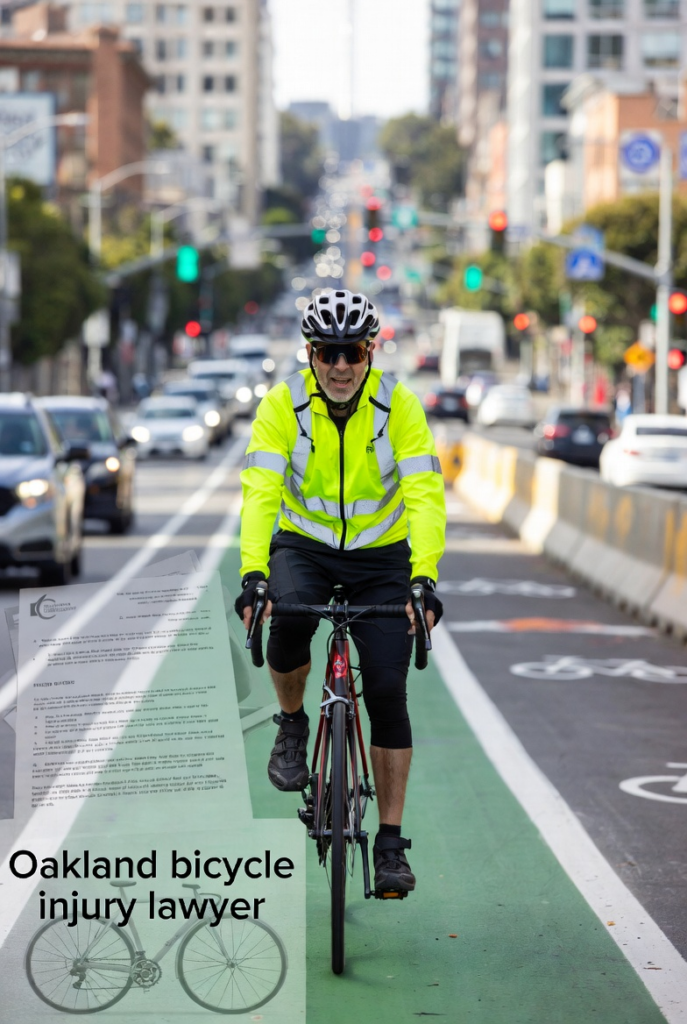
Oakland Bicycle Accident Statistics
Nationally, bicyclist fatalities rose 4.4% from 2022 to 2023, reaching 1,166. California showed a 20.8% drop statewide, but Oakland’s local numbers moved in the opposite direction — the 2023 spike in cyclist and pedestrian deaths reflects the concentration of risk on specific corridors and at specific intersections. Bicyclists made up 3.6% of all motor vehicle fatalities in California in 2023, a percentage that is significantly higher in dense urban areas like Oakland where traffic volumes, parked car density, and intersection frequency are elevated.
The practical implication of the High Injury Network data is straightforward: the vast majority of serious cycling injuries happen on a small number of streets. International Boulevard and San Pablo Avenue consistently top the HIN list. If your route includes those corridors, the risk level is materially higher than on protected paths or residential streets — and that affects both how you ride and how a legal claim would be evaluated if you were injured there.
California Bicycle Laws Every Oakland Rider Needs to Know
California treats bicycles as vehicles under the Vehicle Code, which means cyclists have the same rights and duties as motor vehicle drivers. You must obey stop signs, traffic signals, and speed limits. You must ride with traffic, not against it. You must signal turns and stops using hand signals. These rules are not just legal requirements — they are the foundation of any liability analysis if you are injured. A cyclist who violated traffic law at the time of a crash faces a comparative negligence argument that reduces their recovery.
Helmet law: riders under 18 are legally required to wear a helmet. Adults are not legally required to but should — and if an adult cyclist is not wearing a helmet and suffers a head injury, the defense will raise helmet use in damages arguments even if it cannot be raised on liability.
Lighting: a white front light and red rear reflector are legally required when riding at night. This is one of the most frequently cited contributing factors in nighttime bicycle accident cases — a cyclist without required lighting has a harder negligence case against a driver who claims they could not see them.
Lane position: you must ride as far right as practicable unless passing, turning left, avoiding a hazard, or the lane is too narrow for a bicycle and vehicle to travel safely side by side. Many cyclists do not know that last exception — if a lane is genuinely too narrow to share, you are legally entitled to take the full lane. Riding in the door zone of parked cars to stay right is not legally required and is far more dangerous than taking the lane.
Safer Routes in Oakland
Oakland has over 164 miles of bikeways and the Let’s Bike Oakland plan targets 219 additional miles with improvements at 88 intersections. The protected and buffered infrastructure that already exists is significantly safer than unprotected lanes on high-volume corridors.
Telegraph Avenue offers buffered bike lanes through several miles of the city. Broadway has dedicated downtown paths. The Bay Trail along the waterfront connects to Martin Luther King Regional Shoreline with over 5 miles of paved, vehicle-separated trail. Lake Merritt Loop is a 3-mile circuit with low vehicle conflict. Arrowhead Marsh Trail and Oyster Bay Loop are solid options for less experienced riders or families. Skyline Boulevard, Moraga Loop, and Joaquin Miller Park offer more challenging terrain for experienced cyclists in the hills.
The practical safety rule is simple: avoid International Boulevard and San Pablo Avenue when you can, particularly at night and during peak hours. Use apps like Ride with GPS and Bike East Bay’s planning resources to find protected alternatives before your first trip on an unfamiliar route.
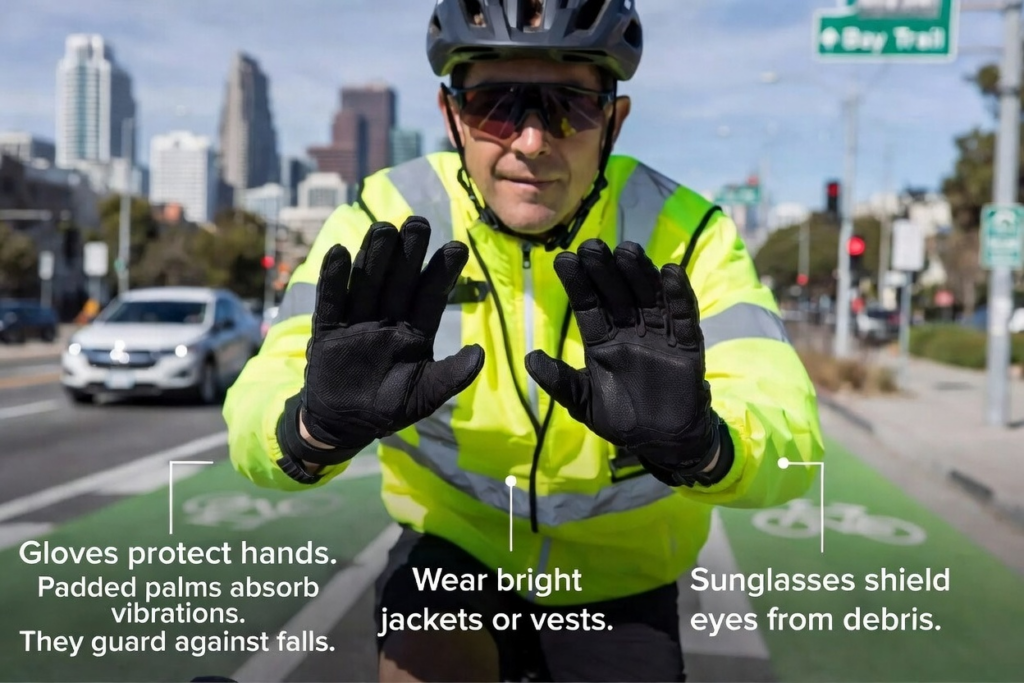
Essential Gear
A properly fitted helmet is the single most important piece of equipment for any urban cyclist. Replace it every five years or after any impact — the foam compresses on impact and does not recover. A front white light and rear red light are legally required at night and worth running during the day in low-visibility conditions. Reflective tape on the bike and high-visibility clothing meaningfully increase your detectability to drivers, particularly on HIN corridors where distracted driving is a documented contributing factor.
Beyond the basics: padded gloves protect your hands in a fall and reduce vibration fatigue on longer rides. A pump, tire levers, patch kit, and spare tube keep a flat from stranding you. A rear radar device like the Garmin Varia gives audible and visual alerts when vehicles approach from behind — particularly useful on roads without protected lanes. A handlebar or helmet camera documents your ride and can be critical evidence if you are hit.
What to Do If You Are Hit by a Car in Oakland
Call 911 immediately and request a police report even if the driver minimizes the incident. The police report documents the parties, the location, and the officer’s observations — it is foundational evidence in any injury claim. Photograph everything at the scene: the vehicle, the driver’s information, your bicycle damage, your injuries, skid marks, traffic signals, and road conditions. Get witness contact information before anyone leaves.
Seek medical attention the same day. Traumatic brain injuries and spinal injuries from bicycle collisions frequently produce symptoms that worsen in the hours after impact. A gap between the accident and your first medical visit gives the defense an argument that your injuries were not serious or were unrelated to the crash.
Do not give a recorded statement to the driver’s insurance company before consulting an attorney. California’s pure comparative negligence rule means the insurer will look for any basis to assign you a percentage of fault — riding position, lighting, helmet use, route choice — to reduce their exposure. Once you have retained counsel, all communications go through my office.
California’s statute of limitations for bicycle accident personal injury claims is two years from the date of the accident. If a government entity — including the City of Oakland for road defects or signal failures — may share liability, a government tort claim must be filed within six months. Contact an attorney promptly.
If you were injured in a bicycle accident in Oakland or anywhere in the Bay Area, call me at (415) 851-4557 for a free consultation. I work on a contingency fee basis — you pay nothing unless I recover money for you. I am bilingual in English and Spanish.
Frequently Asked Questions: Bicycle Accidents in Oakland
The at-fault driver is liable for the cyclist’s injuries, medical bills, lost wages, bicycle damage, and non-economic damages including pain and suffering. California follows pure comparative negligence — if the cyclist was also partially at fault (for example, riding without required lighting at night), their recovery is reduced by their percentage of fault but not eliminated. Oakland’s High Injury Network data and the specific conditions at the accident location are relevant to establishing the driver’s liability and defending against comparative fault arguments.
California requires riders under 18 to wear a helmet. Adult cyclists are not legally required to wear one, but should. In a personal injury case involving an adult cyclist who was not wearing a helmet and suffered a head injury, the defense will typically raise helmet use in arguments about damages — arguing that the injury would have been less severe with a helmet. This can affect the damages calculation even if it cannot be used to reduce fault on the liability question.
Yes. California Vehicle Code Section 22517 requires vehicle occupants to ensure it is reasonably safe to open a door into traffic before opening it. Failing to check for approaching cyclists before opening a door is negligence per se — a violation of the statute that constitutes evidence of negligence without requiring additional proof of a standard of care breach. Dooring injuries are among the most common serious bicycle accidents in urban Oakland, particularly on streets adjacent to on-street parking.
Two years from the date of the accident for personal injury claims under California Code of Civil Procedure Section 335.1. If a government entity may share liability — for example, the City of Oakland for a road defect, failed signal, or inadequate bicycle infrastructure that contributed to the crash — a government tort claim must be filed within six months of the accident. Missing the six-month deadline for government claims typically bars that claim permanently. Contact an attorney as soon as possible after any serious bicycle accident.
A hit-and-run bicycle accident is treated as an uninsured motorist claim under your own auto insurance policy. California law allows cyclists to access their Uninsured Motorist (UM) coverage even when they were riding a bicycle — not driving a car — at the time of the accident. Document everything you can about the vehicle and report it to the Oakland Police Department immediately. Traffic and business surveillance cameras in the area may have captured the vehicle. Contact an attorney promptly to preserve that footage before it is overwritten.
Disclaimer: This blog post is for informational purposes only and does not constitute legal advice. Consult a licensed attorney for advice specific to your situation.




